Attraction in Armenia
Haghpat and Sanahin Monasteries
UNESCO World Heritage
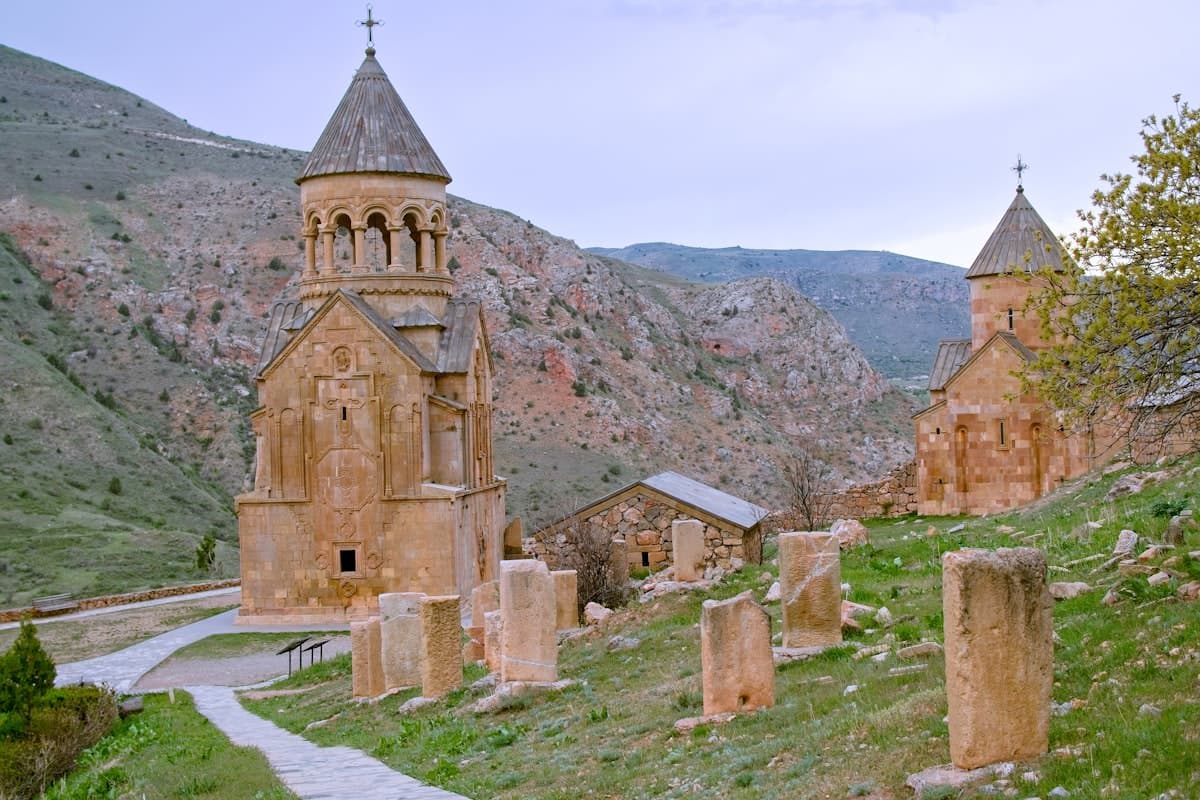
These two medieval monastic complexes, located in the Debed Canyon in northern Armenia, were jointly inscribed on the UNESCO World Heritage List in 1996 for their outstanding examples of Armenian religious architecture from the 10th to 13th centuries. Sanahin was a renowned centre of scholarship, while Haghpat features some of the finest stone carvings and gavits (narthex halls) of the medieval period. Both sites are set amid dramatic forested gorge landscapes.
Wise
Your bank marks up every USD you spend in Armenia. Wise doesn't.
- No foreign transaction fees
- Free ATM withdrawals up to your limit
- Pay in local currency at the real rate
4.8 ★ App Store·4.8 ★ Google Play
Airalo eSIM
Your phone plan was built for home. This one was built for Armenia.
- No SIM swapping
- No data roaming charges
- Active in minutes
4.7 ★ App Store·4.6 ★ Google Play
Travel Guide
Frequently Asked Questions About Visiting Armenia
Entry requirements vary by passport. Check the requirements for your specific passport on the Armenia page at Yoogo.
Armenia uses the Armenian Dram (AMD). Cards are accepted in hotels, larger restaurants, and shops in Yerevan, but cash is essential in smaller towns, markets, and rural areas, so it is worth carrying Drams for day-to-day spending.
Yerevan and the main tourist regions are generally considered safe for travellers, with low rates of petty crime compared to many European cities. Check your government's current travel advisory before departure, as the situation near the country's borders can change.
Yerevan has a metro line, city buses, and shared minibuses called marshrutkas, with fares of around 100 AMD per journey. Intercity marshrutkas and buses connect Yerevan to Gyumri, Dilijan, and other destinations from the Kilikia and Northern bus stations, and hired taxis or tour vehicles are the most convenient way to reach rural monasteries and Lake Sevan.
Spring (April to June) and autumn (September to October) are generally the most pleasant periods, with mild temperatures, stable weather, and, in autumn, the added appeal of harvest festivals and wine season. Summer is popular for hiking at altitude and visiting Lake Sevan, though Yerevan can be very hot in July and August.
Armenian is the official language and is spoken by the great majority of the population, using a unique script. Russian is widely understood, particularly among older generations, while English is increasingly common in hotels, restaurants, and among younger people in Yerevan, though less so in regional towns.
No vaccinations are required for entry to Armenia from most countries, but health authorities typically recommend being up to date on routine jabs plus hepatitis A for most travellers. Hepatitis B and typhoid vaccines may be advised depending on your itinerary and activities, so consult a travel health clinic four to six weeks before departure.
Tipping is not obligatory but is genuinely appreciated for good service. In restaurants, leaving around 10 per cent in cash directly for your server is the common practice, as service charges do not always reach staff; rounding up taxi fares and leaving a small tip for tour guides after a full-day excursion is also customary.
Armenia has good mobile coverage across Yerevan and major tourist areas through operators including Viva-MTS, Ucom, and Team Telecom. Airalo and other international eSIM providers offer data plans for Armenia, and local physical SIMs are available at kiosks in Zvartnots International Airport arrivals hall if you prefer a local number.