←Bangladesh travel guide
Dhaka Division, Bangladesh
Dhaka
Rickshaws, river life, and Mughal history at full throttle
CultureFood & DrinkHistory & Heritage
Dhaka is one of South Asia's most densely populated capitals, where the ancient lanes of Old Dhaka wind past 17th-century Mughal forts, ornate mosques, and bustling river ghats on the Buriganga. The city balances its layered history with a modern metro and a vibrant street-food culture that keeps visitors returning to its chaotic, captivating streets.
Check Bangladesh visa requirements →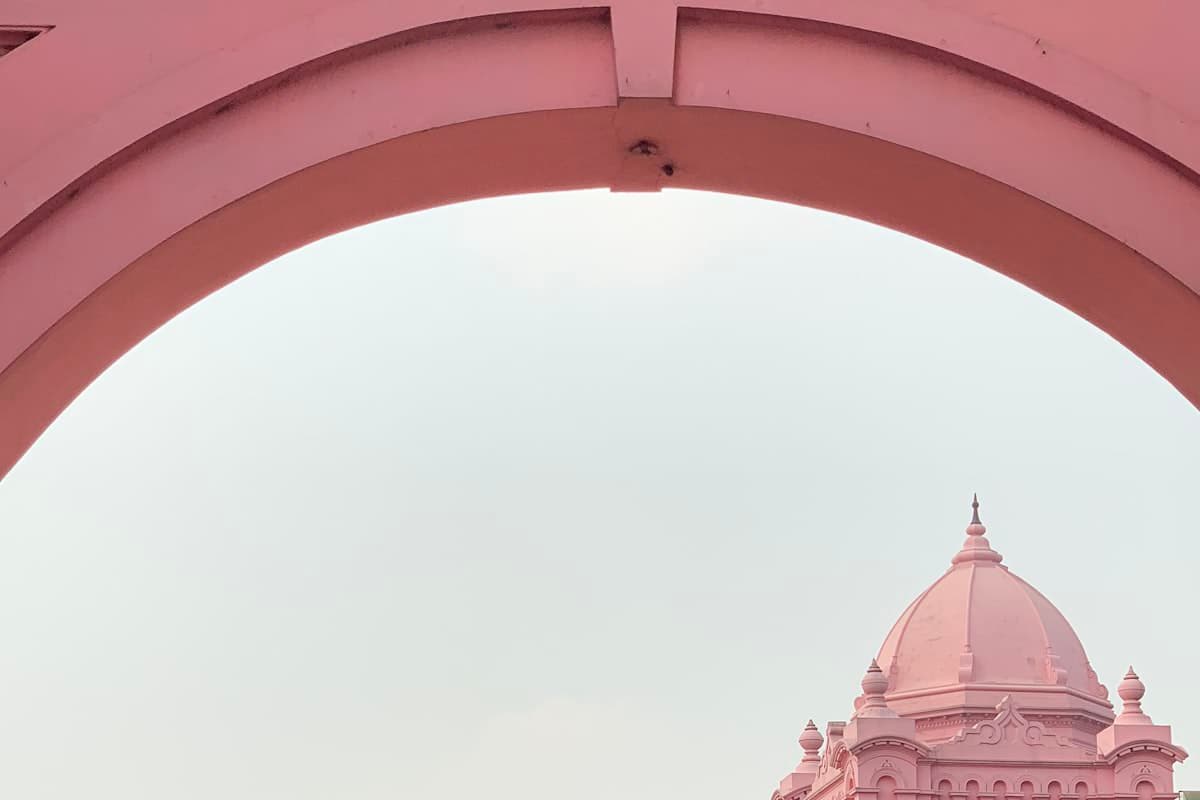
Best time to visit
October to March
Region
Dhaka Division
Main airport
Dhaka Airport (DAC)
Discover
Top Things to Do in Dhaka
History
Lalbagh Fort
Lalbagh Fort is an incomplete 17th-century Mughal fortification in Old Dhaka, begun in 1678 by Prince Muhammad Azam and never finished following the death of the governor's daughter Pari Bibi, whose ornate tomb stands within the compound. The walled complex contains a mosque, audience hall, and formal gardens that offer a calm retreat from the surrounding city. Visitors can explore the on-site museum, which displays Mughal-era coins, weapons, and decorative arts recovered from the site.
Culture
Ahsan Manzil
Ahsan Manzil, known as the Pink Palace, is a striking rose-coloured Italianate mansion that served as the official residence of the Nawabs of Dhaka from the late 19th century and overlooks the Buriganga River in Old Dhaka. The palace was constructed in its current form in 1872 and is now a museum housing period furniture, portraits, and artefacts that document the Nawab family's patronage of the city. Its distinctive dome and riverside setting make it one of the most photographed landmarks in Bangladesh.
Wise
Your bank marks up every USD you spend in Bangladesh. Wise doesn't.
- No foreign transaction fees
- Free ATM withdrawals up to your limit
- Pay in local currency at the real rate
4.8 ★ App Store·4.8 ★ Google Play
Airalo eSIM
Your phone plan was built for home. This one was built for Bangladesh.
- No SIM swapping
- No data roaming charges
- Active in minutes
4.7 ★ App Store·4.6 ★ Google Play
Plan Your Trip
Getting Around Dhaka
Tours, stays, transfers, and flights — curated partner options are on the way.
Tours & Activities
Skip-the-line tickets, guided tours, and day experiences — curated partner options are on the way.
Coming soonWhere to Stay
Hotels, apartments, and guesthouses across every neighbourhood — booking options are on the way.
Coming soonAirport Transfers
Private and shared rides between the airport and the city centre — partner options are on the way.
Coming soonFlights
Compare fares from hundreds of airlines to find the best route in — search options are on the way.
Coming soonTravel Guide
Frequently Asked Questions About Visiting Bangladesh
Entry requirements vary by passport. Check the requirements for your specific passport on the Bangladesh page at Yoogo.
Bangladesh uses the Bangladeshi taka (BDT). Cash is the dominant payment method, particularly outside major hotels and upmarket restaurants in Dhaka; ATMs are available in cities but can be unreliable in rural areas, so carrying sufficient taka is advisable.
Bangladesh is generally safe for tourists in its main cities and tourist areas, with petty crime such as pickpocketing being the most common concern in crowded places. Road traffic poses a significant risk given the high rate of road accidents, so choosing reputable transport is worthwhile. Travellers should monitor official government advisories before and during their visit, as conditions can change.
Cycle rickshaws and CNG auto-rickshaws are the standard short-distance transport in cities and towns, while intercity buses and trains connect major destinations. Bangladesh's extensive river network is served by ferries and the iconic Rocket Steamer paddleboat, which runs between Dhaka and Khulna, offering a memorable way to experience the delta landscape.
The most comfortable time to visit is November to February, when temperatures are mild (around 15–25°C), humidity is low, and rainfall is minimal. The monsoon season from June to September brings heavy rain and flooding that can disrupt travel, while March to May can be very hot with temperatures exceeding 35°C.
The official language is Bengali (Bangla), spoken by the vast majority of the population. English is widely understood in Dhaka hotels, tourist sites, and among educated professionals, but knowledge of a few basic Bangla phrases is appreciated by locals in smaller towns and rural areas.
Hepatitis A, typhoid, and tetanus vaccinations are routinely recommended for travellers, and malaria prophylaxis may be advised for those visiting rural or forested regions. Travellers arriving from yellow fever risk countries are required to show proof of yellow fever vaccination. Drinking only bottled or purified water and taking precautions against mosquito bites are important health measures throughout the country.
Tipping is not a deeply embedded custom in Bangladesh and is not expected at local restaurants or markets. In tourist-facing establishments such as hotels and tour operations, a small tip of 5–10 per cent for good service is appreciated but entirely discretionary. Cash tips in small taka notes are the most practical option.