Attraction in Chile
Historic Quarter of Valparaíso
UNESCO World Heritage
The historic quarter of Valparaíso preserves the urban landscape of Chile's principal 19th-century seaport, recognised by UNESCO in 2003 for its outstanding significance in the history of Pacific trade. The hillside neighbourhood of Cerro Alegre and Cerro Concepción are characterised by colourful painted houses, European-influenced architecture, and open-air street art on almost every wall. Seventeen historic funiculars, known as ascensores, carry residents and visitors between the port flatlands and the residential hills.
Wise
Your bank marks up every USD you spend in Chile. Wise doesn't.
- No foreign transaction fees
- Free ATM withdrawals up to your limit
- Pay in local currency at the real rate
4.8 ★ App Store·4.8 ★ Google Play
Airalo eSIM
Your phone plan was built for home. This one was built for Chile.
- No SIM swapping
- No data roaming charges
- Active in minutes
4.7 ★ App Store·4.6 ★ Google Play
Travel Guide
Frequently Asked Questions About Visiting Chile
Entry requirements vary by passport. Check the requirements for your specific passport on the Chile page at Yoogo.
Chile uses the Chilean peso (CLP). Cards are widely accepted in cities, hotels, supermarkets, and larger restaurants. ATMs are plentiful in urban areas. In smaller towns, markets, and rural Patagonia, cash is essential. Always carry pesos for smaller transactions.
Chile is one of South America's safer destinations, with generally low violent crime in tourist areas. Pickpocketing and bag-snatching occur in Santiago city centre and around bus stations. Some Santiago neighbourhoods are best avoided after dark. Exercise normal urban caution and keep valuables secure. Natural hazards include earthquakes and volcanic activity; Chile is one of the world's most seismically active countries.
Chile's elongated shape makes domestic flights practical for covering long distances quickly. Long-distance buses are comfortable, affordable, and extensive. Santiago has a modern metro system. In Patagonia, car hire or organised tours are the main options for reaching remote parks. Traffic drives on the right.
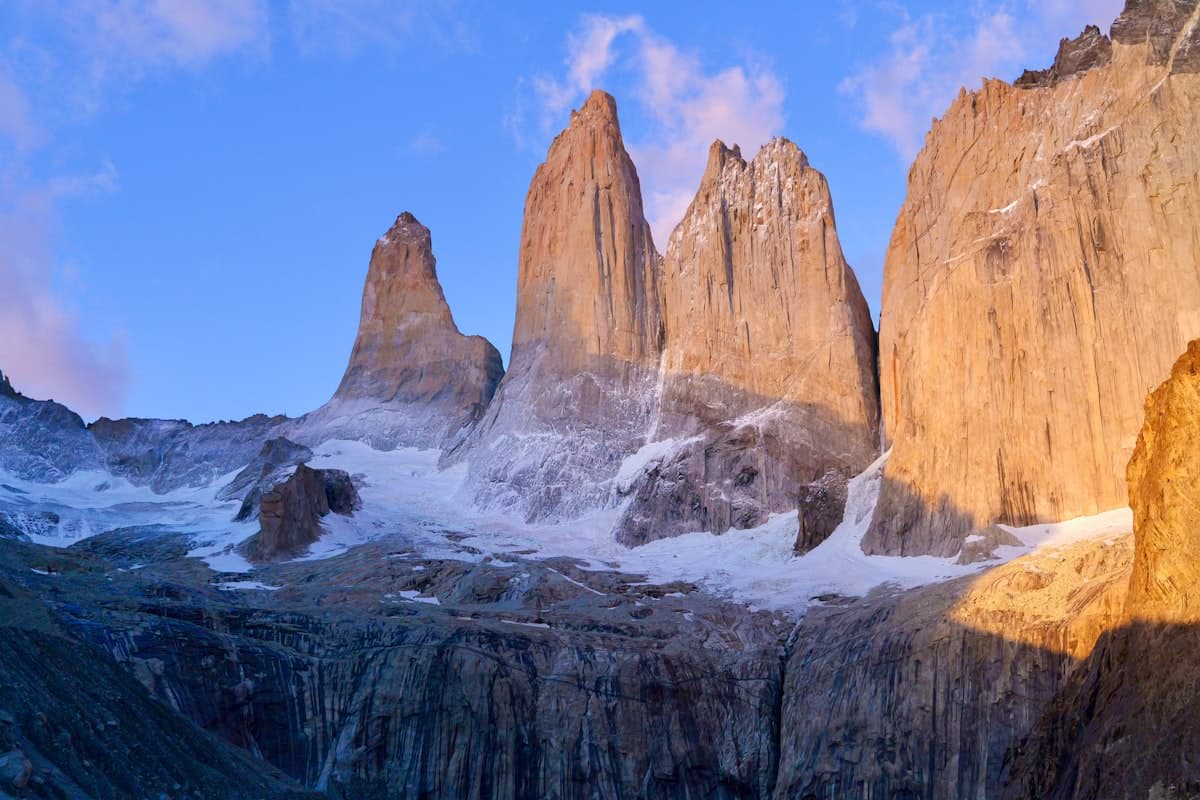
The best time depends on the region. Santiago and central Chile are pleasant from October to April. Patagonia and Torres del Paine are best visited from November to March, the Southern Hemisphere summer. The Atacama Desert can be visited year-round, though spring and autumn are most comfortable. The Lake District is excellent from November to April.
Spanish is the official language. Chilean Spanish is known for its distinctive accent, speed, and extensive use of local slang (chilenismos), which can challenge even fluent Spanish speakers. English is spoken at upscale hotels, tour operators, and in wealthier areas of Santiago, but is limited elsewhere.
No vaccinations are legally required for most travellers. Hepatitis A and typhoid are sometimes recommended for those travelling outside major cities. Tap water is safe to drink in Santiago and most cities. Healthcare is of a good standard in urban areas. Travel insurance with medical cover is strongly recommended.
Tipping is customary in Chile. In restaurants, 10% is standard and is usually shown as a suggested propina on the bill. Taxi drivers are typically tipped by rounding up the fare. Hotel porters and tour guides appreciate a modest gratuity.
Chile has good 4G coverage in cities and along main tourist routes, provided by Entel, Claro, and Movistar. Coverage drops significantly in Patagonia and remote areas. Prepaid SIM cards are easy to obtain. Wi-Fi is widely available at hotels and cafes in urban areas.