←Djibouti travel guide
Djibouti Region, Djibouti
Djibouti City
A Red Sea capital where French colonial streets meet a working harbour
AdventureCulture
Founded in 1888 on a peninsula jutting into the Gulf of Tadjoura, Djibouti City is the country's commercial and cultural heartbeat, shaped by African, Arab, and French influences. The corniche, Central Market, and the white-domed Hamoudi Mosque all sit within easy walking distance of one of the busiest ports in East Africa.
Check Djibouti visa requirements →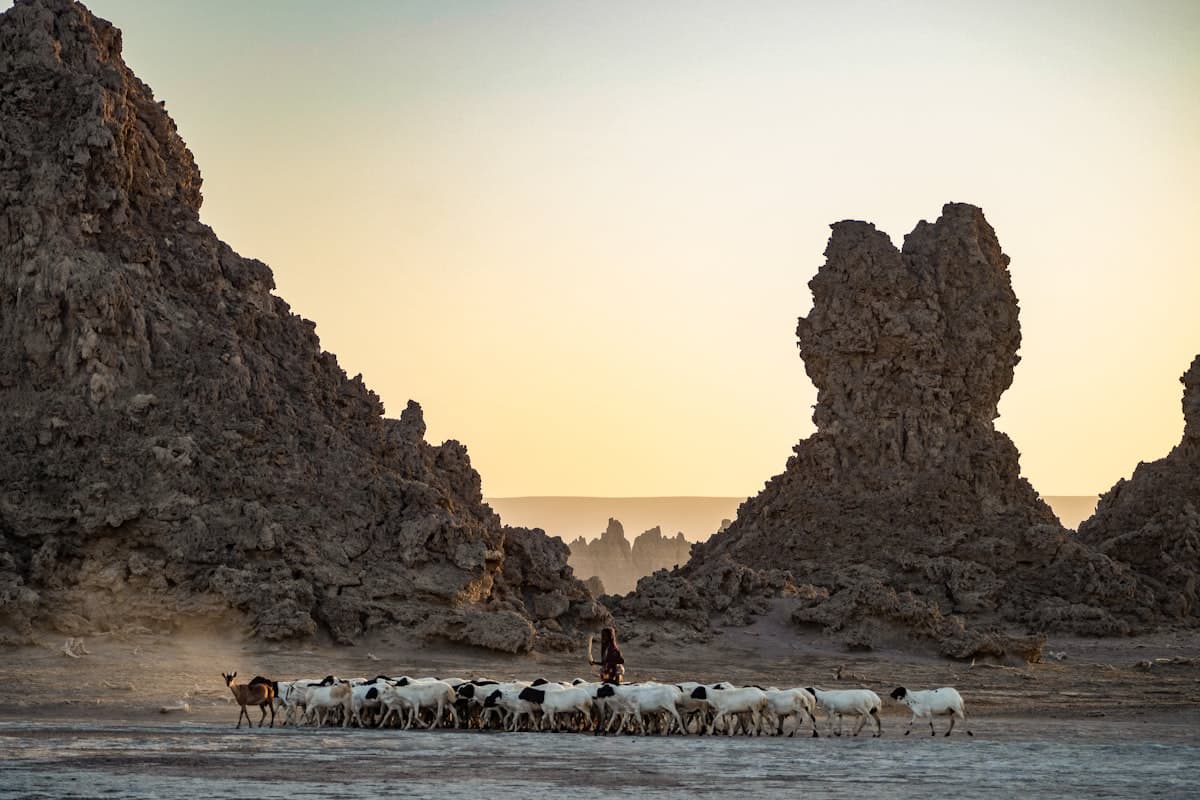
Best time to visit
Cooler season (October to April)
Region
Djibouti Region
Main airport
Djibouti (JIB)
Beyond the City
Day Trips from Djibouti City
Nature
Lake Assal
The lowest point in Africa at 155 metres below sea level, Lake Assal is a dazzling salt lake ringed by white crystalline shores. Its intensely blue water and stark setting make it Djibouti's signature sight.
Nature
Lake Abbe
A surreal landscape of limestone chimneys venting steam, Lake Abbe sits on the Ethiopian border. Flamingos gather at the water and the otherworldly scenery has stood in for alien planets on film.
Nature
Moucha Island
A small coral island in the Gulf of Tadjoura, about 45 minutes by boat from the capital, Moucha rewards visitors with white-sand beaches, clear turquoise water, and accessible reef snorkelling just offshore. The surrounding coral gardens shelter angelfish, butterflyfish, parrotfish, and the occasional sea turtle. The island is compact enough to explore entirely on foot in a few hours.
Wise
Your bank marks up every USD you spend in Djibouti. Wise doesn't.
- No foreign transaction fees
- Free ATM withdrawals up to your limit
- Pay in local currency at the real rate
4.8 ★ App Store·4.8 ★ Google Play
Airalo eSIM
Your phone plan was built for home. This one was built for Djibouti.
- No SIM swapping
- No data roaming charges
- Active in minutes
4.7 ★ App Store·4.6 ★ Google Play
Plan Your Trip
Getting Around Djibouti City
Tours, stays, transfers, and flights — curated partner options are on the way.
Tours & Activities
Skip-the-line tickets, guided tours, and day experiences — curated partner options are on the way.
Coming soonWhere to Stay
Hotels, apartments, and guesthouses across every neighbourhood — booking options are on the way.
Coming soonAirport Transfers
Private and shared rides between the airport and the city centre — partner options are on the way.
Coming soonFlights
Compare fares from hundreds of airlines to find the best route in — search options are on the way.
Coming soonTravel Guide
Frequently Asked Questions About Visiting Djibouti
Entry requirements vary by passport. Check the requirements for your specific passport on the Djibouti page at Yoogo.
Djibouti uses the Djiboutian franc (DJF), which is pegged to the US dollar at a fixed rate. US dollars are widely accepted. Cash is essential for most transactions. ATMs are available in Djibouti City but limited. Cards are accepted at upscale hotels.
Djibouti City is relatively stable and safe by regional standards. Petty crime occurs in the city, and travellers should keep valuables secure. The country borders Somalia, Eritrea, and Ethiopia, and some border areas are sensitive. Terrorism from al-Shabaab has affected the wider region. Check your government's travel advisory before visiting.
Djibouti City is small and navigable by taxi. The Addis Ababa–Djibouti railway connects the capital with Ethiopia. For visiting natural attractions such as Lake Assal and Lake Abbé, hire a 4WD vehicle or join an organised tour, as roads are poor and the terrain demanding.
October to April is the most comfortable period to visit, when temperatures are below 35°C. The hottest months from May to September can see daytime temperatures exceed 45°C, making outdoor activities difficult and potentially dangerous. The whale shark season along the coast runs from November to January, drawing divers and snorkellers.
French and Arabic are both official languages. Somali (Issa) and Afar are the two main national languages spoken in daily life. French is used in government and higher education. English is spoken in some hotels and businesses catering to international travellers and military personnel.
A yellow fever certificate is required if arriving from a yellow fever-endemic country. Malaria prophylaxis is recommended, particularly outside the capital. Hepatitis A, typhoid, and cholera vaccinations are advised. Djibouti's heat means hydration is critical; drink only bottled water.
Tipping is not obligatory but is appreciated. In restaurants, rounding up the bill or leaving a modest tip is a kind gesture. Guides and drivers for natural attraction tours expect and appreciate gratuities.
Djibouti Telecom is the only mobile provider. Coverage is reasonable in Djibouti City but very limited in the countryside. Internet access is available at larger hotels. Prepaid SIM cards are available in the capital but data packages are expensive by international standards.
Djibouti is a predominantly Muslim country. Dress modestly, particularly outside tourist hotels, covering shoulders and knees. Respect Ramadan by not eating or drinking in public during fasting hours. Friday is the main day of rest. Qat (khat), a mild stimulant leaf chewed throughout the afternoon, is central to Djibouti's social life and widely visible in the city.