Attraction in Dominica
Trafalgar Falls
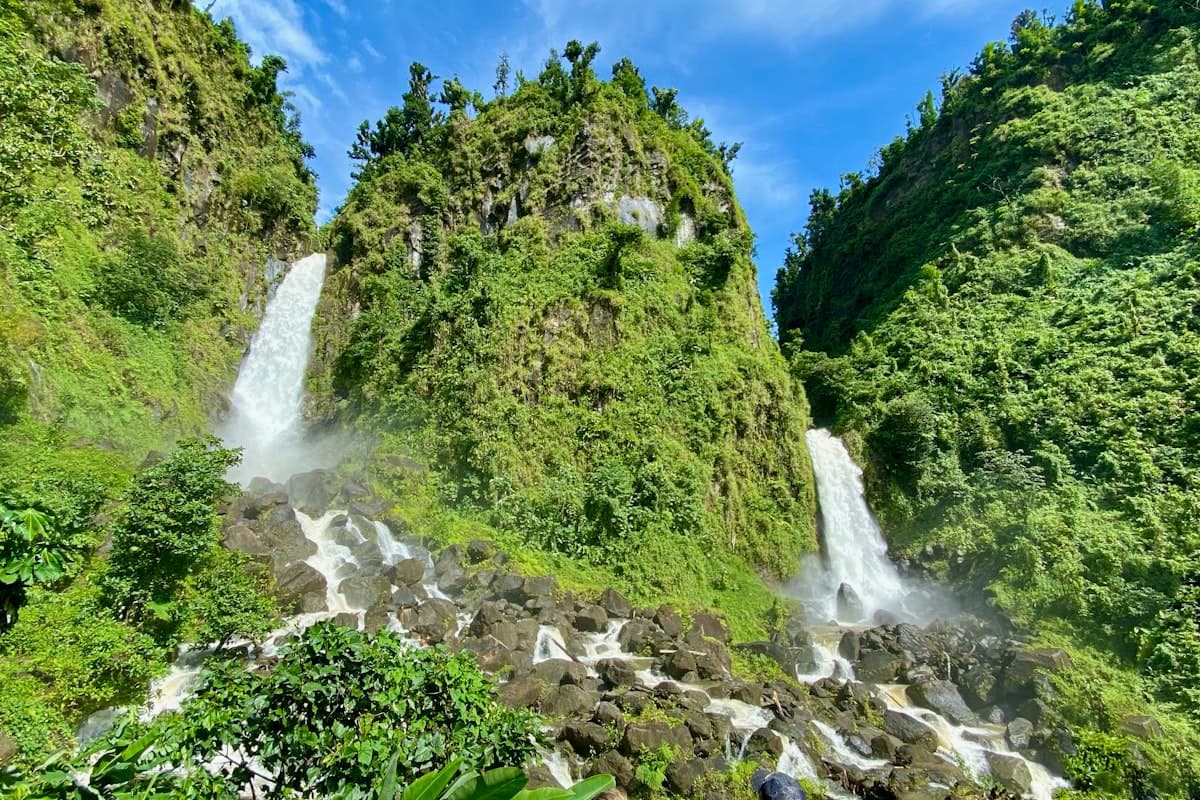
A short drive from Roseau and an easy 15-minute walk from the visitor centre, Trafalgar Falls comprises twin cascades known locally as Father and Mother, tumbling side by side into pools at the edge of the rainforest. The taller Father fall drops about 40 metres over dark volcanic rock, while the shorter Mother fall feeds a warm pool heated by geothermal springs below. The site is one of Dominica's most accessible natural landmarks and a regular stop on day tours from the capital.
Wise
Your bank marks up every USD you spend in Dominica. Wise doesn't.
- No foreign transaction fees
- Free ATM withdrawals up to your limit
- Pay in local currency at the real rate
4.8 ★ App Store·4.8 ★ Google Play
Airalo eSIM
Your phone plan was built for home. This one was built for Dominica.
- No SIM swapping
- No data roaming charges
- Active in minutes
4.7 ★ App Store·4.6 ★ Google Play
Travel Guide
Frequently Asked Questions About Visiting Dominica
Entry requirements vary by passport. Check the requirements for your specific passport on the Dominica page at Yoogo.
Dominica uses the Eastern Caribbean dollar (XCD), which is pegged to the US dollar at a fixed rate of approximately EC$2.70 to US$1. US dollars are widely accepted, and credit cards are taken at most hotels and larger restaurants, though smaller establishments and market vendors generally prefer cash.
The US State Department rates Dominica at Level 1 (Exercise Normal Precautions), making it one of the safer destinations in the Caribbean. Petty theft can occur, so standard caution around valuables is sensible, particularly in crowded market areas and on beaches.
Brightly coloured minibus taxis are the main form of public transport, running set routes between towns at low fares. Rental cars are available and offer the most flexibility for reaching trailheads and remote villages, though driving is on the left and roads in the interior are narrow and winding. Negotiating taxi fares in advance is recommended for private transfers.
The dry season from December to April is generally the most favourable time to visit, with lower rainfall and more reliable conditions for hiking and outdoor activities. Hurricane season runs from June to November, with the highest risk between August and October, when some trails and coastal areas may be affected.
English is the official language and is spoken throughout the island, making communication straightforward for most visitors. A French-based Creole called Kweyol is also widely spoken in everyday conversation, particularly in rural communities and among the older population.
No vaccinations are required for entry, but Hepatitis A, Typhoid, and routine immunisations are commonly recommended by travel health professionals. Dengue and Zika are present on the island, so using an effective insect repellent is advisable, particularly in areas with standing water.
Tipping is not obligatory but is appreciated for good service. A gratuity of 10 to 15 per cent is customary in restaurants where a service charge has not already been added to the bill. Small tips for taxi drivers, tour guides, and hotel staff are also welcomed.
Dominica is covered by two main carriers, Digicel and Flow (Cable and Wireless), with 4G/LTE available in urban areas and along the coast. International roaming works on both networks, and several third-party providers including Airalo offer eSIM data plans for Dominica, providing a convenient option before you arrive.