Attraction in Ecuador
Historic Centre of Quito
UNESCO World Heritage
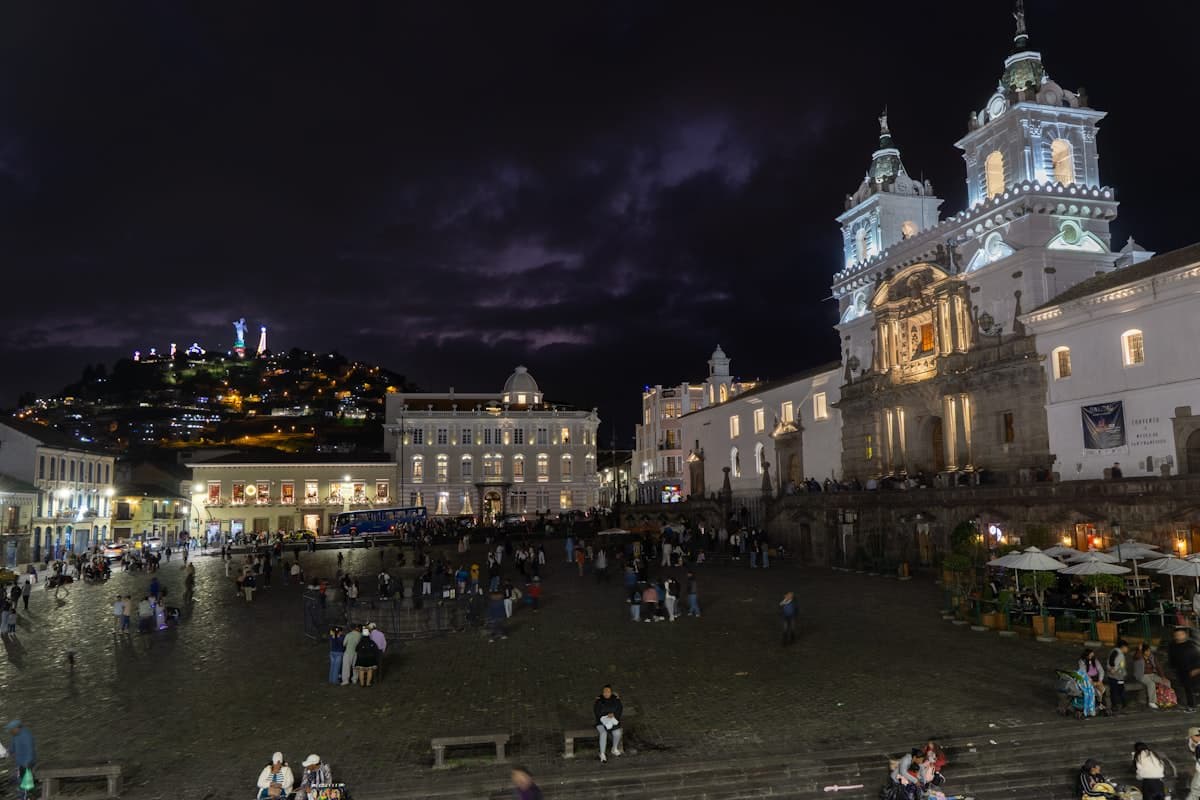
One of the largest and least modified colonial centres in Latin America, Quito's old town covers 320 hectares of 16th and 17th-century churches, monasteries, plazas, and civic buildings that UNESCO recognised in 1978 as the very first World Heritage Site to be inscribed. The Church of La Compañia de Jesus, with its gold-encrusted baroque interior, and the Convent of San Francisco, the largest colonial complex in the Americas, anchor an area with 32 museums and 24 churches.
Wise
Your bank marks up every USD you spend in Ecuador. Wise doesn't.
- No foreign transaction fees
- Free ATM withdrawals up to your limit
- Pay in local currency at the real rate
4.8 ★ App Store·4.8 ★ Google Play
Airalo eSIM
Your phone plan was built for home. This one was built for Ecuador.
- No SIM swapping
- No data roaming charges
- Active in minutes
4.7 ★ App Store·4.6 ★ Google Play
Travel Guide
Frequently Asked Questions About Visiting Ecuador
Entry requirements vary by passport. Check the requirements for your specific passport on the Ecuador page at Yoogo.
Ecuador uses the US dollar (USD) as its official currency, a policy in place since 2001. Credit and debit cards are widely accepted in hotels, restaurants, and larger shops in cities, though smaller towns and markets typically operate on a cash-only basis, so carrying smaller notes is advisable.
Ecuador's major cities experience petty theft, and travellers should remain vigilant in crowded markets, bus terminals, and tourist areas, keeping valuables out of sight. The Galapagos Islands have very low crime rates, and destinations such as Cuenca and Banos are generally considered calm. Consult your government's current travel advisory before departure for the most up-to-date regional guidance.
Intercity buses are the most affordable and widely used form of transport, connecting all major cities from central terminals (terminal terrestre) at low fares. Taxis and ride-hailing apps operate in cities, while Quito and Guayaquil both have rapid transit systems; regular passenger rail services are no longer operational, though a small number of scenic tourist rail experiences run on specific routes.
Ecuador's climate varies considerably by region: the Andes highlands are driest and clearest from June to September, the Pacific coast is warmest and most accessible from December to May, and the Galapagos Islands offer different wildlife highlights year-round, with June to August bringing cooler, calmer seas ideal for snorkelling. Because the country straddles the equator, no single season closes off any destination entirely.
Spanish is the official language and is spoken throughout the country, making it the primary means of communication for travellers. Kichwa, an indigenous Andean language, holds official status alongside Spanish and is spoken by significant communities in the highlands and Amazon regions; English is understood in major tourist areas, hotels, and tour operations, but less so in smaller towns.
Yellow fever vaccination is recommended for travel to regions below 2,300 metres elevation, including parts of the Amazon and Pacific lowlands, but is not required for visits confined to Quito, Cuenca, the inter-Andean highlands, or the Galapagos Islands. Malaria prophylaxis may be advised for travel to lowland provinces; consulting a travel health clinic at least six weeks before departure is advisable to tailor recommendations to your specific itinerary.