←Egypt travel guide
Cairo Governorate, Egypt
Cairo
Pyramids, chaos, and 5,000 years of history at your door.
ArchitectureCultureHistory & Heritage
Cairo is one of Africa's largest cities, where medieval Islamic architecture lines the lanes of Khan el-Khalili bazaar and the ancient pyramids rise improbably on the city's south-western edge. The newly opened Grand Egyptian Museum anchors a skyline that has been layered by civilisation upon civilisation.
Check Egypt visa requirements →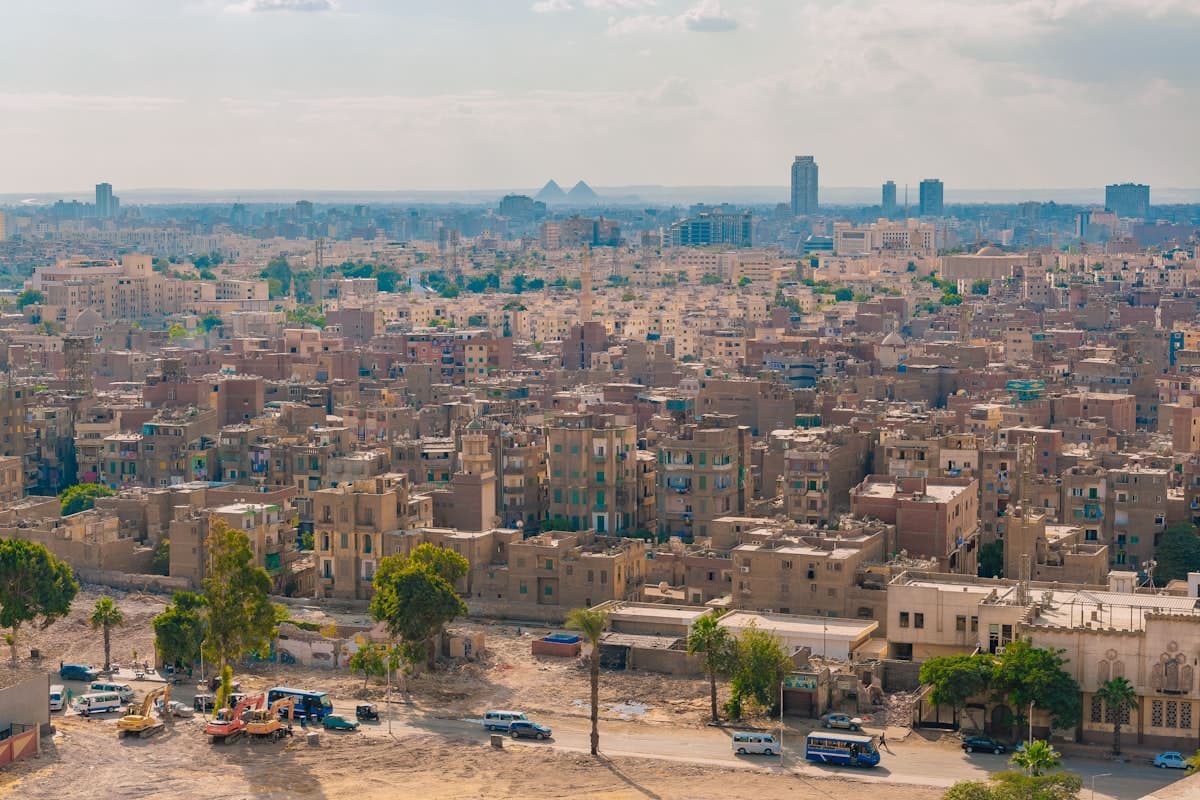
Best time to visit
October to April
Region
Cairo Governorate
Main airport
Cairo Airport (CAI)
Discover
Top Things to Do in Cairo
CultureHistory
Grand Egyptian Museum
The Grand Egyptian Museum near Giza is the largest archaeological museum in the world, housing more than 100,000 artefacts including the complete treasures of Tutankhamun. The centrepiece is a monumental atrium containing a 12-metre-tall statue of Ramses II, setting the tone for one of the most ambitious cultural projects in Egypt's modern history.
UNESCO World HeritageCultureHistoryCity
Khan el-Khalili Bazaar
Established in the 14th century in the heart of Islamic Cairo, Khan el-Khalili is one of the oldest and largest souks in the Middle East, a labyrinth of narrow lanes filled with merchants selling spices, jewellery, textiles, perfumes, and hand-crafted goods. The surrounding neighbourhood of Al-Muizz Street contains some of the finest medieval Islamic architecture in the world, with ornate mosques, mausoleums, and caravanserais dating back over 1,000 years.
Beyond the City
Day Trips from Cairo
UNESCO World HeritageHistory
Pyramids of Giza
The only surviving wonder of the ancient world, the Giza pyramid complex comprises three main pyramids, including the Great Pyramid of Khufu, built around 2560 BC and standing at 138 metres tall. Visitors can explore the surrounding plateau on foot or by camel, descend into the narrow internal chambers of the pyramids, and stand before the Great Sphinx, which has guarded the site for over 4,500 years.
UNESCO World Heritage
Wise
Your bank marks up every USD you spend in Egypt. Wise doesn't.
- No foreign transaction fees
- Free ATM withdrawals up to your limit
- Pay in local currency at the real rate
4.8 ★ App Store·4.8 ★ Google Play
Airalo eSIM
Your phone plan was built for home. This one was built for Egypt.
- No SIM swapping
- No data roaming charges
- Active in minutes
4.7 ★ App Store·4.6 ★ Google Play
Plan Your Trip
Getting Around Cairo
Tours, stays, transfers, and flights — curated partner options are on the way.
Tours & Activities
Skip-the-line tickets, guided tours, and day experiences — curated partner options are on the way.
Coming soonWhere to Stay
Hotels, apartments, and guesthouses across every neighbourhood — booking options are on the way.
Coming soonAirport Transfers
Private and shared rides between the airport and the city centre — partner options are on the way.
Coming soonFlights
Compare fares from hundreds of airlines to find the best route in — search options are on the way.
Coming soonTravel Guide
Frequently Asked Questions About Visiting Egypt
Entry requirements vary by passport; check your specific requirements on the Egypt destination page at Yoogo.
Egypt uses the Egyptian Pound (EGP). Cash is widely preferred, particularly at markets, smaller restaurants, and heritage sites. ATMs are readily available in Cairo, Luxor, and other major tourist cities, and larger hotels and chain restaurants typically accept Visa and Mastercard. It is worth carrying small-denomination notes for tips and everyday purchases.
Egypt's main tourist areas, including Cairo, Luxor, Aswan, and the Red Sea resorts, are generally considered safe for visitors and are heavily policed. Tourist Police officers are present at major attractions and can be reached on 126. As with any destination, travellers should remain aware of their surroundings, avoid poorly lit areas at night, and follow current advice from their government's travel advisory service before and during their trip.
Egypt offers a range of transport options. Overnight sleeper trains connect Cairo with Luxor and Aswan, making for a practical and scenic journey between sites. Domestic flights serve major cities and save considerable time across long distances. In Cairo, the metro is affordable and efficient for navigating the city centre, while ride-hailing apps such as Uber and Careem operate widely. For inter-city travel, private drivers and organised tours are also popular choices.
October through April offers the most comfortable temperatures, with daytime highs typically ranging from 20-28 degrees Celsius across most of the country, making it ideal for sightseeing at outdoor monuments. Summer months (June to August) are intensely hot, particularly in Upper Egypt around Luxor and Aswan, where temperatures regularly exceed 40 degrees Celsius. The Red Sea coast is pleasant year-round for beach and diving holidays.
Arabic is the official language of Egypt. Egyptian Arabic is the local dialect and is widely understood across the Arab world. In tourist areas, hotels, and major attractions, English is commonly spoken by staff and guides. French is also understood in some hotels and cultural institutions. Learning a few basic Arabic greetings, such as 'marhaba' (hello) and 'shukran' (thank you), is warmly appreciated by locals.
Most travel health authorities recommend that visitors are up to date with routine vaccinations, including hepatitis A, typhoid, and tetanus, before travelling to Egypt. Drinking tap water is not recommended; stick to sealed bottled water throughout your trip. Sun protection, including high-SPF sunscreen and a hat, is essential given the intense sun, particularly when visiting open-air monuments. Consult a travel health clinic at least four to six weeks before departure for personalised advice.