←Equatorial Guinea travel guide
Bioko Norte, Equatorial Guinea
Malabo
Spanish colonial charm on a volcanic island in the Gulf of Guinea
CultureHistory & HeritageNature & Outdoors
Malabo sits on the northern tip of Bioko Island, its skyline defined by the twin spires of the Cathedral of Santa Isabel and the greenery of the surrounding volcanic hills. The compact city centre allows visitors to walk between Independence Square, the colonial market halls, and the breezy seafront in a single afternoon.
Check Equatorial Guinea visa requirements →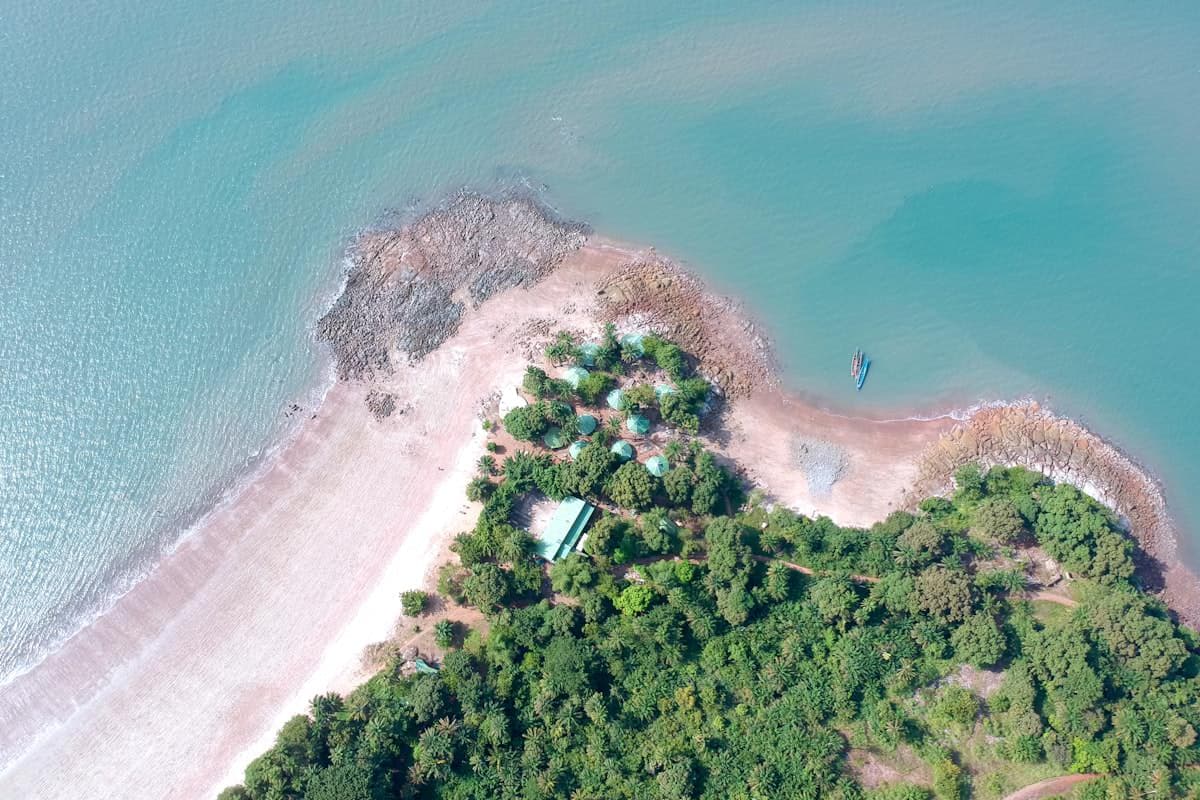
Best time to visit
Dry season (December to February)
Region
Bioko Norte
Main airport
Malabo (SSG)
Discover
Top Things to Do in Malabo
History
Cathedral of Santa Isabel
The Cathedral of Santa Isabel stands on Malabo's Plaza de la Independencia and is one of the most striking examples of Spanish colonial Gothic Revival architecture in Central Africa. Built between 1897 and 1916, the structure features two 40-metre spires that form a landmark visible from much of the city. The square surrounding it, flanked by the Presidential Palace and colonial-era administrative buildings, provides a vivid portrait of the city's layered history.
City
Independence Square, Malabo
Plaza de la Independencia is the historic heart of Malabo, ringed by the Cathedral of Santa Isabel, the Presidential Palace, and a collection of colonial-era administrative facades. The square serves as the civic focal point of the city and the natural starting point for exploring Malabo's compact colonial quarter on foot. The blend of Spanish architectural influences and the animated daily life of the surrounding streets gives the plaza a character that is hard to find elsewhere in the region.
Beyond the City
Day Trips from Malabo
Nature
Pico Basile National Park
Pico Basile rises to 3,011 metres as the highest peak in Equatorial Guinea, dominating the north of Bioko Island within a 30,000-hectare national park formally established in 2000. The park is recognised by BirdLife International as an Important Bird Area and shelters Preuss's monkey, red-eared guenons, black colobus, and numerous endemic species of sunbird. Hikers who reach the summit are rewarded with sweeping panoramas across Bioko Island and, on clear days, towards the Cameroonian coast.
Nature
Ureca Beach
Ureca lies on the remote southern coast of Bioko Island within the Gran Caldera and Southern Highlands Scientific Reserve, its 15 kilometres of black volcanic sand accessible only by rough track or boat. The beaches form one of the most important sea turtle nesting sites in the Gulf of Guinea, receiving leatherback, green, olive ridley, and hawksbill turtles during nesting season. The surrounding rainforest, coastal waterfalls, and near-total isolation make it one of the most remarkable natural landscapes in the country.
Wise
Your bank marks up every USD you spend in Equatorial Guinea. Wise doesn't.
- No foreign transaction fees
- Free ATM withdrawals up to your limit
- Pay in local currency at the real rate
4.8 ★ App Store·4.8 ★ Google Play
Airalo eSIM
Your phone plan was built for home. This one was built for Equatorial Guinea.
- No SIM swapping
- No data roaming charges
- Active in minutes
4.7 ★ App Store·4.6 ★ Google Play
Plan Your Trip
Getting Around Malabo
Tours, stays, transfers, and flights — curated partner options are on the way.
Tours & Activities
Skip-the-line tickets, guided tours, and day experiences — curated partner options are on the way.
Coming soonWhere to Stay
Hotels, apartments, and guesthouses across every neighbourhood — booking options are on the way.
Coming soonAirport Transfers
Private and shared rides between the airport and the city centre — partner options are on the way.
Coming soonFlights
Compare fares from hundreds of airlines to find the best route in — search options are on the way.
Coming soonTravel Guide
Frequently Asked Questions About Visiting Equatorial Guinea
Entry requirements vary by passport. Check the requirements for your specific passport on the Equatorial Guinea page at Yoogo.
The official currency is the Central African CFA franc (XAF), which is pegged to the euro. Equatorial Guinea operates predominantly as a cash economy: credit cards are rarely accepted outside a handful of large hotels, and ATMs are available in Malabo and Bata but are often unreliable, so it is advisable to arrive with sufficient cash.
Most visits to Malabo and Bata pass without serious incident when travellers take standard precautions such as avoiding displays of valuables and travelling in groups after dark. Road conditions outside the two main cities can be poor, and emergency services are limited across much of the country.
Shared taxis are the most practical option within Malabo and Bata, with fares typically around 500 XAF per ride on established routes. Domestic flights connect the two cities several times a week, and passenger ferries run between them as well as to Douala in Cameroon. Outside the main cities, road quality varies considerably and four-wheel-drive vehicles are often necessary.
The dry seasons, broadly December to February and June to August, offer the most comfortable travel conditions with lower rainfall. The wet seasons from March to May and September to November can make road travel more challenging, particularly in the interior of Rio Muni, though the landscapes are lushest during this period.
Equatorial Guinea has three official languages: Spanish, French, and Portuguese, with Spanish being the most widely spoken, particularly in urban areas and for official purposes. A number of Bantu languages, including Fang on the mainland and Bubi on Bioko Island, are spoken by significant portions of the population. English is not widely understood outside international business circles.
Vaccination against yellow fever is required for entry if you are arriving from a country where the disease is endemic, and is broadly recommended for all travellers. Malaria is present throughout the country year-round, so antimalarial medication is advised regardless of itinerary. Hepatitis A, typhoid, and routine vaccinations are also commonly recommended; consult a travel health clinic well before departure.
Tipping is not a deeply embedded formal custom in Equatorial Guinea, though it is welcomed in restaurants, by hotel staff, and for guides when service has been good. A modest gesture of around 5 to 10 per cent of a restaurant bill or a small cash tip for a guide is appropriate and appreciated. In rural areas and local eateries, tipping is less common.