←All destinations
Travel Guide
Visiting Ethiopia
Select your passport to instantly check if you need a visa.
Avoid Some Regions
UK FCDO: FCDO advises against all travel to within:
Updated 2026-01-31
Discover
Top Attractions in Ethiopia
The most iconic and unmissable experiences this country has to offer.
UNESCO World Heritage
Rock-Hewn Churches of Lalibela
Eleven medieval churches, each carved entirely from living rock in the 12th and 13th centuries, form a sacred complex in the Ethiopian Highlands that UNESCO inscribed in 1978. The churches are arranged around a symbolic river called Yordanos, recreating a 'New Jerusalem' in stone, with the cruciform Church of Saint George being the most celebrated. The site remains an active place of worship and pilgrimage, giving visitors the rare experience of encountering a World Heritage Site still fulfilling its original function.
UNESCO World Heritage
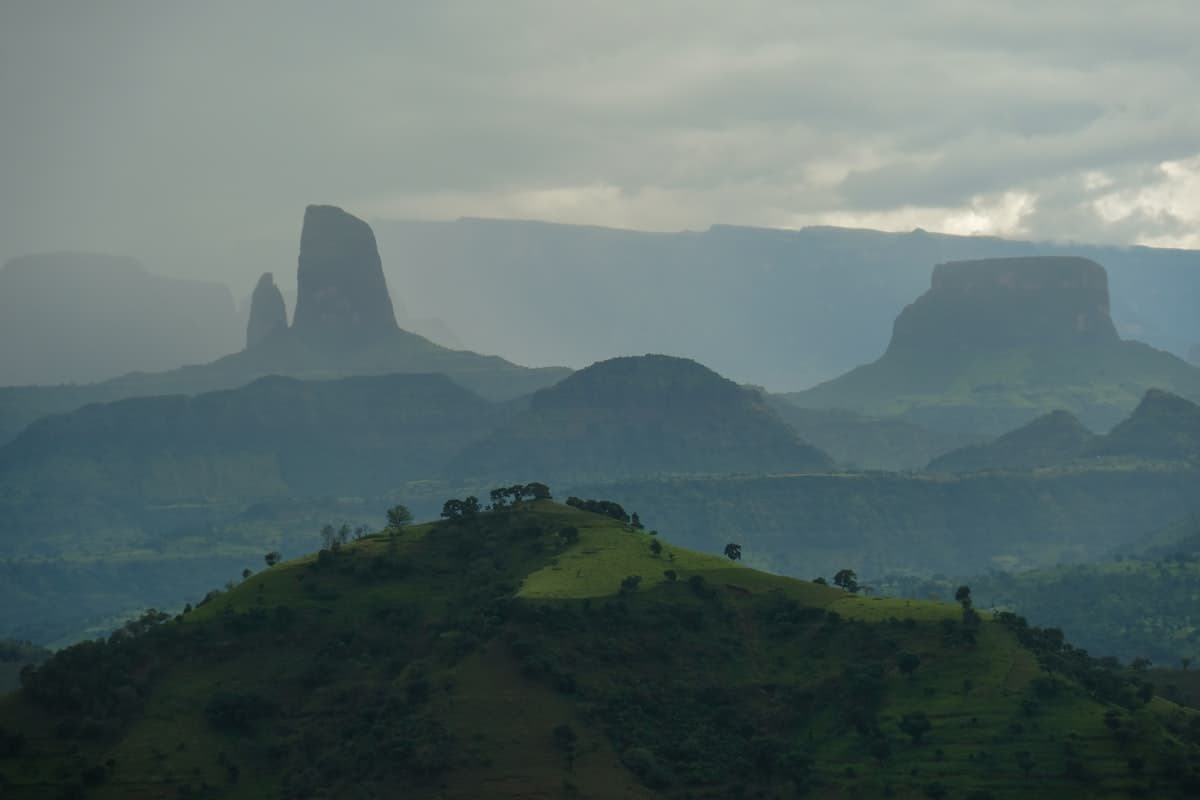
Simien Mountains National Park
Wise
Your bank marks up every USD you spend in Ethiopia. Wise doesn't.
- No foreign transaction fees
- Free ATM withdrawals up to your limit
- Pay in local currency at the real rate
4.8 ★ App Store·4.8 ★ Google Play
Airalo eSIM
Your phone plan was built for home. This one was built for Ethiopia.
- No SIM swapping
- No data roaming charges
- Active in minutes
4.7 ★ App Store·4.6 ★ Google Play
Health & Safety
Health & Emergency Info
Before You Travel
Before you travel check that: your destination can provide the healthcare you may need you have appropriate travel insurance for local treatment or unexpected medical evacuation This is particularly important if you have a health condition or are pregnant. Emergency medical number Dial 907 and ask for an ambulance. Contact your insurance company quickly if you’re referred to a medical facility for treatment. Vaccine recommendations and health risks At least 8 weeks before your trip: check the latest vaccine recommendations for Ethiopia see where to get vaccines and whether you have to pay on t
Full health advice (FCDO) →Emergency Numbers
Police991
Ambulance907
Fire939
Health information sourced from UK FCDO. Always consult a travel health professional before departure.
Practical Info
Travel Essentials
Travel Guide
Frequently Asked Questions About Visiting Ethiopia
Entry requirements vary by passport. Check the requirements for your specific passport on the Ethiopia page at Yoogo.
Ethiopia uses the Ethiopian Birr (ETB), and cash is the dominant payment method throughout the country. Credit and debit cards are accepted at some hotels and larger restaurants in Addis Ababa, but outside the capital you should carry sufficient birr, as ATMs are scarce and card acceptance is limited.
Ethiopia attracts many international visitors each year, particularly to the historic northern circuit and established national parks. Conditions vary significantly by region, so it is worth consulting your government's official travel advisory before your trip and staying informed throughout your stay.
Domestic flights are the most practical way to cover Ethiopia's large distances, connecting Addis Ababa with Lalibela, Gondar, Axum, and other key destinations. Within cities, metered taxis, ride-hailing apps such as Ride and ZayRide, and minibuses are widely available, while organised tours with private vehicles are common for reaching national parks and rural sites.
October to March is generally the most popular period for travel, when the dry season brings clear skies and comfortable temperatures across the highland circuit. The main rainy season runs from June to September, which can disrupt travel on unpaved roads but brings lush landscapes and significantly lower accommodation prices.
Amharic is the national official language and Oromo is the most widely spoken language by population, while more than 80 other languages are in daily use across the country. English is reasonably common in Addis Ababa, at tourist sites, and in hotels throughout the country, but is less reliable in rural areas, where a local guide is a practical asset.
Yellow fever vaccination is required if you are arriving from a country with risk of yellow fever transmission, and proof of vaccination may be checked at the border. Malaria is present in most lowland areas below 2,500 metres, so antimalarial medication is recommended for travel outside highland cities, along with vaccinations for hepatitis A, typhoid, and tetanus as a baseline.
Tipping is not obligatory but is warmly appreciated, particularly in tourist-facing businesses. A tip of around 10 per cent is standard in restaurants accustomed to visitors, while tour guides typically receive 100–200 Birr per day and drivers 50–100 Birr per day as a customary acknowledgement of their work.