←All destinations
Travel Guide
Visiting French Polynesia
Select your passport to instantly check if you need a visa.
Discover
Top Attractions in French Polynesia
The most iconic and unmissable experiences this country has to offer.
Bora Bora Lagoon
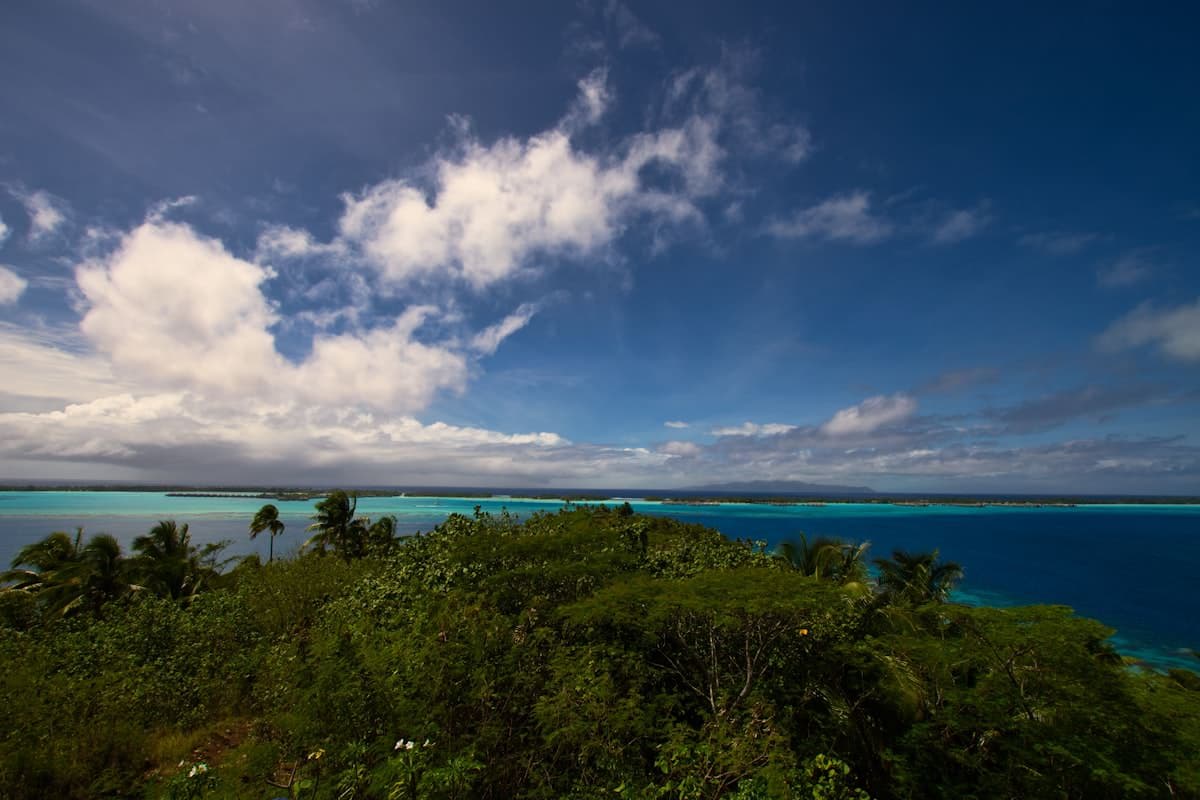
The lagoon encircling Bora Bora is one of the most photographed stretches of water in the Pacific, its clear shallows framing the twin peaks of Mount Otemanu. Glass-bottom boats, snorkelling trips, and overwater bungalows all make the most of the warm, sheltered water.
Matira Beach
Matira Beach is Bora Bora's main public beach, a long curve of soft white sand sloping gently into a calm, swimmable lagoon. It is free to visit, popular at sunset, and one of the few beaches on the island open to everyone rather than reserved for resorts.
Fakarava Biosphere Reserve
UNESCO designated the Fakarava atoll and its neighbours a Biosphere Reserve in 1977, protecting one of the least disturbed lagoon systems in the Pacific. The Garuae pass on the northern rim is the widest navigable pass in French Polynesia, and divers come for the wall of grey reef sharks that gathers in the current.
Te Fare Iamanaha, Museum of Tahiti and the Islands
Polynesia's national museum reopened in Punaauia in March 2023 after a five year rebuild of its permanent galleries. The collection covers all five archipelagos, with sacred objects, navigation tools, and loans from the British Museum and the musee du quai Branly, set in gardens overlooking the lagoon.
Wise
Your bank marks up every USD you spend in French Polynesia. Wise doesn't.
- No foreign transaction fees
- Free ATM withdrawals up to your limit
- Pay in local currency at the real rate
4.8 ★ App Store·4.8 ★ Google Play
Airalo eSIM
Your phone plan was built for home. This one was built for French Polynesia.
- No SIM swapping
- No data roaming charges
- Active in minutes
4.7 ★ App Store·4.6 ★ Google Play
Where to Go
Top Cities to Visit in French Polynesia
Health & Safety
Health & Emergency Info
Before You Travel
Before you travel check that: your destination can provide the healthcare you may need you have appropriate travel insurance for local treatment or unexpected medical evacuation This is particularly important if you have a health condition or are pregnant. Emergency medical number Call 15 (or 4048 5906 from a landline) and ask for an ambulance. Contact your insurance company quickly if you’re referred to a medical facility for treatment. Vaccine recommendations and health risks At least 8 weeks before your trip: check the latest vaccine recommendations for French Polynesia see where to get vac
Full health advice (FCDO) →Emergency Numbers
Police17
Ambulance15
Fire18
Health information sourced from UK FCDO. Always consult a travel health professional before departure.
Practical Info
Travel Essentials
Travel Guide
Frequently Asked Questions About Visiting French Polynesia
Entry requirements depend on your passport nationality and the length of your stay. French Polynesia sets its own entry rules as a French overseas collectivity, so check your specific requirements on the French Polynesia destination page at Yoogo before you book.
The local currency is the CFP franc (XPF), used across French Polynesia, New Caledonia, and Wallis and Futuna. Major hotels, restaurants, and shops in Papeete and the main tourist islands accept cards, though it is wise to carry cash for smaller islands, markets, and family-run pensions.
French Polynesia is generally a safe destination with low levels of violent crime. Take the usual precautions with valuables, respect ocean conditions and lagoon currents, and follow local guidance when hiking or diving.
Inter-island travel relies on domestic flights and ferries, with regular boats linking Tahiti to Moorea and flights serving Bora Bora and the outer archipelagos. On the larger islands you can hire a car, use local buses, or rely on taxis, though services are limited outside the main towns.
The dry season from May to October brings cooler, less humid weather and is the most popular time to visit. The wetter season from November to April is warmer with occasional heavy showers, though it can still offer good value and quieter beaches.
French is the official language and is used in government, business, and most signage, while Tahitian and other Polynesian languages are widely spoken. English is understood in many hotels and tourist businesses, though learning a few words of French or Tahitian is appreciated.
No vaccinations are routinely required for entry, but you should be up to date with standard immunisations and check current health guidance before travelling. Mosquito-borne illnesses such as dengue can occur, so pack repellent and consider protective clothing in the evenings.
Tipping is not a strong part of local culture and is never obligatory, as service is usually included in the price. A small tip for exceptional service is welcomed but not expected.
Mobile coverage is good on Tahiti, Moorea, and Bora Bora, though it can be patchy on remote atolls. A local SIM or an eSIM from a provider such as Airalo is often the most economical way to stay connected, since international roaming can be costly.
Polynesian culture places great value on warmth, respect, and a relaxed sense of time, so greetings and patience go a long way. Dress modestly when visiting villages or churches, ask before photographing people, and treat marae and other sacred sites with care.