←Grenada travel guide
Saint George Parish, Grenada
St. George's
A horseshoe harbour ringed by Georgian townhouses and sea-worn forts
BeachesCultureHistory & HeritageScenic Views
St. George's is the capital of Grenada and widely regarded as one of the most picturesque harbour towns in the Caribbean, its colourful hillside buildings reflected in the calm waters of the Carenage. The town blends French and British colonial architecture with a lively waterfront market, historic forts, and a compact grid of streets where spice stalls and rum shops sit side by side.
Check Grenada visa requirements →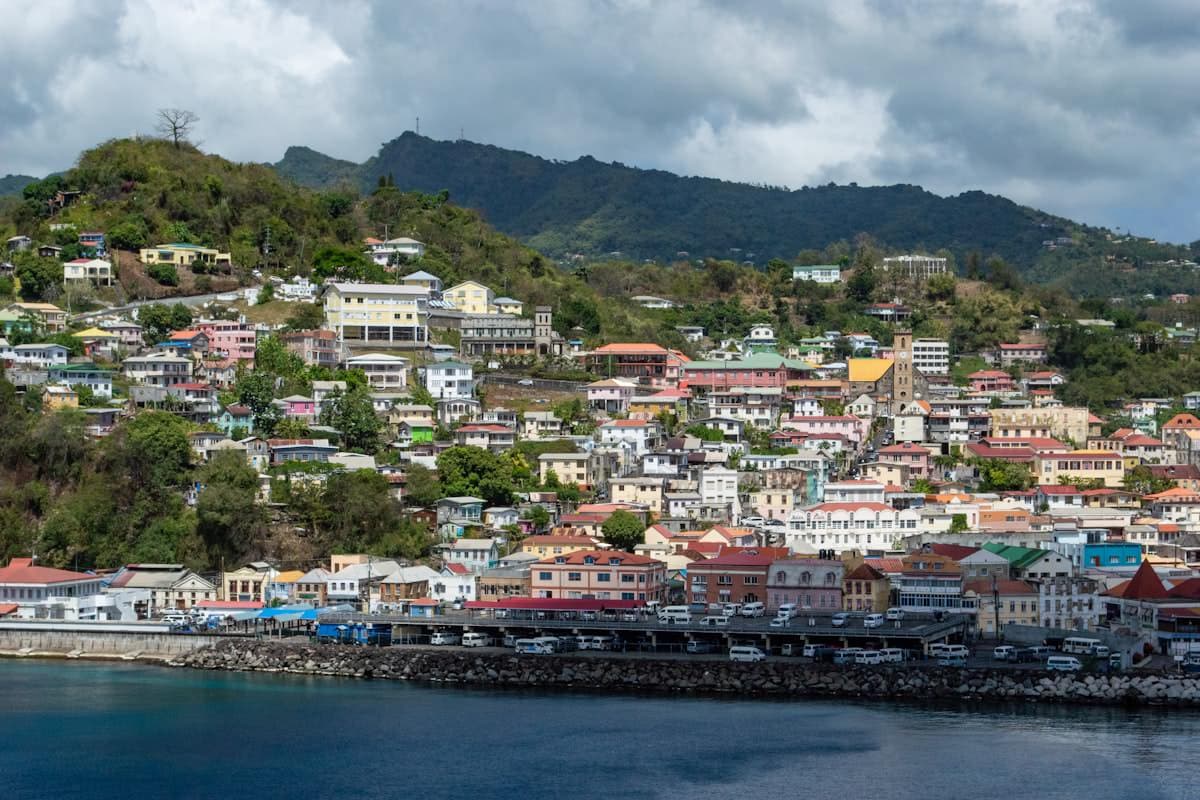
Best time to visit
December to April
Region
Saint George Parish
Main airport
Grenada GND (GND)
Discover
Top Things to Do in St. George's
Nature
Grand Anse Beach
Grand Anse Beach stretches for roughly three kilometres along Grenada's south-western shore, offering a long sweep of powdery white sand backed by palm trees and calm, turquoise Caribbean water. The beach is regularly cited among the finest in the Caribbean, and its gently shelving seabed makes it well suited for swimming, snorkelling, and paddleboarding. A craft and spice market at the northern end of the beach provides a chance to browse locally made goods without leaving the waterfront.
History
Fort George
Fort George stands on a headland above the entrance to St. George's Harbour and was originally constructed by the French in 1705 under the name Fort Royal. The fort's thick stone walls, cannon emplacements, and underground tunnels have survived more than three centuries and offer some of the most commanding views over the capital and the surrounding coastline. The site also holds significance in modern Grenadian history, having been a focal point of events during the 1983 political crisis.
Beyond the City
Day Trips from St. George's
Nature
Grand Etang National Park
Grand Etang National Park covers more than 1,200 hectares of tropical rainforest in the mountains at the centre of the island, with the crater lake of Grand Etang sitting at roughly 530 metres above sea level as its centrepiece. Hiking trails range from easy lakeside walks to more demanding routes such as the Seven Sisters Falls trail, where a series of cascading waterfalls empty into swimming pools. The park is home to Mona monkeys, more than 40 bird species, and dense forest of mahogany and gommier trees.
Culture
Grenada Underwater Sculpture Park
Located in the Moliniere-Beausejour Marine Protected Area just north of St. George's, this park was established in 2006 by British sculptor Jason deCaires Taylor and features more than 100 concrete sculptures installed on the seabed at depths accessible to both snorkellers and divers. The works depict human figures and cultural scenes, their surfaces now colonised by coral and marine life, creating a living reef that grows and changes over time. It is recognised as the world's first underwater sculpture park.
Wise
Your bank marks up every USD you spend in Grenada. Wise doesn't.
- No foreign transaction fees
- Free ATM withdrawals up to your limit
- Pay in local currency at the real rate
4.8 ★ App Store·4.8 ★ Google Play
Airalo eSIM
Your phone plan was built for home. This one was built for Grenada.
- No SIM swapping
- No data roaming charges
- Active in minutes
4.7 ★ App Store·4.6 ★ Google Play
Plan Your Trip
Getting Around St. George's
Tours, stays, transfers, and flights — curated partner options are on the way.
Tours & Activities
Skip-the-line tickets, guided tours, and day experiences — curated partner options are on the way.
Coming soonWhere to Stay
Hotels, apartments, and guesthouses across every neighbourhood — booking options are on the way.
Coming soonAirport Transfers
Private and shared rides between the airport and the city centre — partner options are on the way.
Coming soonFlights
Compare fares from hundreds of airlines to find the best route in — search options are on the way.
Coming soonTravel Guide
Frequently Asked Questions About Visiting Grenada
Entry requirements vary by passport. Check the requirements for your specific passport on the Grenada page at Yoogo.
Grenada uses the Eastern Caribbean dollar (XCD), which is pegged to the US dollar at a fixed rate of approximately 2.70 XCD to 1 USD. US dollars are widely accepted in tourist areas, and credit cards are accepted at most hotels, restaurants, and larger shops, though carrying some local cash is advisable for markets, minibuses, and smaller vendors.
Grenada is generally considered one of the safer destinations in the Caribbean, with most visitors experiencing no difficulties during their stay. Petty theft such as bag snatching can occur in busy areas like markets and beaches, so it is sensible to keep valuables secure and be aware of your surroundings, particularly after dark.
Minibuses are the main form of public transport on the island, following set routes and operating at low cost, though they can be crowded and schedules are informal. Taxis are widely available and commonly used by visitors, and rental cars give the most flexibility for exploring the island, though note that driving is on the left and a local driving permit is required in addition to a foreign licence.
The dry season from January to May is generally considered the best time to visit, offering the most reliable sunshine, lower humidity, and calm sea conditions. The wet season runs from June to December and coincides with the Atlantic hurricane season, with the greatest risk of tropical storms occurring between July and November.
English is the official language of Grenada and is spoken throughout the island in government, business, and everyday life. Grenadian Creole, a French-influenced English-based creole, is also widely used in informal settings and reflects the island's mixed colonial heritage.
No vaccinations are legally required for entry to Grenada unless you are arriving from a country with a risk of yellow fever, in which case proof of yellow fever vaccination is needed. Health authorities commonly recommend ensuring routine vaccinations are up to date and may advise hepatitis A, typhoid, and hepatitis B vaccinations depending on individual circumstances and planned activities; consulting a travel health clinic at least four to six weeks before departure is advisable.
Tipping is appreciated but not obligatory in Grenada. A gratuity of 10 to 15 per cent is a reasonable gesture in restaurants when a service charge has not already been added to the bill, and small tips for taxi drivers and hotel staff are welcomed.