←Guatemala travel guide
Sacatepéquez Department, Guatemala
Antigua Guatemala
Colonial spires, cobblestones, and volcanoes on every horizon
ArchitectureCultureHistory & HeritageScenic Views
Antigua is Central America's most intact Spanish colonial city, where baroque churches, pastel mansions, and earthquake-softened ruins line a grid of cobblestone streets framed by three volcanoes. The city served as Guatemala's capital for over two centuries and was inscribed as a UNESCO World Heritage Site in 1979, preserving a skyline largely unchanged since the 17th and 18th centuries.
Check Guatemala visa requirements →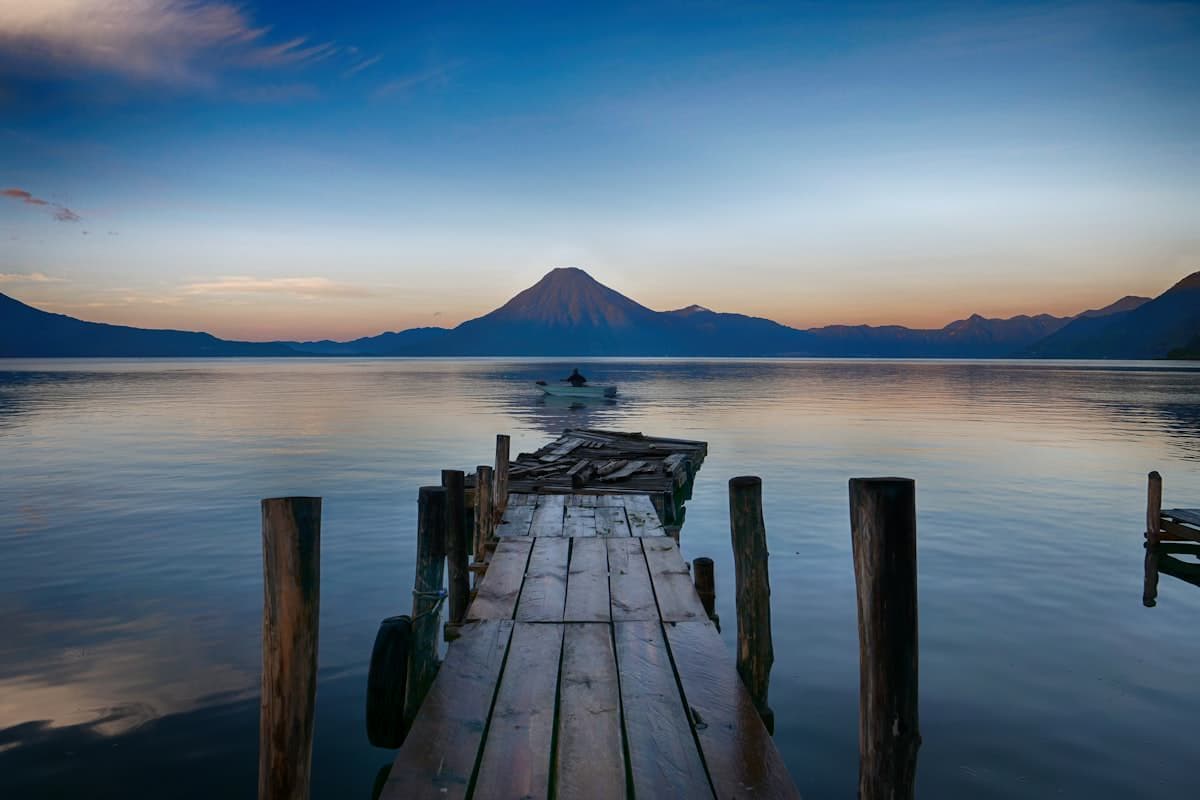
Best time to visit
Dry season (November to April)
Region
Sacatepéquez Department
Main airport
Guatemala City GUA (GUA)
Beyond the City
Day Trips from Antigua Guatemala
Nature
Lake Atitlan
Lake Atitlan is a volcanic caldera lake in the western highlands, formed 84,000 years ago and ringed by three volcanoes and a chain of indigenous Maya villages, each with its own distinct Tz'utujil or Kaqchikel character. Sitting at 1,562 metres above sea level, the lake is considered the deepest in Central America at up to 340 metres, and travellers move between villages by public lancha (boat) to experience markets, weaving cooperatives, and lakeshore cafes. Panajachel is the main transport hub, while Santiago Atitlan and San Pedro La Laguna offer traditional culture and long-stay communities respectively.
Culture
Chichicastenango Market
The market at Chichicastenango, held every Thursday and Sunday in the western highlands town of the same name, is one of the largest and oldest continuously operating indigenous markets in Central America. K'iche' Maya artisans and traders from surrounding highland communities sell handwoven huipiles (embroidered blouses), carved wooden masks, ceramics, incense, and fresh produce across a dense warren of market stalls that spill up the steps of the Santo Tomas church. The town, at over 2,000 metres altitude, has a population that is more than 98 per cent K'iche' Maya and retains deep ceremonial traditions alongside its commercial life.
Wise
Your bank marks up every USD you spend in Guatemala. Wise doesn't.
- No foreign transaction fees
- Free ATM withdrawals up to your limit
- Pay in local currency at the real rate
4.8 ★ App Store·4.8 ★ Google Play
Airalo eSIM
Your phone plan was built for home. This one was built for Guatemala.
- No SIM swapping
- No data roaming charges
- Active in minutes
4.7 ★ App Store·4.6 ★ Google Play
Plan Your Trip
Getting Around Antigua Guatemala
Tours, stays, transfers, and flights — curated partner options are on the way.
Tours & Activities
Skip-the-line tickets, guided tours, and day experiences — curated partner options are on the way.
Coming soonWhere to Stay
Hotels, apartments, and guesthouses across every neighbourhood — booking options are on the way.
Coming soonAirport Transfers
Private and shared rides between the airport and the city centre — partner options are on the way.
Coming soonFlights
Compare fares from hundreds of airlines to find the best route in — search options are on the way.
Coming soonTravel Guide
Frequently Asked Questions About Visiting Guatemala
Entry requirements vary by passport. Check the requirements for your specific passport on the Guatemala page at Yoogo.
Guatemala's currency is the Guatemalan Quetzal (GTQ). US dollars are widely accepted at tourist-oriented hotels and larger restaurants, but smaller establishments, markets, and rural areas operate almost exclusively in cash Quetzales, so it is advisable to carry local currency. ATMs are available in major cities and tourist towns such as Antigua and Panajachel, though machines in smaller villages can be unreliable.
Safety conditions vary considerably by location. Major tourist destinations such as Antigua, Lake Atitlan, Flores, and Tikal are generally well-visited and have tourist police presence, while certain zones of Guatemala City and border areas carry higher risks. Petty theft is the most common concern in tourist areas, and checking your government's current travel advisory before and during your trip is advisable.
The most common options for travellers are tourist shuttle minibuses, which connect all major destinations with door-to-door service, and the colourfully repainted school buses known as chicken buses (camionetas), which are the cheapest way to travel between towns. Tuk-tuks serve short hops within towns, while lanchas (small boats) are the main way to move between villages on Lake Atitlan. Domestic flights link Guatemala City to Flores for those heading to Tikal.
The dry season from November to April is generally considered the most comfortable time to visit, with clear skies, warm days, and cooler evenings in the highland areas, making it ideal for visiting outdoor sites such as Tikal and hiking around Lake Atitlan. The wet season (May to October) brings afternoon rains, lush green landscapes, fewer tourists, and lower hotel rates, with mornings typically remaining dry. The Christmas and Semana Santa (Holy Week) periods are peak travel times with higher prices and larger crowds.
Spanish is the official language and is spoken across the country, understood by around 93 per cent of the population as a first or second language. Guatemala also recognises 21 Mayan languages, the most widely spoken of which are K'iche', Q'eqchi', Mam, and Kaqchikel, and these remain in everyday use in highland and rural indigenous communities. Basic Spanish phrases are helpful outside Antigua and other tourist hubs, where English is spoken at many hotels and tour operators.
Most travel health authorities recommend that visitors ensure routine vaccinations are current and consider additional vaccines for hepatitis A, typhoid, and hepatitis B before travelling. Travellers arriving from countries with a risk of yellow fever transmission are required to present a valid yellow fever vaccination certificate. Tap water is generally not safe to drink outside major hotels, so bottled or treated water is the standard precaution throughout the country.