Les Cayes is the main city of Haiti's southern peninsula, a low-slung port town on a wide coastal plain. It is the departure point for boats to Ile-a-Vache and the road west to the sands at Port-Salut.
Check Haiti visa requirements →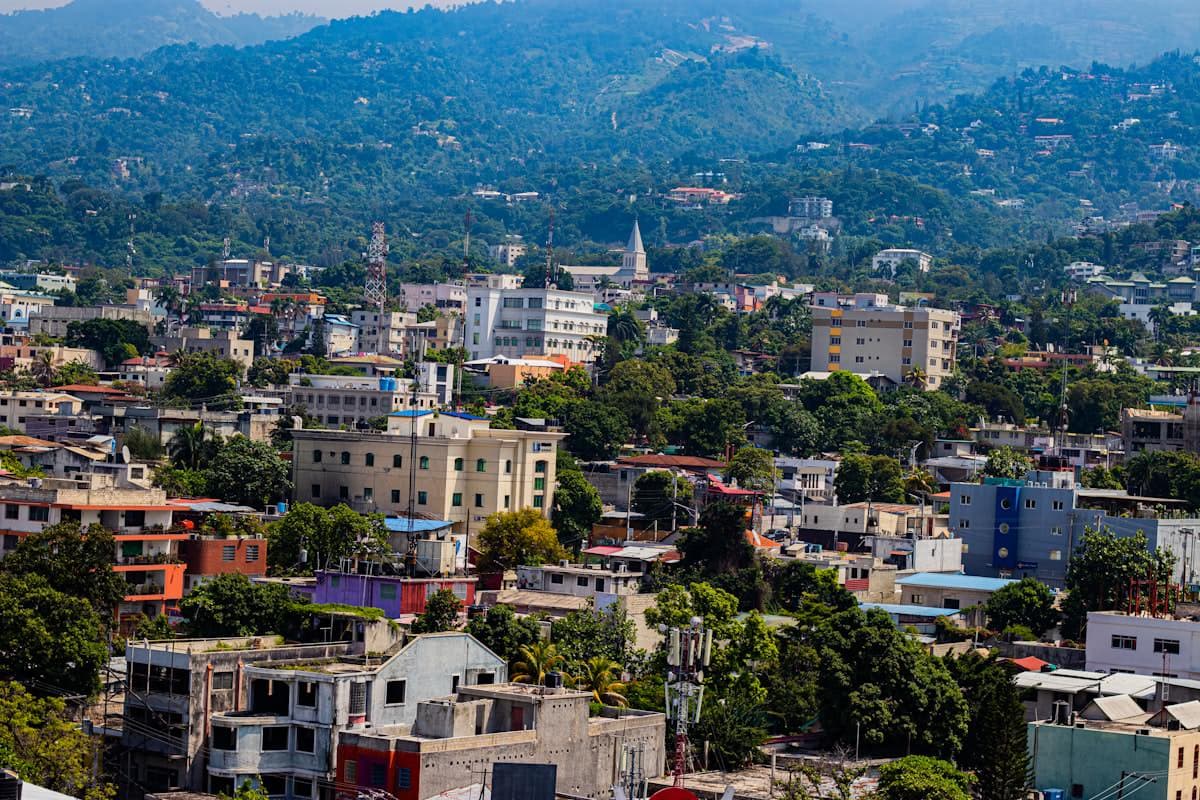
Wise
Your bank marks up every USD you spend in Haiti. Wise doesn't.
- No foreign transaction fees
- Free ATM withdrawals up to your limit
- Pay in local currency at the real rate
4.8 ★ App Store·4.8 ★ Google Play
Airalo eSIM
Your phone plan was built for home. This one was built for Haiti.
- No SIM swapping
- No data roaming charges
- Active in minutes
4.7 ★ App Store·4.6 ★ Google Play
Plan Your Trip
Getting Around Les Cayes
Tours, stays, transfers, and flights — curated partner options are on the way.
Tours & Activities
Skip-the-line tickets, guided tours, and day experiences — curated partner options are on the way.
Coming soonWhere to Stay
Hotels, apartments, and guesthouses across every neighbourhood — booking options are on the way.
Coming soonAirport Transfers
Private and shared rides between the airport and the city centre — partner options are on the way.
Coming soonFlights
Compare fares from hundreds of airlines to find the best route in — search options are on the way.
Coming soonTravel Guide
Frequently Asked Questions About Visiting Haiti
Entry requirements vary by passport. Check the requirements for your specific passport on the Haiti page at Yoogo.
The official currency is the Haitian Gourde (HTG), though US dollars are widely accepted in hotels, larger restaurants, and tourist areas. Card acceptance is limited outside of upscale establishments, so carrying cash in both currencies is advisable.
Haiti faces significant security challenges, and several governments advise against non-essential travel to much of the country. Travellers should consult their government's current travel advisory and review the safety information on this site before making plans.
The most common form of public transport is the 'tap-tap', a brightly painted shared minibus or pickup truck that follows set routes for a very low fare. Moto-taxis (motorcycle taxis) are also widely used for short urban journeys, while private car hire with a local driver is available for longer distances.
The dry season from November to April offers the most reliable weather for travel, with lower rainfall and comfortable temperatures typically in the high 20s Celsius. This period also coincides with Haiti's vibrant carnival season in February and March, making it the liveliest time to visit.
Haiti has two official languages: Haitian Creole, which is spoken by virtually the entire population, and French, which is used in formal settings, education, and government. Basic French is useful in cities, but Haitian Creole is the everyday language, and learning a few phrases will be warmly received.
The CDC and international health authorities recommend vaccination against hepatitis A, typhoid, and cholera for most travellers, with hepatitis B and rabies vaccines advised depending on your planned activities. Malaria prevention is recommended for many areas, and proof of yellow fever vaccination is required if you are arriving from a country at risk for yellow fever transmission.
Tipping is customary and appreciated in Haiti, particularly in restaurants and for guided tours and taxi services. A tip of around 10 per cent is standard in restaurants where a service charge has not already been included.
Haiti's two main mobile operators are Digicel and Natcom, both offering prepaid SIM cards at low cost that provide 4G coverage in urban areas and along main routes. International eSIMs from providers such as Airalo can also be used in Haiti for travellers who prefer not to swap physical SIMs, though local SIM cards typically offer better data value.