←Hungary travel guide
Budapest, Hungary
Budapest
Baroque grandeur, thermal springs, and ruin bars on the Danube
ArchitectureHistory & HeritageNightlifeWellness & Spa
Budapest straddles the Danube River, with the hilly Buda side crowned by a medieval castle district and the flat Pest side housing grand boulevards and a lively café culture. The city's network of thermal bathhouses, built over natural hot springs, has drawn visitors for centuries.
Check Hungary visa requirements →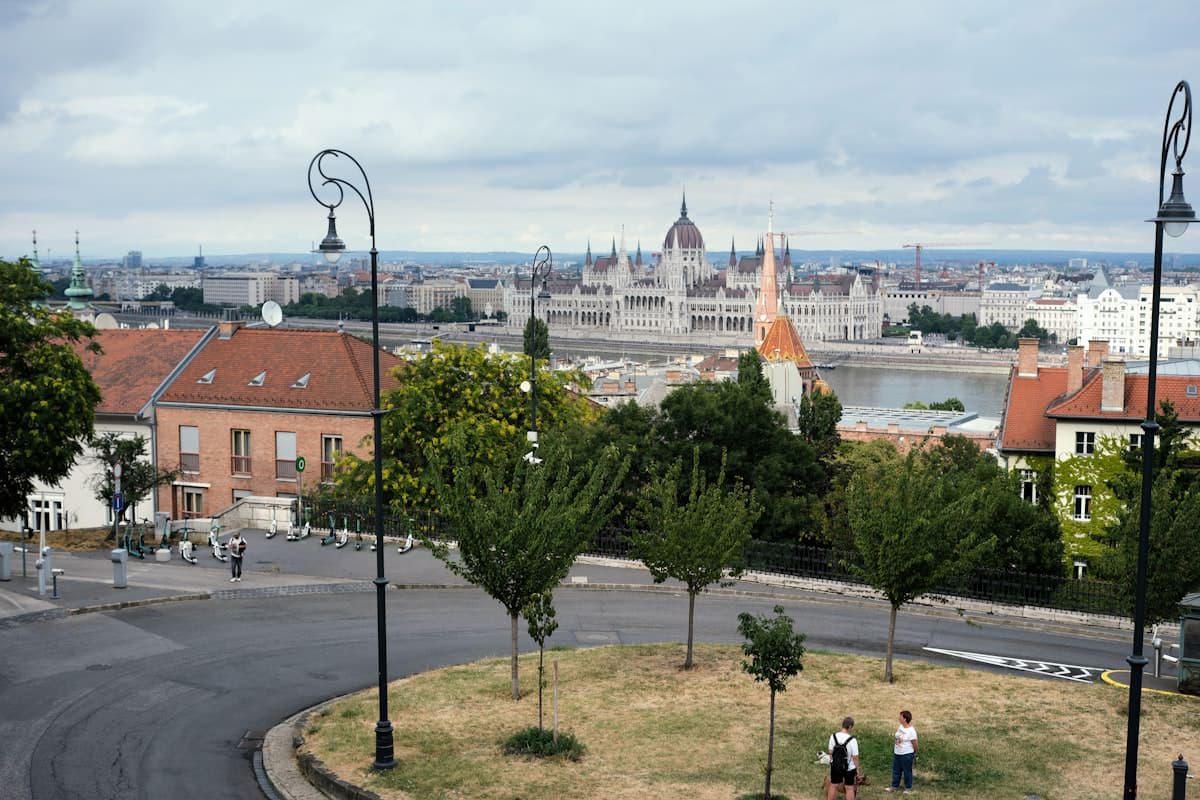
Best time to visit
April to June and September to October
Region
Budapest
Main airport
Budapest BUD (BUD)
Discover
Top Things to Do in Budapest
UNESCO World HeritageHistory
Budapest Castle District and Danube Banks
The Castle District on Buda's limestone plateau holds an eight-hundred-year-old complex of royal palaces, Gothic churches, and cobblestone lanes that together form a UNESCO World Heritage Site inscribed in 1987 and expanded in 2002. From the terrace of Fisherman's Bastion, visitors take in a panoramic view across the Danube to the Hungarian Parliament Building on the opposite bank. Andrássy Avenue, the grand boulevard leading from the inner city to Heroes' Square, rounds out the UNESCO-listed ensemble with a succession of opera houses, academies, and museums.
Culture
Széchenyi Thermal Bath
Széchenyi Thermal Bath, opened in 1913 in the neo-baroque style, is one of the largest thermal bath complexes in Europe, with fifteen indoor pools and three outdoor pools fed by natural hot springs reaching 74 degrees Celsius. The grand yellow building in City Park has become one of Budapest's most visited and recognisable landmarks. Visitors come to soak in the naturally heated waters, use the steam rooms and saunas, or simply take in the spectacle of outdoor chess matches conducted from the pool.
Wise
Your bank marks up every USD you spend in Hungary. Wise doesn't.
- No foreign transaction fees
- Free ATM withdrawals up to your limit
- Pay in local currency at the real rate
4.8 ★ App Store·4.8 ★ Google Play
Airalo eSIM
Your phone plan was built for home. This one was built for Hungary.
- No SIM swapping
- No data roaming charges
- Active in minutes
4.7 ★ App Store·4.6 ★ Google Play
Plan Your Trip
Getting Around Budapest
Tours, stays, transfers, and flights — curated partner options are on the way.
Tours & Activities
Skip-the-line tickets, guided tours, and day experiences — curated partner options are on the way.
Coming soonWhere to Stay
Hotels, apartments, and guesthouses across every neighbourhood — booking options are on the way.
Coming soonAirport Transfers
Private and shared rides between the airport and the city centre — partner options are on the way.
Coming soonFlights
Compare fares from hundreds of airlines to find the best route in — search options are on the way.
Coming soonTravel Guide
Frequently Asked Questions About Visiting Hungary
Entry requirements vary by passport. Check the requirements for your specific passport on the Hungary page at Yoogo.
Hungary uses the Hungarian forint (HUF), and despite being an EU member, it has not adopted the euro. Card payments are widely accepted in cities and larger towns, but it is advisable to carry some cash for smaller establishments, markets, and rural areas.
Hungary is generally considered a safe destination, with low rates of violent crime. Travellers should exercise normal precautions in busy tourist areas of Budapest, where pickpocketing can occur around major landmarks and public transport.
Budapest has an extensive public transport network of metro lines, trams, and buses. Intercity rail services connect the capital to most regional cities, with MÁV (Hungarian State Railways) operating frequent routes. Car hire is practical for exploring rural areas such as the Tokaj wine region and the Hortobágy puszta.
Spring (April to June) and early autumn (September to October) offer mild temperatures and fewer crowds, making them ideal for sightseeing in Budapest and exploring the countryside. Summer (July to August) is the peak season for Lake Balaton, though temperatures in cities can reach 35 degrees Celsius.
Hungarian (Magyar) is the official language, a Finno-Ugric language unrelated to most European tongues and considered challenging to learn. English is widely understood in Budapest's hospitality and tourism sectors, though knowledge is more limited in smaller towns and rural areas.
No specific vaccinations are required for entry into Hungary, and the country has a well-functioning public healthcare system. EU/EEA citizens should carry a European Health Insurance Card (EHIC), while non-EU travellers are advised to arrange comprehensive travel health insurance before departure.
Tipping is customary in Hungary, particularly in restaurants, where 10–15 per cent of the bill is the norm. Rather than leaving cash on the table, it is standard practice to tell the server the total you wish to pay when settling the bill. Rounding up the fare is appreciated for taxis.
Hungary has good 4G coverage across cities and major routes, with 5G available in Budapest and other urban centres. Travellers from outside the EU can use an eSIM from a provider such as Airalo for convenient data access without swapping a physical SIM card.