Attraction in India
Hampi
UNESCO World Heritage
A UNESCO World Heritage Site in Karnataka — the ruins of the Vijayanagara Empire spread across a dramatic landscape of giant boulders and banana plantations.
Wise
Your bank marks up every USD you spend in India. Wise doesn't.
- No foreign transaction fees
- Free ATM withdrawals up to your limit
- Pay in local currency at the real rate
4.8 ★ App Store·4.8 ★ Google Play
Airalo eSIM
Your phone plan was built for home. This one was built for India.
- No SIM swapping
- No data roaming charges
- Active in minutes
4.7 ★ App Store·4.6 ★ Google Play
Travel Guide
Frequently Asked Questions About Visiting India
Yes. Most foreign nationals require a visa to enter India. An e-Visa (eTV) is available for tourism for citizens of over 160 countries — apply online before travel. Citizens of Nepal and Bhutan are exempt.
India's tourist e-Visa typically allows stays of up to 90 days per visit (30 days for Pakistani nationals). The e-Visa is valid for 365 days from the date of issue and allows double entry.
A valid passport with at least 6 months validity, a printed copy of your e-Visa approval, return or onward travel details, a passport-sized photograph, and evidence of sufficient funds.
India is generally safe for tourists. Millions of visitors travel safely each year. Petty theft is the most common issue. Solo female travellers should take additional precautions, particularly at night and in rural areas. Read specific destination advice for the regions you plan to visit.
The Indian Rupee (INR, symbol ₹). Cash is still widely used — ensure you carry enough rupees, particularly in rural areas. ATMs are common in cities but less reliable in smaller towns.
India has 22 constitutionally recognised languages. Hindi is the most widely spoken and English is used widely for government, business, education, and tourism.
October to March is the ideal time for most of India — cool and dry across the plains and hill stations. Avoid the monsoon season (June–September) for northern sightseeing, though it can be spectacular in Kerala and Goa. Summer (April–June) is very hot in the plains.
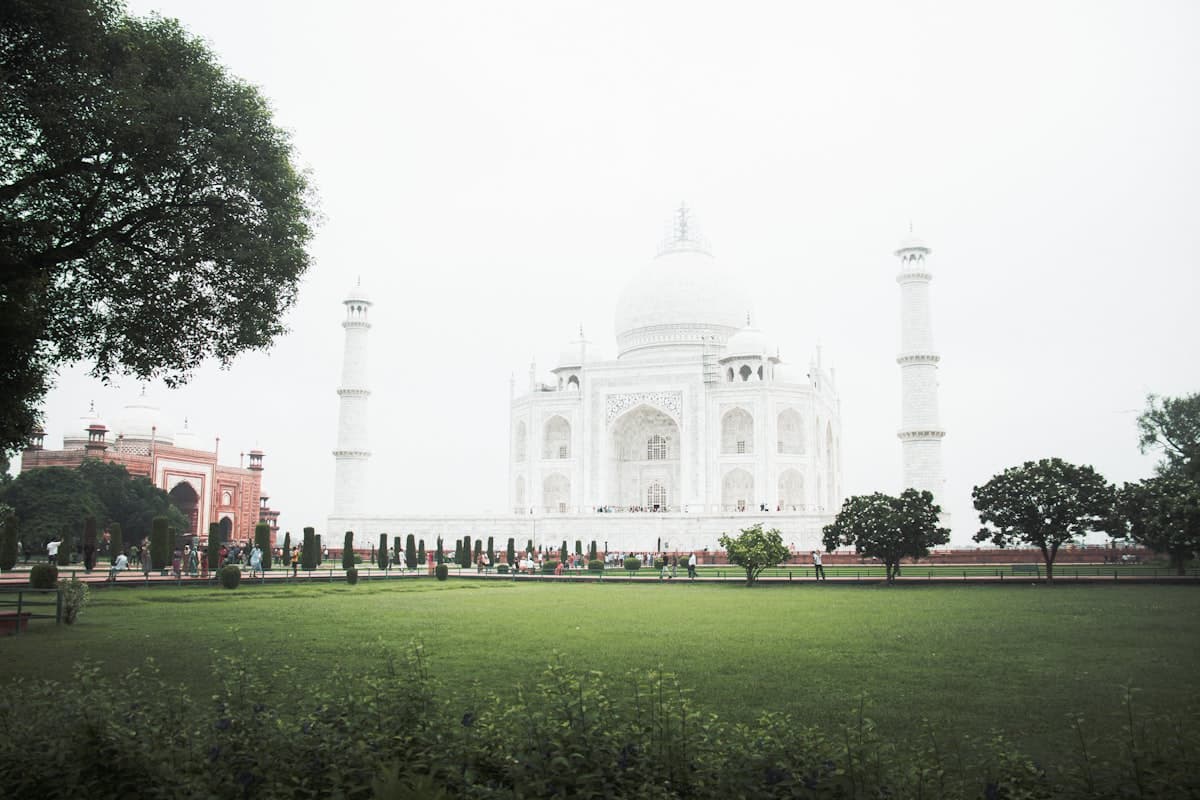
Visit the Taj Mahal at sunrise, witness the Varanasi ghats ceremonies, explore Rajasthan's forts and palaces, take a Kerala houseboat cruise, spot tigers in a wildlife reserve, hike in the Himalayas, explore the temples of Hampi, and experience a local festival.
Indira Gandhi International Airport (DEL) in New Delhi and Chhatrapati Shivaji Maharaj International Airport (BOM) in Mumbai are the primary international hubs. Bengaluru (BLR) and Chennai (MAA) also handle significant international traffic.
Yes, strongly recommended. Medical facilities are excellent in major cities but limited in rural areas. A policy covering emergency medical evacuation is advisable.
Yellow fever vaccination is required if arriving from a yellow fever zone. Hepatitis A, typhoid, and tetanus vaccinations are strongly recommended. Malaria prophylaxis is advisable for travel to certain regions.