Attraction in Israel
Old City of Jerusalem
UNESCO World Heritage
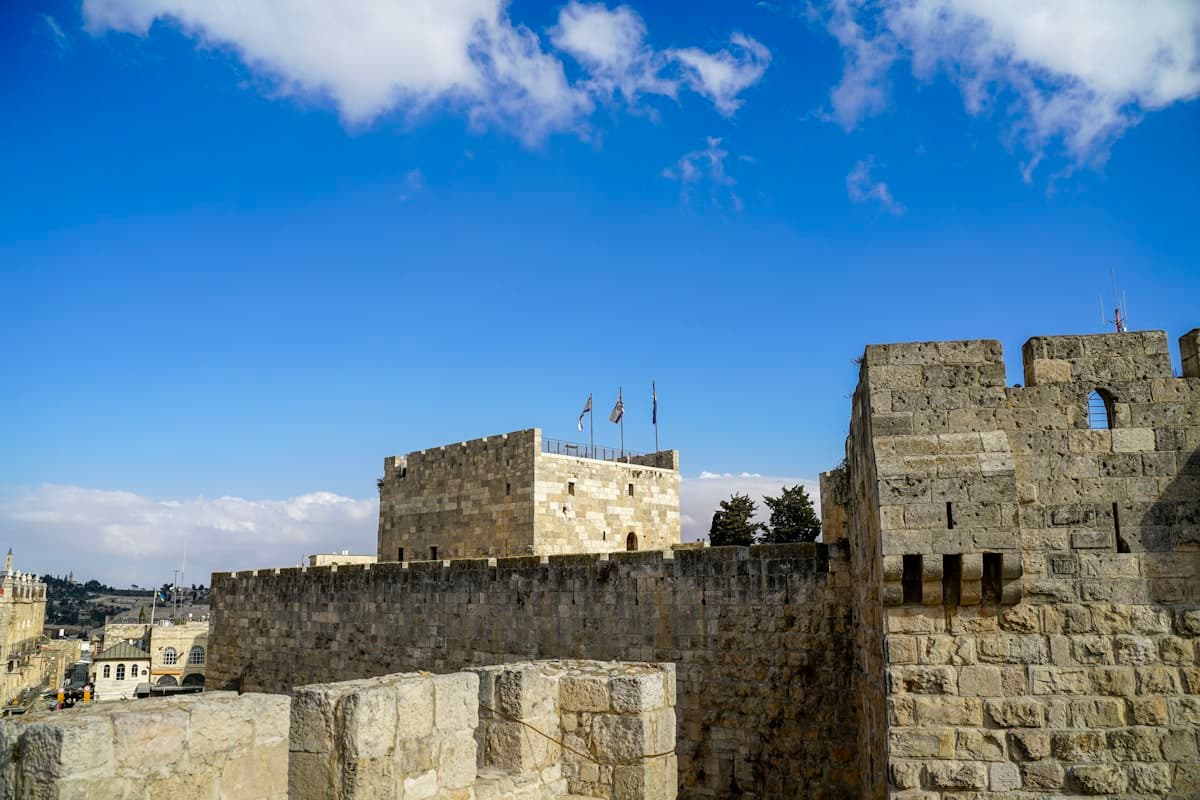
Enclosed within medieval walls, the Old City of Jerusalem is one of the most concentrated accumulations of religious and historical sites on earth, home to the Western Wall, the Church of the Holy Sepulchre, and the Dome of the Rock. Its four quarters, Jewish, Christian, Muslim, and Armenian, are threaded by narrow stone lanes lined with markets, shrines, and ancient institutions. Visitors can walk the Via Dolorosa, climb the ramparts, or simply absorb the atmosphere of a place that has drawn pilgrims and travellers for thousands of years.
Wise
Your bank marks up every USD you spend in Israel. Wise doesn't.
- No foreign transaction fees
- Free ATM withdrawals up to your limit
- Pay in local currency at the real rate
4.8 ★ App Store·4.8 ★ Google Play
Airalo eSIM
Your phone plan was built for home. This one was built for Israel.
- No SIM swapping
- No data roaming charges
- Active in minutes
4.7 ★ App Store·4.6 ★ Google Play
Travel Guide
Frequently Asked Questions About Visiting Israel
Entry requirements vary by passport. Check the requirements for your specific passport on the Israel page at Yoogo.
Israel's currency is the New Israeli Shekel (ILS). Credit and debit cards are widely accepted in hotels, restaurants, and shops across major cities, though it is advisable to carry some cash for smaller markets and rural areas.
Israel has well-developed tourist infrastructure and millions of visitors travel there each year. The security situation can vary by region and period, so it is worth consulting your government's official travel advisory before and during your trip.
Israel has an expanding intercity rail network connecting Tel Aviv, Jerusalem, Haifa, and Be'er Sheva, supplemented by a comprehensive intercity bus service operated primarily by Egged and Dan. Car hire is widely available and practical for exploring the Galilee, the Negev Desert, and the Dead Sea region at your own pace.
Spring (March to May) and autumn (September to November) offer the most comfortable conditions for sightseeing, with pleasant temperatures and relatively few crowds compared with the busy summer peak. Summer is hot and humid on the coast and extremely hot in the desert interior, while winters are mild but can bring rain, particularly in the north.
Hebrew and Arabic are the two official languages of Israel. English is widely spoken in tourist areas, hotels, and restaurants, particularly in Tel Aviv and Jerusalem, making it straightforward to navigate as an English-speaking visitor.
No vaccinations are required for entry to Israel. Routine immunisations should be up to date, and health authorities typically recommend Hepatitis A and Hepatitis B vaccinations for travellers; a polio booster is also advised given recent detection of vaccine-derived poliovirus in environmental samples. Consult a travel health professional at least four to six weeks before departure.
Tipping in restaurants and cafes is customary, with 10 to 15 per cent of the bill considered standard for good service. Tipping taxi drivers is not obligatory but rounding up the fare is a common courtesy.
Israel has strong mobile coverage with 4G LTE nationwide and 5G available in major urban areas including Tel Aviv, Jerusalem, and Haifa. Airalo and other eSIM providers offer data plans for Israel, which can be activated before departure for immediate connectivity on arrival.
Modest dress is expected when visiting religious sites, including covering shoulders and knees at synagogues, mosques, and churches; some sites provide coverings at the entrance. The Jewish Sabbath (Shabbat) runs from Friday sunset to Saturday night, during which many businesses, restaurants, and public transport services operate on reduced schedules or close entirely.