←Kyrgyzstan travel guide
Chuy Region, Kyrgyzstan
Bishkek
Soviet boulevards and mountain horizons in Central Asia's most open capital
AdventureCultureNature & Outdoors
Bishkek sits at the foot of the Kyrgyz Ala-Too range in the Chui Valley, its wide tree-lined avenues and Soviet-era architecture giving way to a lively cafe scene and the grand Ala-Too Square at its centre. The city of over a million people serves as Kyrgyzstan's main gateway, with the National History Museum, Osh Bazar, and easy day-trip access to Ala-Archa Gorge drawing travellers who use it as a base for the wider country.
Check Kyrgyzstan visa requirements →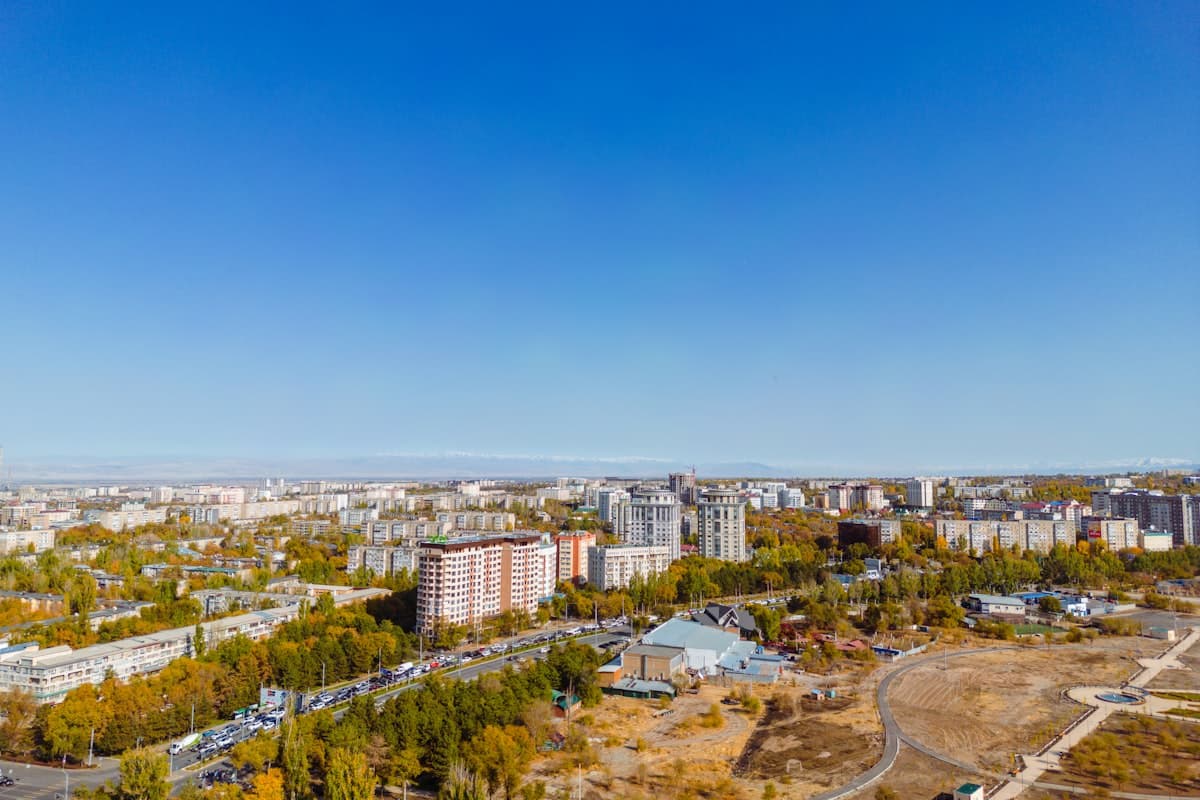
Best time to visit
April to June and September to October
Region
Chuy Region
Main airport
Bishkek FRU (FRU)
Beyond the City
Day Trips from Bishkek
Nature
Ala-Archa National Park
Located just 40 kilometres south of Bishkek, Ala-Archa offers an immediate transition from city streets to alpine wilderness, with the gorge rising from 1,600 to nearly 4,900 metres and encompassing more than 50 peaks, 20 glaciers, and 150 climbing and trekking routes. The valley's pine and juniper forests give way to rocky ridgelines that shelter snow leopards, Marco Polo sheep, lynx, and golden eagles within its 2,280 hectares of protected terrain. A well-maintained path from the park entrance reaches the Ak-Sai glacier, making the park an accessible yet dramatic introduction to the Tian Shan mountains.
History
Burana Tower
Standing in the Chui Valley about 80 kilometres east of Bishkek, the Burana Tower is an 11th-century minaret and one of the oldest surviving architectural monuments in Central Asia. Originally rising to 45 metres, a 15th-century earthquake reduced it to its present 25-metre height, and an internal spiral staircase leads visitors to the top for panoramic views across the steppe. The surrounding site preserves the earthworks and mausoleum remnants of Balasagun, a former Karakhanid capital on the Silk Road, along with a field of carved stone Balbal funerary figures.
Wise
Your bank marks up every USD you spend in Kyrgyzstan. Wise doesn't.
- No foreign transaction fees
- Free ATM withdrawals up to your limit
- Pay in local currency at the real rate
4.8 ★ App Store·4.8 ★ Google Play
Airalo eSIM
Your phone plan was built for home. This one was built for Kyrgyzstan.
- No SIM swapping
- No data roaming charges
- Active in minutes
4.7 ★ App Store·4.6 ★ Google Play
Plan Your Trip
Getting Around Bishkek
Tours, stays, transfers, and flights — curated partner options are on the way.
Tours & Activities
Skip-the-line tickets, guided tours, and day experiences — curated partner options are on the way.
Coming soonWhere to Stay
Hotels, apartments, and guesthouses across every neighbourhood — booking options are on the way.
Coming soonAirport Transfers
Private and shared rides between the airport and the city centre — partner options are on the way.
Coming soonFlights
Compare fares from hundreds of airlines to find the best route in — search options are on the way.
Coming soonTravel Guide
Frequently Asked Questions About Visiting Kyrgyzstan
Entry requirements vary by passport. Check the requirements for your specific passport on the Kyrgyzstan page at Yoogo.
The local currency is the Kyrgyzstani Som (KGS). Cash is the dominant payment method across the country, and while Visa and Mastercard are accepted in larger hotels and restaurants in Bishkek and Osh, carrying local currency is essential for markets, rural guesthouses, and smaller towns. ATMs are readily available in major cities.
Kyrgyzstan is generally considered safe for travellers, with most trips passing without incident, particularly in popular areas such as Issyk-Kul, Bishkek, and Osh. Petty crime such as pickpocketing occurs in crowded places, and travellers are advised to remain aware of their surroundings and to keep copies of important documents separate from originals. Border areas, particularly those adjoining Tajikistan, carry additional risks and should be researched carefully before any travel there.
Shared minibuses known as marshrutkas connect most cities and towns and are the most common and affordable form of intercity transport. Taxis, both metered and negotiated, are widely available in urban areas, and apps such as Yandex Go operate in Bishkek and Osh. For remote mountain destinations and the backcountry, hiring a 4x4 vehicle with a driver or joining an organised tour is the practical choice.
The prime season runs from June to September, when mountain passes are open, the high-altitude jailoos (summer pastures) are dotted with yurt camps, and temperatures are pleasant across the country. July and August offer the best conditions for trekking and lake swimming, while September brings golden landscapes and quieter trails. Winter, from December to February, suits those visiting specifically for skiing at the Karakol resort, though travel to mountain areas can be challenging.
Kyrgyz and Russian are both official languages, with Kyrgyz predominating in rural areas and Russian widely used in cities, business, and between people of different ethnic backgrounds. English is not widely spoken outside the tourism industry, though younger city residents and staff at guesthouses and tour agencies in Bishkek and Osh increasingly have a working knowledge of it. Learning a few words of Kyrgyz or Russian is warmly received by locals.
Vaccinations commonly recommended for Kyrgyzstan include hepatitis A, typhoid, and routine immunisations such as tetanus and diphtheria; hepatitis B is also advised for longer stays or those likely to have close contact with local communities. There is no significant malaria risk in standard tourist areas. Water from taps and streams should be treated or avoided in favour of bottled water, and travellers should consult a travel health clinic well before departure for personalised advice.