←Liberia travel guide
Montserrado County, Liberia
Monrovia
Where freed slaves founded a nation on the Atlantic shore
CultureHistory & HeritageNightlife
Monrovia, named after US President James Monroe, sits on a narrow peninsula where the Mesurado River meets the Atlantic Ocean, blending a founding settlement history with the energy of a modern West African capital. The city's bustling Waterside Market, colonial-era landmarks, and nearby beaches make it the natural starting point for any visit to Liberia.
Check Liberia visa requirements →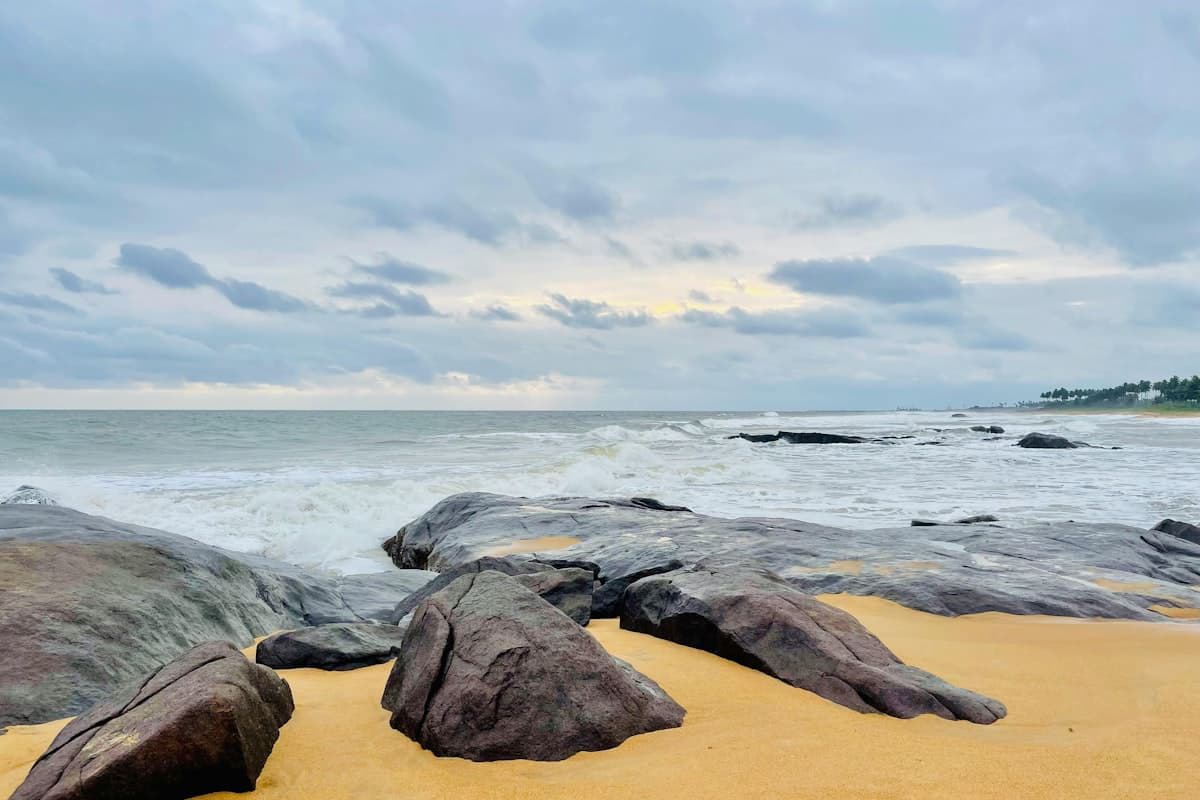
Best time to visit
November to April (dry season)
Region
Montserrado County
Main airport
Monrovia (ROB)
Discover
Top Things to Do in Monrovia
History
Providence Island
A small island at the mouth of the Mesurado River in central Monrovia, Providence Island is the site where 88 formerly enslaved and freeborn Black Americans landed in 1822, founding the settlement that would grow into the Republic of Liberia. The island is on Liberia's UNESCO tentative list and features a striking installation of artwork made from decommissioned weapons. Visiting gives a direct, tangible connection to the origin story of Africa's oldest republic.
History
Ducor Hotel
Opened in 1960 on Ducor Hill, the highest point in Monrovia, the Ducor Palace Hotel was once one of the few five-star hotels in all of Africa, hosting heads of state and international dignitaries with views stretching across the Atlantic and the Saint Paul River. Civil war forced its closure in 1989 and it has stood in ruined splendour ever since, its bullet-scarred walls and overgrown terraces forming one of the most striking pieces of urban history in West Africa. Guided tours of the site offer panoramic views of the capital alongside a sobering account of Liberia's recent past.
Wise
Your bank marks up every USD you spend in Liberia. Wise doesn't.
- No foreign transaction fees
- Free ATM withdrawals up to your limit
- Pay in local currency at the real rate
4.8 ★ App Store·4.8 ★ Google Play
Airalo eSIM
Your phone plan was built for home. This one was built for Liberia.
- No SIM swapping
- No data roaming charges
- Active in minutes
4.7 ★ App Store·4.6 ★ Google Play
Plan Your Trip
Getting Around Monrovia
Tours, stays, transfers, and flights — curated partner options are on the way.
Tours & Activities
Skip-the-line tickets, guided tours, and day experiences — curated partner options are on the way.
Coming soonWhere to Stay
Hotels, apartments, and guesthouses across every neighbourhood — booking options are on the way.
Coming soonAirport Transfers
Private and shared rides between the airport and the city centre — partner options are on the way.
Coming soonFlights
Compare fares from hundreds of airlines to find the best route in — search options are on the way.
Coming soonTravel Guide
Frequently Asked Questions About Visiting Liberia
Entry requirements vary by passport. Check the requirements for your specific passport on the Liberia page at Yoogo.
The official currency is the Liberian dollar (LRD), though US dollars are widely accepted and are often the preferred tender for hotels, restaurants, and larger businesses. Card payments are uncommon outside of a small number of establishments in Monrovia, so it is advisable to carry sufficient cash.
Liberia is a country in ongoing recovery and many areas, including parts of Monrovia, require caution regarding petty theft and opportunistic crime. Road travel outside the capital can be challenging, particularly during the rainy season when routes become impassable. Checking your government's latest travel advisory before and during your trip is recommended.
Shared minibus taxis and bush taxis are the primary means of intercity travel, connecting Monrovia to towns such as Buchanan and Robertsport at low cost. Within Monrovia, private taxis are the most practical option for getting around, and hiring a car with a driver is advisable for longer journeys. Most roads outside the capital are unpaved, and many become impassable in the rainy season between May and October.
The dry season, running from November to April, is generally regarded as the best time to visit, offering more accessible roads, lower humidity, and reduced mosquito activity. November and the period from mid-February onwards are particularly pleasant, as the dusty harmattan winds that blow down from the Sahara typically ease. Wildlife viewing in Sapo National Park and surfing at Robertsport are best enjoyed during these drier months.
English is the official language of Liberia and is used in government, education, and commerce, making it accessible for Anglophone visitors. More than 20 indigenous languages are also spoken across the country, including Kpelle, Bassa, and Grebo, which are widely used in everyday life outside of formal settings. Learning a few greetings in the local language of the region you are visiting is appreciated.
Proof of yellow fever vaccination is required for entry into Liberia, and health authorities also recommend vaccinations against typhoid, hepatitis A and B, and polio. Malaria is endemic throughout the country, so antimalarial medication, insect repellent, and long-sleeved clothing for the evenings are important precautions. Consulting a travel health clinic at least four to six weeks before departure is advisable.