Attraction in Lithuania
Aukstaitija National Park
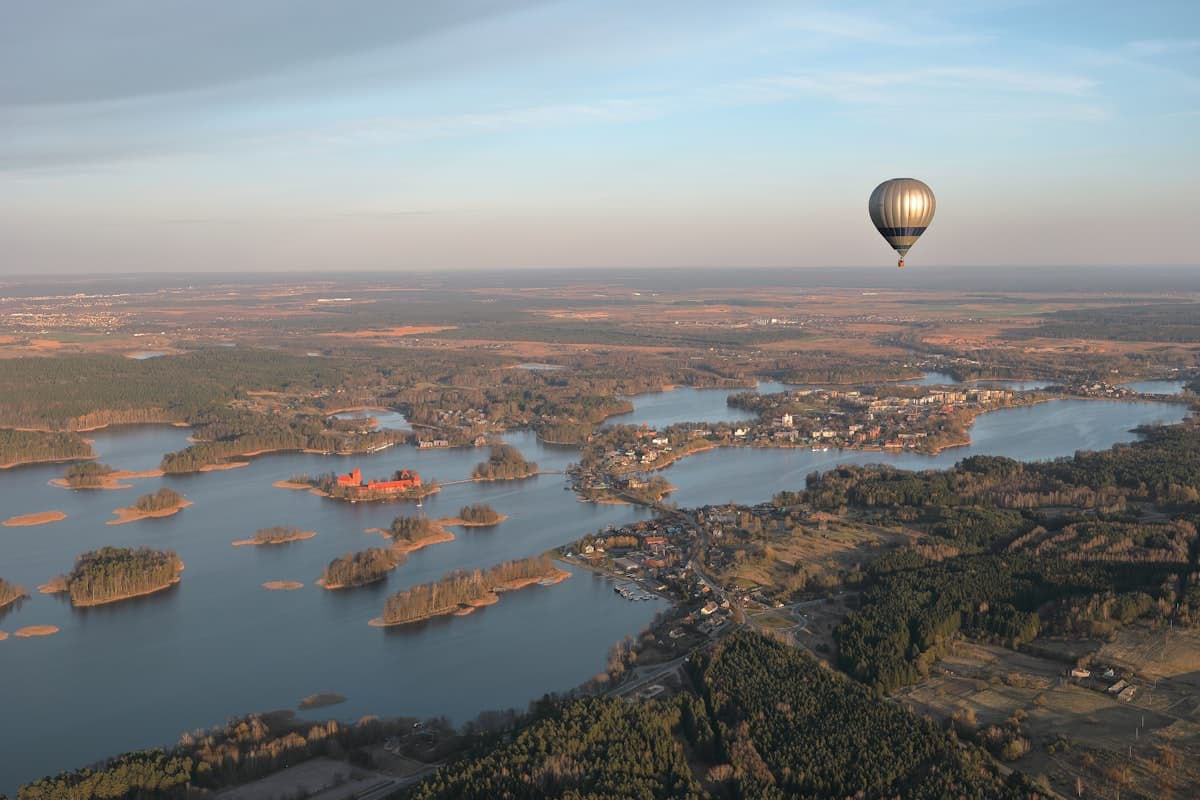
Aukstaitija, established in 1974 as Lithuania's first national park, protects a landscape of over 100 interconnected lakes, ancient pine forests, and traditional wooden farmsteads in the country's northeast. Canoe routes linking the lakes provide some of the most accessible wilderness travel in the Baltic states, passing through small villages where beekeeping and weaving traditions have been maintained for generations.
Wise
Your bank marks up every USD you spend in Lithuania. Wise doesn't.
- No foreign transaction fees
- Free ATM withdrawals up to your limit
- Pay in local currency at the real rate
4.8 ★ App Store·4.8 ★ Google Play
Airalo eSIM
Your phone plan was built for home. This one was built for Lithuania.
- No SIM swapping
- No data roaming charges
- Active in minutes
4.7 ★ App Store·4.6 ★ Google Play
Travel Guide
Frequently Asked Questions About Visiting Lithuania
Entry requirements vary by passport. Check the requirements for your specific passport on the Lithuania page at Yoogo.
Lithuania uses the euro (EUR), having joined the eurozone in 2015. Card payments are widely accepted in Vilnius, Kaunas, and larger towns, though it is worth carrying some cash when visiting rural areas, markets, or smaller establishments.
Lithuania is generally considered a safe destination with low levels of violent crime. As in any European city, travellers should take standard precautions against pickpocketing in busy tourist areas and on public transport.
Lithuania has a reliable network of inter-city buses connecting Vilnius, Kaunas, Klaipeda, and other towns, with Lux Express and Eurolines among the main operators. Trains are available on some routes, and renting a car is a practical option for exploring rural areas such as Aukstaitija National Park or the Curonian Spit.
Late spring to early autumn (May to September) offers the most pleasant conditions, with long daylight hours, temperatures of 15–25 degrees Celsius, and the Baltic coast at its most inviting in July and August. Winter months bring snow and Christmas markets, though days are short and temperatures can fall well below freezing.
Lithuanian is the official language, spoken by around 85% of the population. English is widely understood in Vilnius and Kaunas, particularly among younger people working in tourism, hospitality, and retail, though it is less common in smaller rural towns.
No vaccinations are required by regulation for entry into Lithuania, but travellers are advised to ensure routine immunisations are up to date. Tick-borne encephalitis is present throughout the country, particularly in forested areas, so vaccination is recommended for those planning outdoor activities between spring and autumn.
Tipping is not obligatory but is appreciated for good restaurant service, with around 10% being the accepted norm. Be aware that saying 'thank you' when a server collects your bill is interpreted as an instruction to keep all the change, so withhold your thanks until you are ready to leave.
Lithuania has good 4G coverage across most of the country, with 5G available in major cities. Travellers can purchase a local SIM on arrival or use an eSIM from a provider such as Airalo, which offers Lithuania-specific data plans starting from 1 GB.