←All destinations
Travel Guide
Visiting Malawi
Select your passport to instantly check if you need a visa.
Discover
Top Attractions in Malawi
The most iconic and unmissable experiences this country has to offer.
UNESCO World Heritage
Lake Malawi National Park
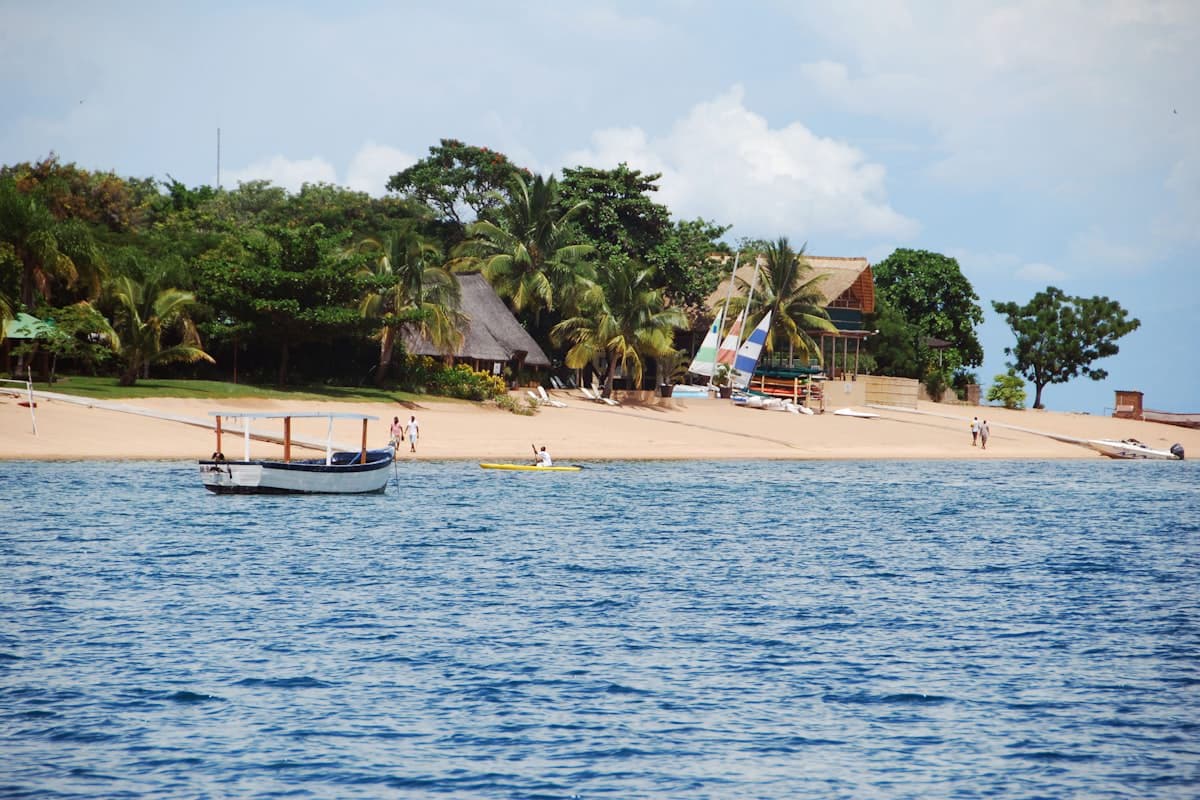
Established in 1984 as the world's first freshwater national park and inscribed as a UNESCO World Heritage Site, this park at Cape Maclear protects an extraordinary ecosystem home to more than 1,000 species of colourful cichlid fish. The crystal-clear waters offer superb snorkelling and freshwater diving, while the craggy shoreline, 13 offshore islands, and forests of baobab trees provide a vivid natural backdrop.
Liwonde National Park
Set along the banks of the Shire River in southern Malawi, Liwonde is the country's most celebrated wildlife reserve, offering boat safaris, walking safaris, and 4x4 game drives through mopane woodland. Elephants, hippos, and crocodiles are abundant, while lions, cheetahs, and wild dogs have been successfully reintroduced under the management of African Parks. The park is also regarded as one of Central Africa's finest birdwatching destinations, with Pel's fishing owl and African fish eagle among its most sought-after sightings.
Wise
Your bank marks up every USD you spend in Malawi. Wise doesn't.
- No foreign transaction fees
- Free ATM withdrawals up to your limit
- Pay in local currency at the real rate
4.8 ★ App Store·4.8 ★ Google Play
Airalo eSIM
Your phone plan was built for home. This one was built for Malawi.
- No SIM swapping
- No data roaming charges
- Active in minutes
4.7 ★ App Store·4.6 ★ Google Play
Health & Safety
Health & Emergency Info
Before You Travel
Before you travel check that: your destination can provide the healthcare you may need you have appropriate travel insurance for local treatment or unexpected medical evacuation This is particularly important if you have a health condition or are pregnant. Emergency medical number Call 998 and ask for an ambulance. Emergency numbers are unreliable in Malawi. There may be other numbers for the areas you visit – ask your hotel or the local police. Contact your insurance company quickly if you’re referred to a medical facility for treatment. Vaccine recommendations and health risks At least 8 wee
Full health advice (FCDO) →Emergency Numbers
Police997
Ambulance998
Fire999
Health information sourced from UK FCDO. Always consult a travel health professional before departure.
Practical Info
Travel Essentials
Travel Guide
Frequently Asked Questions About Visiting Malawi
Entry requirements vary by passport. Check the requirements for your specific passport on the Malawi page at Yoogo.
Malawi's currency is the Malawian Kwacha (MWK). Cash remains the most reliable payment method, particularly outside Lilongwe and Blantyre, where ATMs linked to Standard Bank and National Bank are generally the most dependable for international cards. VISA and Mastercard are accepted at larger hotels, lodges, and tourist-facing businesses, but it is wise to carry sufficient kwacha for smaller purchases and rural areas.
Malawi is widely regarded as one of the more peaceful countries in sub-Saharan Africa and is commonly called the 'Warm Heart of Africa' for its friendly population. Petty theft, pickpocketing, and bag snatching can occur at bus stations, ferry ports, and busy markets in Lilongwe and Blantyre, so keeping valuables discreet and avoiding walking alone after dark are sensible precautions. Carjacking is occasionally reported in major cities, and financial scams targeting foreigners are common, so caution is warranted in those situations.
Minibuses are the most widely used form of public transport between cities, operating on set routes and departing when full rather than to a fixed timetable. In urban areas, matolas (shared Toyota Hiace minivans) and motorbike taxis handle shorter journeys, while taxis pre-arranged through hotels are a more comfortable option in Lilongwe and Blantyre. Hiring a private vehicle or joining an organised tour is the most practical approach for reaching national parks and remote areas.
The dry season from May to October is generally considered the best time to visit, as wildlife concentrates around waterholes and rivers, road conditions are at their best, and outdoor activities are unhindered by rain. The cool months of May to August are particularly pleasant, with comfortable temperatures even at lower elevations. The wet season from November to April brings lush green landscapes and lower accommodation prices, but some roads become difficult to pass.
English is Malawi's official language and is used in government, education, and business, making it straightforward to communicate in tourist areas, hotels, and most towns. Chichewa is the most widely spoken local language and is understood across most of the country, while Chitumbuka is common in the northern region. Learning a few words of Chichewa, such as 'zikomo' (thank you), is warmly appreciated by local people.
Malaria is present throughout Malawi year-round, so consulting a travel health clinic at least six to eight weeks before departure is essential to obtain appropriate antimalarial medication. The government of Malawi requires proof of yellow fever vaccination on arrival for travellers coming from yellow fever-endemic countries. Hepatitis A, typhoid, and routine vaccinations such as tetanus and MMR are also typically recommended by travel health practitioners.