←Malta travel guide
City in Malta
Valletta
A walled city of baroque splendour above the Grand Harbour
ArchitectureCultureHistory & Heritage
Founded by the Knights of St John in the 16th century, Valletta is one of the smallest capital cities in the European Union and among the most concentrated historic areas in the world, with more than 320 monuments packed into 55 hectares. Walking its grid of honey-coloured streets reveals gilded palaces, baroque churches, and sweeping harbour vistas at nearly every turn.
Check Malta visa requirements →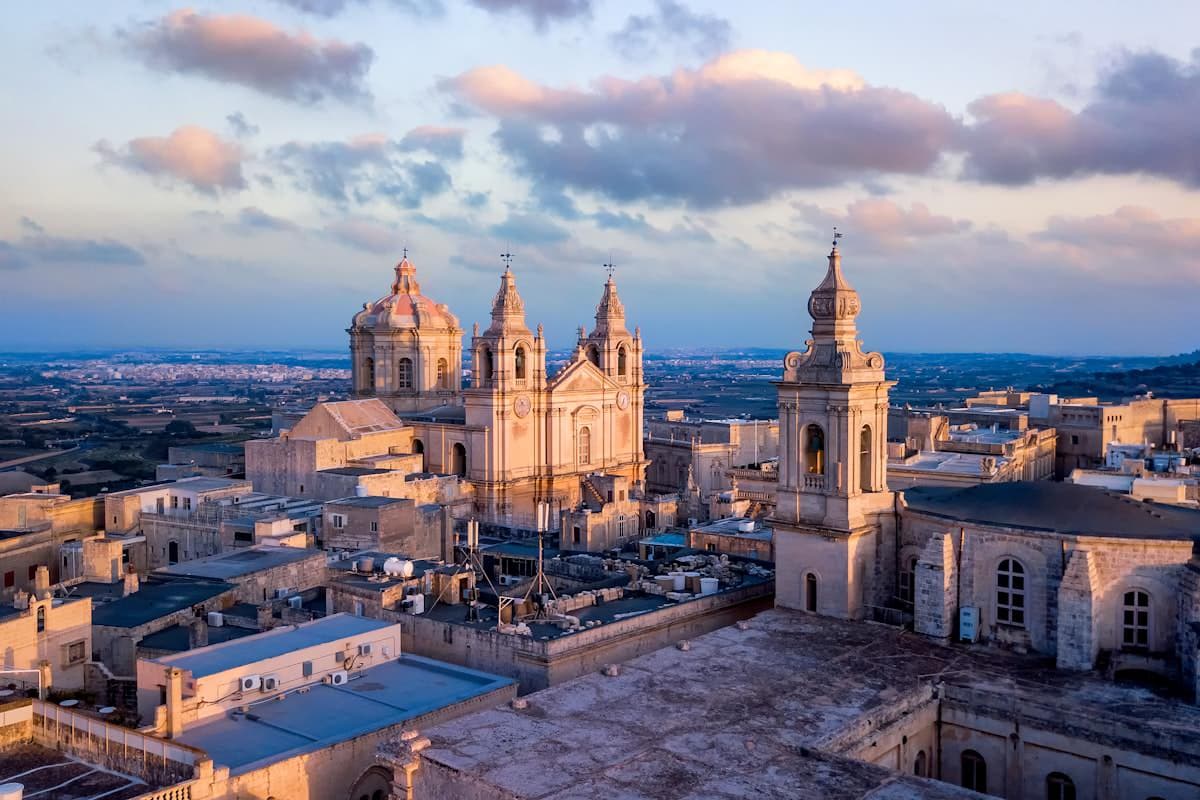
Best time to visit
April to June and September to October
Main airport
Malta MLA (MLA)
Discover
Top Things to Do in Valletta
History
St John's Co-Cathedral
Built by the Knights of St John in the 16th century and redecorated in exuberant high Baroque style by the Calabrian painter Mattia Preti, the interior of St John's Co-Cathedral is one of the most ornate church interiors in Europe, its stone walls gilded from floor to vaulted ceiling. The marble floor is composed of around 400 tombstones of Knights, while a side oratory holds Caravaggio's monumental painting 'The Beheading of Saint John the Baptist', the only canvas the artist signed.
City
Upper Barrakka Gardens
Created in 1661 as a private retreat for the Knights of St John and opened to the public in 1800, these formal gardens sit atop Valletta's bastions and command one of the finest panoramic views in the Mediterranean, looking out across the Grand Harbour to the Three Cities below. The Saluting Battery within the gardens fires a cannon at midday and in the late afternoon, a tradition that marks the harbour vista with sound as well as sight.
UNESCO World Heritage
Beyond the City
Day Trips from Valletta
UNESCO World HeritageHistory
Hal Saflieni Hypogeum
The Hal Saflieni Hypogeum is the world's only known prehistoric underground temple, a subterranean complex of chambers and halls hewn from coralline limestone around 2500 BC and used as a communal burial site for thousands of individuals. Designated a UNESCO World Heritage Site in 1981, it is entered in very small groups and strictly limits visitor numbers each day to protect the fragile microclimate of this extraordinary site.
UNESCO World Heritage
Wise
Your bank marks up every USD you spend in Malta. Wise doesn't.
- No foreign transaction fees
- Free ATM withdrawals up to your limit
- Pay in local currency at the real rate
4.8 ★ App Store·4.8 ★ Google Play
Airalo eSIM
Your phone plan was built for home. This one was built for Malta.
- No SIM swapping
- No data roaming charges
- Active in minutes
4.7 ★ App Store·4.6 ★ Google Play
Plan Your Trip
Getting Around Valletta
Tours, stays, transfers, and flights — curated partner options are on the way.
Tours & Activities
Skip-the-line tickets, guided tours, and day experiences — curated partner options are on the way.
Coming soonWhere to Stay
Hotels, apartments, and guesthouses across every neighbourhood — booking options are on the way.
Coming soonAirport Transfers
Private and shared rides between the airport and the city centre — partner options are on the way.
Coming soonFlights
Compare fares from hundreds of airlines to find the best route in — search options are on the way.
Coming soonTravel Guide
Frequently Asked Questions About Visiting Malta
Entry requirements vary by passport. Check the requirements for your specific passport on the Malta page at Yoogo.
Malta uses the euro (EUR), and card payments are widely accepted in hotels, restaurants, and shops across the island. It is advisable to carry some cash for smaller vendors, markets such as the Marsaxlokk Sunday market, and rural areas where card terminals may not be available.
Malta is generally considered a safe country for travellers, with low rates of violent crime. Petty theft such as pickpocketing can occur in busy tourist areas, so standard precautions with valuables apply.
Malta has a public bus network operated by Malta Public Transport that connects most towns and tourist sites, with Valletta serving as the main hub. Taxis, rideshare apps, and hire cars are also available, though roads can be narrow and traffic congested in central areas, particularly around Valletta.
The spring months of April and May and the autumn month of October are widely regarded as the most comfortable periods to visit, offering warm, sunny weather without the intensity of the summer heat. July and August see the highest temperatures and the largest crowds, while winter is mild and quiet, though some beach-focused facilities operate on reduced hours.
Both Maltese and English are official languages, and English is spoken widely throughout the island in shops, restaurants, and public services. Maltese is a Semitic language written in the Latin alphabet and is unique to the islands.
No specific vaccinations are required for entry to Malta for most travellers, and the country has a well-developed healthcare system. It is recommended to ensure routine immunisations are up to date and to consult a travel health professional well in advance of your trip for personalised advice.
Tipping is appreciated but not obligatory in Malta. In restaurants, leaving around 10 per cent of the bill is a common gesture for good service, and rounding up taxi fares or leaving small tips for hotel staff is customary.
Malta has good 4G LTE coverage across the main island and Gozo, and eSIM plans are supported by major international providers including Airalo. Purchasing an eSIM before departure is a convenient way to stay connected without needing a local physical SIM card.
Malta has a strong Catholic tradition, and modest dress covering shoulders and knees is expected when entering churches or religious sites. Greetings are warm and respectful, and locals generally appreciate visitors who show interest in Maltese culture, language, and cuisine.