←Marshall Islands travel guide
Majuro Atoll, Marshall Islands
Majuro
A coral-ribbon capital spread across 64 tiny islands in the Pacific
BeachesCultureHistory & Heritage
Majuro is the capital and commercial heart of the Marshall Islands, strung along a narrow strip of land encircling a vast turquoise lagoon. The town holds the international airport, the main port, government offices, and most of the country's hotels, restaurants, and cultural institutions.
Check Marshall Islands visa requirements →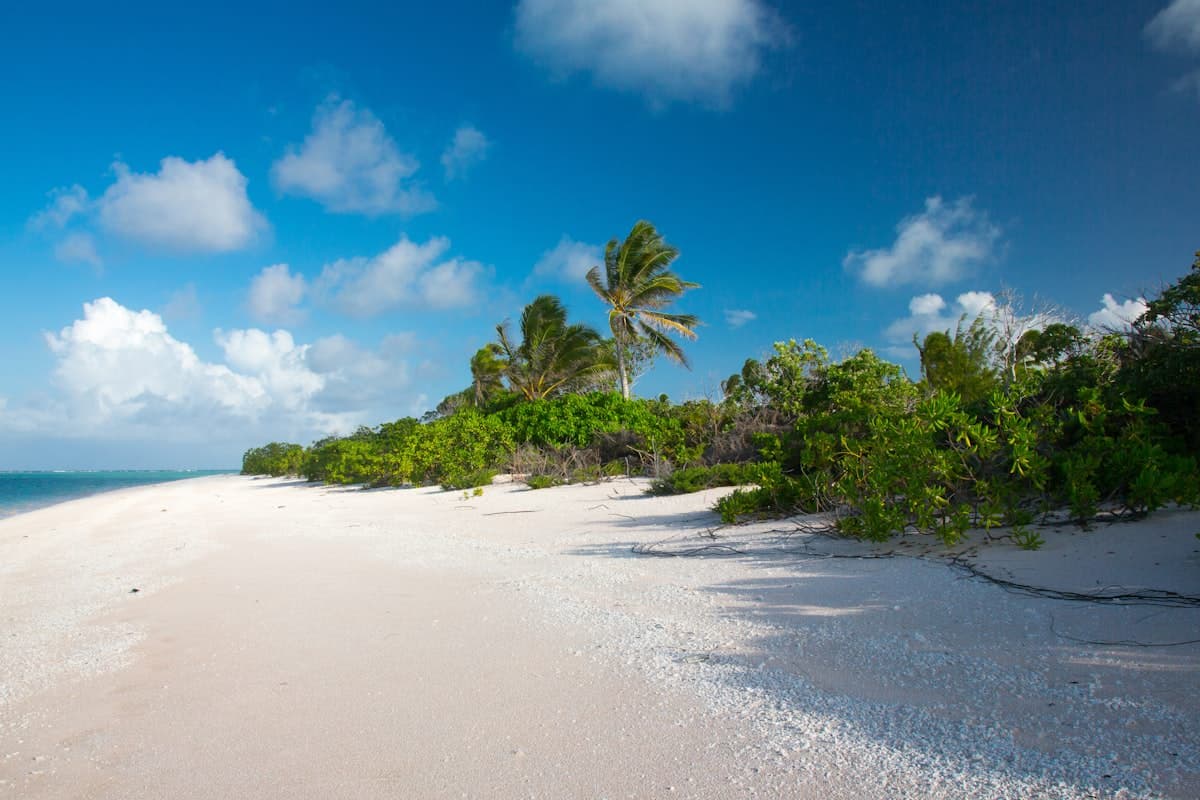
Best time to visit
December to April
Region
Majuro Atoll
Main airport
Majuro MAJ (MAJ)
Discover
Top Things to Do in Majuro
Culture
Alele Museum and Library
The Alele Museum in Majuro is the national museum, public library, and archives of the Marshall Islands, dedicated to preserving Marshallese history and cultural heritage. Exhibits include traditional stick charts used for open-ocean navigation, intricately crafted outrigger canoe models, ancient tools, and the Joachim Debrum Collection of more than 2,500 glass-plate negatives documenting Marshallese life from 1880 to 1930. It is the primary institution for anyone seeking to understand the depth and ingenuity of Marshallese seafaring culture.
Nature
Laura Beach
Laura Beach sits at the westernmost tip of Majuro Atoll and is widely regarded as the finest beach in the capital atoll, with calm, clear water and a broad sweep of white sand. The beach is a short drive from central Majuro and offers a peaceful contrast to the town, with picnic facilities and a freshwater shower on site. The shallow lagoon-side water makes it well suited for swimming and gentle snorkelling.
Culture
Beyond the City
Day Trips from Majuro
UNESCO World HeritageHistory
Bikini Atoll
Inscribed as a UNESCO World Heritage Site in 2010, Bikini Atoll was the location of 67 American nuclear tests carried out between 1946 and 1958, including the first hydrogen bomb detonation. The lagoon floor holds a remarkable collection of sunken warships from that era, among them the aircraft carrier USS Saratoga, making it one of the world's most significant wreck-diving destinations. Marine life has reclaimed the wrecks in extraordinary fashion, with coral gardens and schools of fish weaving through the hulls.
Nature
Arno Atoll
Arno Atoll lies roughly an hour by boat from Majuro and is one of the most accessible outer atolls for visitors seeking pristine reef diving, traditional village life, and near-total seclusion. The atoll's passes and outer walls host healthy coral formations, pelagic fish, rays, and sharks in waters that receive very few divers each year. Small villages on the islets maintain traditional Marshallese customs and a pace of life largely unchanged by tourism.
Wise
Your bank marks up every USD you spend in the Marshall Islands. Wise doesn't.
- No foreign transaction fees
- Free ATM withdrawals up to your limit
- Pay in local currency at the real rate
4.8 ★ App Store·4.8 ★ Google Play
Airalo eSIM
Your phone plan was built for home. This one was built for the Marshall Islands.
- No SIM swapping
- No data roaming charges
- Active in minutes
4.7 ★ App Store·4.6 ★ Google Play
Plan Your Trip
Getting Around Majuro
Tours, stays, transfers, and flights — curated partner options are on the way.
Tours & Activities
Skip-the-line tickets, guided tours, and day experiences — curated partner options are on the way.
Coming soonWhere to Stay
Hotels, apartments, and guesthouses across every neighbourhood — booking options are on the way.
Coming soonAirport Transfers
Private and shared rides between the airport and the city centre — partner options are on the way.
Coming soonFlights
Compare fares from hundreds of airlines to find the best route in — search options are on the way.
Coming soonTravel Guide
Frequently Asked Questions About Visiting Marshall Islands
Entry requirements vary by passport. Check the requirements for your specific passport on the Marshall Islands page at Yoogo.
The Marshall Islands uses the United States dollar (USD) as its official currency. Card acceptance is limited outside of larger hotels and a handful of restaurants in Majuro, so carrying cash is advisable, particularly when travelling to outer atolls or smaller communities.
The Marshall Islands is generally a low-risk destination, though petty crime such as theft does occur, particularly in crowded areas of Majuro. Normal precautions around valuables and personal belongings are sensible, and travelling in groups after dark in unfamiliar areas is wise.
Within Majuro, taxis and minibuses run along the main road connecting Delap, Uliga, and Djarrit, and are the primary means of local transport. Travel between atolls is by small aircraft operated by Air Marshall Islands or by inter-island boat services, both of which operate on limited and sometimes irregular schedules.
The dry season from December to April is generally considered the best time to visit, bringing lower humidity, clearer skies, and calmer seas ideal for diving and island exploration. The wet season runs from May to November and brings heavier rainfall and occasionally rough ocean conditions, though temperatures remain warm year-round, averaging 28–30 degrees Celsius.
Both Marshallese and English are official languages. Marshallese is spoken by the vast majority of the population as their first language, while English is widely understood and used in government, business, and tourism contexts throughout Majuro.
Travellers are advised to be up to date on routine vaccinations and should consider protection against Hepatitis A and B, typhoid, and tetanus-diphtheria. Notably, proof of a current measles vaccination is required for entry to the Marshall Islands and must have been administered at least two weeks before arrival.
Tipping is not a strong cultural tradition in the Marshall Islands and is not expected. A modest tip of around 10 per cent for attentive service in restaurants or guides is appreciated but entirely at your discretion.
The national mobile network is operated by NTSC (National Telecommunication Systems Corporation), with coverage concentrated in Majuro and Ebeye. International eSIM providers such as Airalo offer data plans compatible with the Marshall Islands, allowing travellers to connect upon arrival without needing a local SIM card.