←Mauritania travel guide
Nouakchott, Mauritania
Nouakchott
A sprawling Saharan capital where desert dunes meet the Atlantic
BeachesCultureShopping
Nouakchott was founded in 1958 as one of the world's youngest capitals and has grown into one of the largest cities in the Sahara, home to roughly a third of Mauritania's population. Visitors explore the lively fish market at Port de Peche, the National Museum, and the grand mosque at the heart of the city.
Check Mauritania visa requirements →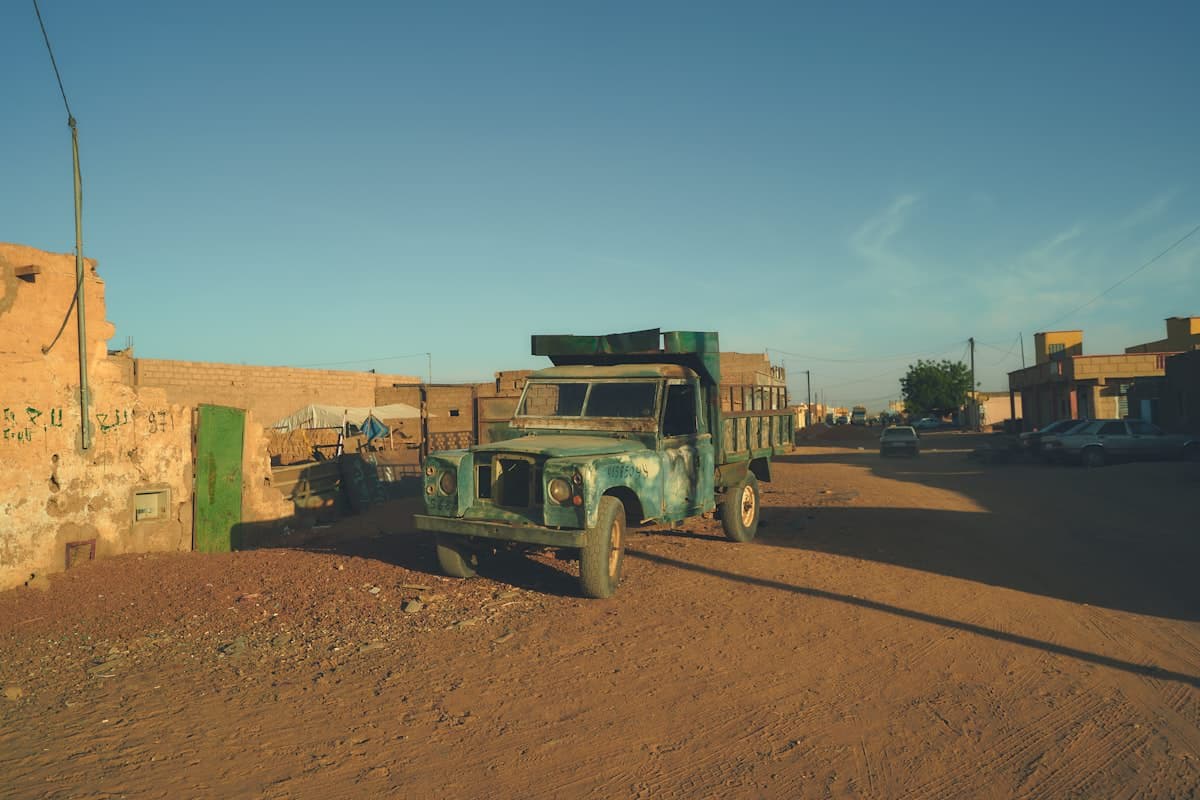
Best time to visit
November to March (cooler dry season)
Region
Nouakchott
Main airport
Nouakchott (NKC)
Wise
Your bank marks up every USD you spend in Mauritania. Wise doesn't.
- No foreign transaction fees
- Free ATM withdrawals up to your limit
- Pay in local currency at the real rate
4.8 ★ App Store·4.8 ★ Google Play
Airalo eSIM
Your phone plan was built for home. This one was built for Mauritania.
- No SIM swapping
- No data roaming charges
- Active in minutes
4.7 ★ App Store·4.6 ★ Google Play
Plan Your Trip
Getting Around Nouakchott
Tours, stays, transfers, and flights — curated partner options are on the way.
Tours & Activities
Skip-the-line tickets, guided tours, and day experiences — curated partner options are on the way.
Coming soonWhere to Stay
Hotels, apartments, and guesthouses across every neighbourhood — booking options are on the way.
Coming soonAirport Transfers
Private and shared rides between the airport and the city centre — partner options are on the way.
Coming soonFlights
Compare fares from hundreds of airlines to find the best route in — search options are on the way.
Coming soonTravel Guide
Frequently Asked Questions About Visiting Mauritania
Entry requirements vary by passport. Check the requirements for your specific passport on the Mauritania page at Yoogo.
The currency is the Mauritanian ouguiya (MRU), which replaced the old ouguiya (MRO) in 2018 at a rate of 10:1. Card payments are rarely accepted outside a small number of hotels in Nouakchott, so it is advisable to carry sufficient cash in local currency, as ATMs are limited and unreliable outside the capital.
Mauritania presents varied conditions across its vast territory, and the situation can change. Consult your government's official travel advisory before departure and register with your embassy on arrival in Nouakchott.
Transport between major towns relies on shared taxis (known as bush taxis or sept-places), which depart when full from designated stations in each town. For remote desert areas such as the Adrar Plateau, a hired four-wheel-drive vehicle with a knowledgeable local guide is the standard approach, as paved roads are limited and desert tracks require specialist navigation.
The period from November to March offers the most comfortable conditions for travel, with daytime temperatures ranging between 20 and 30 degrees Celsius and little risk of rain. From May onwards temperatures rise sharply across the desert interior, and July to September brings seasonal rains that can cause flooding around Nouakchott.
Arabic (specifically the Hassaniya dialect) is the national language and is widely spoken, while Pular, Soninke, and Wolof are recognised national languages of the country's various ethnic communities. French is understood in government and business contexts in Nouakchott and Atar, but English is rarely spoken outside international hotels, so a few basic Arabic phrases will be warmly appreciated.
A yellow fever vaccination certificate is required for travellers arriving from or transiting through countries where yellow fever transmission is a risk. Recommended vaccinations typically include hepatitis A and B, typhoid, meningitis, and rabies, and malaria prophylaxis is advisable for travel to the southern regions; consult a travel health clinic well before departure.
Tipping is not a strong local custom but is appreciated in tourist-facing services. A tip of around 10 per cent is reasonable in restaurants that do not include a service charge, and guides and drivers for desert excursions generally expect a gratuity of a similar proportion of the tour cost.