←All destinations
Travel Guide
Visiting Montenegro
Select your passport to instantly check if you need a visa.
Discover
Top Attractions in Montenegro
The most iconic and unmissable experiences this country has to offer.
UNESCO World Heritage
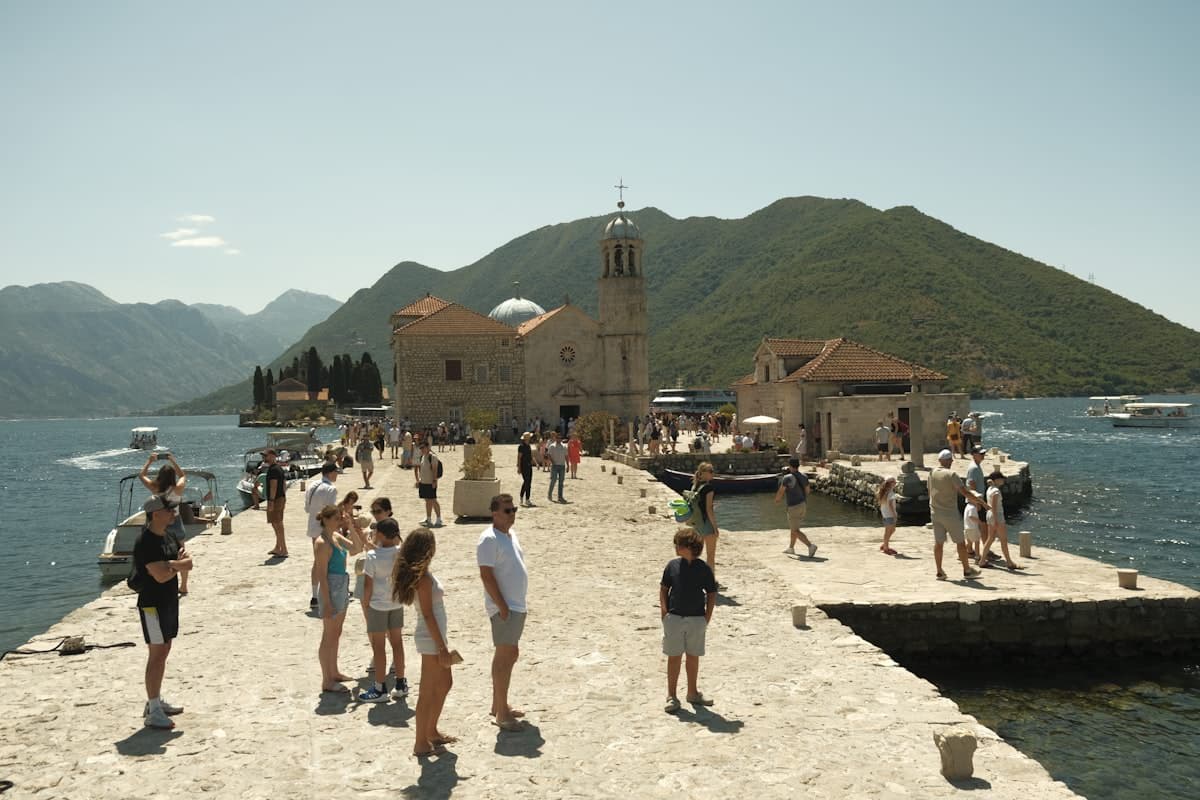
Bay of Kotor and Old Town
The Natural and Culturo-Historical Region of Kotor has been a UNESCO World Heritage Site since 1979, encompassing the fjord-like Bay of Kotor and the superbly preserved medieval city at its shore. The city walls stretch for roughly 4.5 kilometres, climbing the steep hillside to the fortress of San Giovanni, and enclose Romanesque churches, Venetian palaces, and narrow stone streets. St Tryphon Cathedral, consecrated in 1166, remains the centrepiece of an urban fabric little altered since the Middle Ages.
UNESCO World Heritage
Durmitor National Park
Durmitor is a UNESCO World Heritage mountain massif in north-western Montenegro, shaped by glaciers into a landscape of 48 peaks, 18 glacial lakes, and dense Black Pine forests. The park is bisected by the Tara River Canyon, the deepest gorge in Europe at 1,300 metres, which draws visitors for white-water rafting and canyon trekking. In winter, Durmitor's slopes around Zabljak become Montenegro's primary ski destination.
Wise
Your bank marks up every USD you spend in Montenegro. Wise doesn't.
- No foreign transaction fees
- Free ATM withdrawals up to your limit
- Pay in local currency at the real rate
4.8 ★ App Store·4.8 ★ Google Play
Airalo eSIM
Your phone plan was built for home. This one was built for Montenegro.
- No SIM swapping
- No data roaming charges
- Active in minutes
4.7 ★ App Store·4.6 ★ Google Play
Health & Safety
Health & Emergency Info
Before You Travel
Before you travel check that: your destination can provide the healthcare you may need you have appropriate travel insurance for local treatment or unexpected medical evacuation This is particularly important if you have a health condition or are pregnant. Emergency medical number Dial 112 for an ambulance. Contact your insurance or medical assistance company quickly if you’re referred to a medical facility for treatment. Vaccine recommendations and health risks At least 8 weeks before your trip: check the latest vaccine recommendations for Montenegro see where to get vaccines and whether you
Full health advice (FCDO) →Emergency Numbers
Police122
Ambulance124
Fire123
Health information sourced from UK FCDO. Always consult a travel health professional before departure.
Practical Info
Travel Essentials
Travel Guide
Frequently Asked Questions About Visiting Montenegro
Entry requirements vary by passport. Check the requirements for your specific passport on the Montenegro page at Yoogo.
Montenegro uses the Euro (EUR) even though it is not a member of the European Union, having adopted the currency unilaterally. Card payments are widely accepted in hotels, restaurants, and larger shops, though smaller establishments and rural areas often prefer cash.
Montenegro is generally considered a safe destination, with petty theft being the most common concern in crowded tourist areas such as Kotor Old Town and Budva during summer. Standard precautions such as keeping valuables secure and being aware of your surroundings are sufficient for most visits.
Hiring a car is the most flexible way to explore Montenegro, as it gives access to the national parks, mountain roads, and coastal towns that public transport serves infrequently. Buses connect major towns and cities, while a scenic railway line runs between Bar on the coast and the capital Podgorica, continuing north to Serbia.
The Adriatic coast is warmest and driest from June to September, making these the peak months for beach holidays, though Kotor and Budva become very crowded in July and August. The shoulder months of May, early June, and September offer warm weather with smaller crowds, while the northern mountains are best visited in winter for skiing or in summer for hiking.
Montenegrin is the official language, closely related to Serbian, Bosnian, and Croatian, and all four are widely understood across the country. English is spoken by staff in hotels, restaurants, and tourist sites, particularly along the coast, though knowledge of it drops off in rural and mountain areas.
No vaccinations are required for entry into Montenegro for travellers arriving from most countries. Routine immunisations should be up to date, and tick-borne encephalitis vaccination is worth considering for those planning extended hiking in forested mountain areas such as Durmitor National Park.
Tipping is customary but not obligatory in Montenegro; rounding up the bill or leaving around 10 per cent in restaurants and cafes is appreciated. Taxi drivers and hotel staff also welcome a small gratuity for good service, but there is no social pressure to tip.
Montenegro has reasonable 4G coverage along the coast and in major towns, with coverage thinning in mountain and rural areas. EU roaming rules do not apply as Montenegro is not an EU member, so checking your provider's international rates or purchasing a local SIM or eSIM before or upon arrival is advisable. Airalo and other eSIM providers offer Montenegro data plans that can be activated before departure.