←North Macedonia travel guide
City in North Macedonia
Skopje
A capital where Ottoman bazaars meet baroque statues on the Vardar
ArchitectureCultureHistory & Heritage
Skopje stretches along the banks of the Vardar River, its old town anchored by a sprawling Ottoman bazaar dating to the 12th century and a medieval stone bridge. The city's central district was dramatically rebuilt in the 2000s, filling squares and riverside promenades with neoclassical facades and monumental sculptures.
Check North Macedonia visa requirements →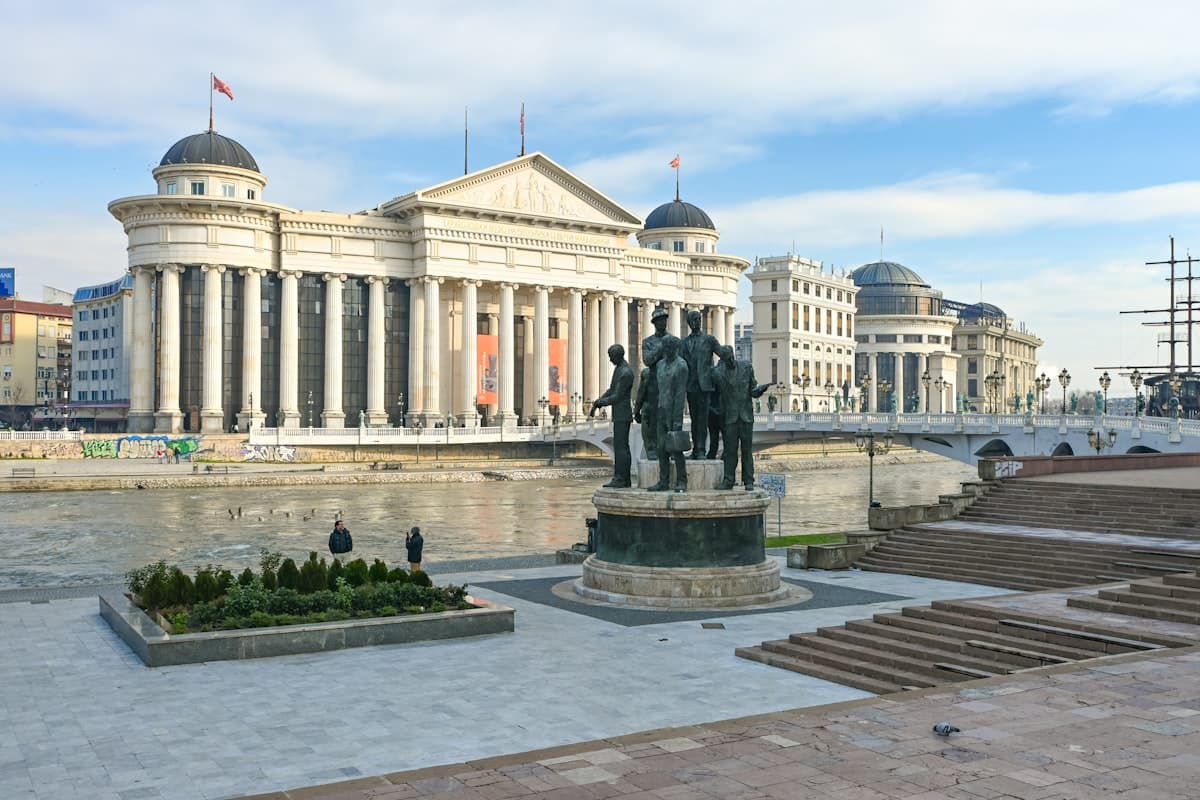
Best time to visit
May to September
Main airport
Skopje SKP (SKP)
Beyond the City
Day Trips from Skopje
History
Kokino Megalithic Observatory
Perched on a volcanic rocky outcrop at 1,013 metres elevation, Kokino is a Bronze Age archaeo-astronomical site dating to around 1800 BC, ranked by NASA among the world's oldest known observatories. Ancient inhabitants shaped the cracked volcanic rock to mark the rising points of the sun at the solstices and equinoxes, and two stone platforms served as observation positions for tracking celestial bodies through the seasons. The site lies about 75 kilometres northeast of Skopje and is on North Macedonia's tentative UNESCO World Heritage list.
History
Stobi Archaeological Site
Situated at the confluence of the Vardar and Crna rivers, Stobi was one of the most significant cities of the Roman province of Macedonia and later the capital of Macedonia Secunda in the late empire. Excavations have uncovered a 2nd-century theatre, palatial residences, bathhouses, early Christian basilicas, and intricate mosaic floors spread across a substantial open-air park. The site is well signed and accessible from the main highway between Skopje and Thessaloniki, making it a practical stop for travellers moving between the two countries.
Wise
Your bank marks up every USD you spend in North Macedonia. Wise doesn't.
- No foreign transaction fees
- Free ATM withdrawals up to your limit
- Pay in local currency at the real rate
4.8 ★ App Store·4.8 ★ Google Play
Airalo eSIM
Your phone plan was built for home. This one was built for North Macedonia.
- No SIM swapping
- No data roaming charges
- Active in minutes
4.7 ★ App Store·4.6 ★ Google Play
Plan Your Trip
Getting Around Skopje
Tours, stays, transfers, and flights — curated partner options are on the way.
Tours & Activities
Skip-the-line tickets, guided tours, and day experiences — curated partner options are on the way.
Coming soonWhere to Stay
Hotels, apartments, and guesthouses across every neighbourhood — booking options are on the way.
Coming soonAirport Transfers
Private and shared rides between the airport and the city centre — partner options are on the way.
Coming soonFlights
Compare fares from hundreds of airlines to find the best route in — search options are on the way.
Coming soonTravel Guide
Frequently Asked Questions About Visiting North Macedonia
Entry requirements vary by passport. Check the requirements for your specific passport on the North Macedonia page at Yoogo.
North Macedonia uses the Macedonian denar (MKD), which is not widely available outside the country, so it is best to exchange money on arrival. Card payments are accepted in most hotels, larger restaurants, and shops in Skopje and Ohrid, but smaller towns and rural areas still rely heavily on cash.
North Macedonia is generally considered a safe destination, ranking favourably on regional safety indices, with violent crime against tourists being rare. Petty theft such as pickpocketing can occur in busy areas of Skopje, so standard precautions with valuables are sensible.
Buses are the primary form of public transport between cities, with reliable routes connecting Skopje, Ohrid, Bitola, and other towns. Renting a car is the most practical way to explore the national parks and rural areas, as public transport coverage is limited outside the main corridors.
Late spring (May to June) and early autumn (September) offer the most comfortable temperatures for sightseeing, with warm and largely dry conditions across the country. July and August are the busiest and hottest months, particularly around Lake Ohrid, while winter brings skiing opportunities to Mavrovo and Popova Sapka.
Macedonian is the primary official language, written in a Cyrillic script adapted for Macedonian sounds, while Albanian holds co-official status at the national level. English is spoken in tourist areas, hotels, and restaurants in Skopje and Ohrid, though knowledge of it is more limited in smaller towns.
No vaccinations are specifically required for entry into North Macedonia, though ensuring routine immunisations are up to date is recommended before any international travel. Tap water in cities is generally safe to drink, though many travellers opt for bottled water in rural areas.
Tipping is appreciated but not obligatory; in restaurants it is common to round up the bill or leave around 10 per cent for good service. Tipping taxi drivers is not customary, though rounding up the fare is a friendly gesture.
Local SIM cards from providers such as A1 and Telekom are widely available and affordable, offering good 4G coverage in urban areas and along main roads. eSIM options through providers such as Airalo are a convenient alternative for travellers who prefer not to swap physical cards.