←Oman travel guide
Ad Dakhiliyah Governorate, Oman
Nizwa
Oman's ancient capital, ringed by palms and mountain peaks
ArchitectureCultureHistory & Heritage
Nizwa lies in the Hajar mountain interior and served as Oman's political and religious capital during the 6th and 7th centuries, drawing scholars, poets, and merchants across the Arab world. Its 17th-century round tower fort and traditional Friday cattle and silver souq remain among the country's most visited and best-preserved heritage sites.
Check Oman visa requirements →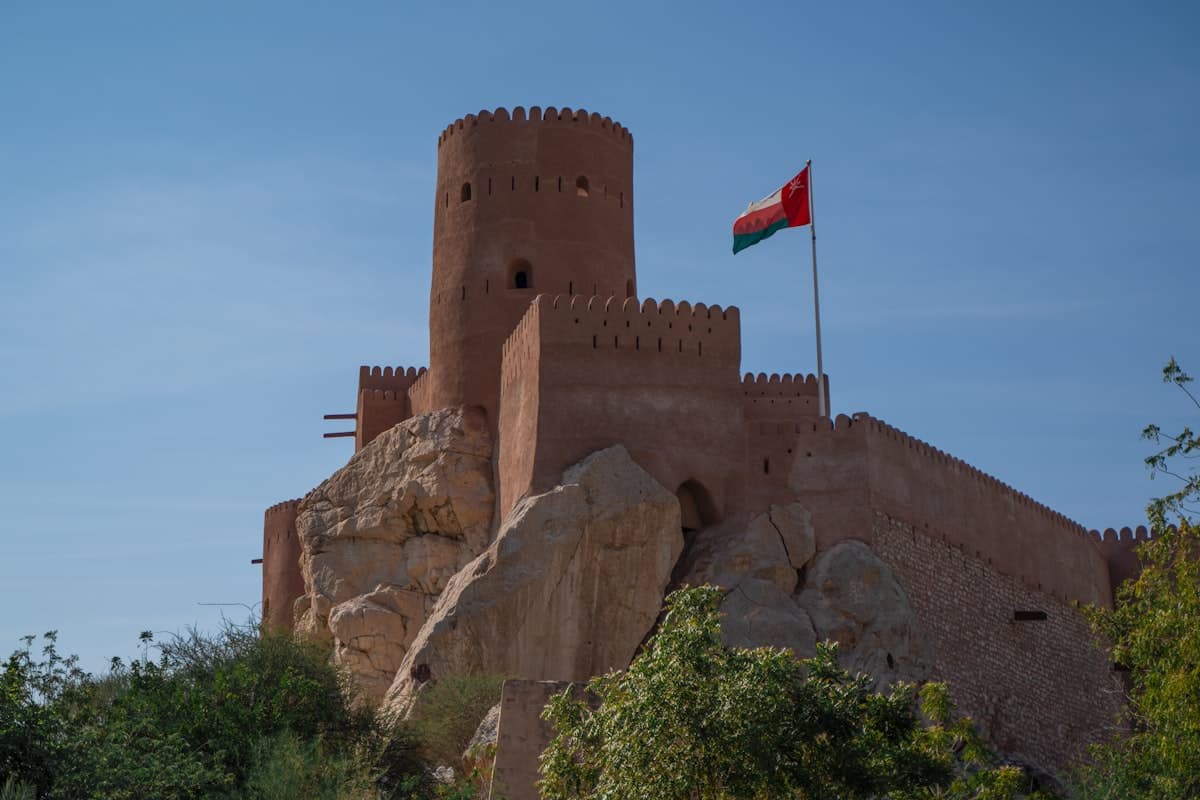
Best time to visit
October to March
Region
Ad Dakhiliyah Governorate
Main airport
Muscat MCT (MCT)
Beyond the City
Day Trips from Nizwa
UNESCO World HeritageHistory
Bahla Fort
Inscribed as a UNESCO World Heritage Site in 1987, Bahla Fort was built by the Banu Nebhan tribe between the 12th and 15th centuries on a rocky outcrop overlooking a palm oasis in the Hajar Mountains. The mud-brick construction and scale of the fortifications are considered outstanding examples of medieval Omani military architecture.
UNESCO World Heritage
Wise
Your bank marks up every USD you spend in Oman. Wise doesn't.
- No foreign transaction fees
- Free ATM withdrawals up to your limit
- Pay in local currency at the real rate
4.8 ★ App Store·4.8 ★ Google Play
Airalo eSIM
Your phone plan was built for home. This one was built for Oman.
- No SIM swapping
- No data roaming charges
- Active in minutes
4.7 ★ App Store·4.6 ★ Google Play
Plan Your Trip
Getting Around Nizwa
Tours, stays, transfers, and flights — curated partner options are on the way.
Tours & Activities
Skip-the-line tickets, guided tours, and day experiences — curated partner options are on the way.
Coming soonWhere to Stay
Hotels, apartments, and guesthouses across every neighbourhood — booking options are on the way.
Coming soonAirport Transfers
Private and shared rides between the airport and the city centre — partner options are on the way.
Coming soonFlights
Compare fares from hundreds of airlines to find the best route in — search options are on the way.
Coming soonTravel Guide
Frequently Asked Questions About Visiting Oman
Entry requirements vary by passport. Check the requirements for your specific passport on the Oman page at Yoogo.
Oman uses the Omani rial (OMR), one of the highest-valued currencies in the world. Credit and debit cards are widely accepted in Muscat and major towns, but it is wise to carry cash if you plan to visit rural areas, desert camps, or traditional souqs.
Oman is widely regarded as one of the safest destinations in the Middle East, with low rates of petty crime and a stable political environment. As with any destination, normal precautions apply, and travellers should stay informed through their government's official travel advisory before departure.
Renting a car is the most practical way to explore Oman's diverse landscapes, as public transport between regions is limited. Mwasalat operates intercity coaches connecting Muscat with Salalah, Nizwa, and Sur, while taxis and ride-hailing apps such as Otaxi cover urban areas.
October to April is generally the most comfortable period, with cooler temperatures ideal for desert hiking, coastal drives, and city sightseeing. The exception is Salalah in the south, which is popular during the Khareef monsoon season from July to September, when the surrounding hills turn unusually green.
Arabic is the official language of Oman, with several regional dialects spoken across the country. English is widely understood in Muscat, hotels, tourist sites, and most restaurants, though some knowledge of basic Arabic phrases is appreciated in rural areas.
No mandatory vaccinations are required for most travellers entering Oman, though hepatitis A and routine immunisations such as tetanus and MMR are commonly recommended. Consult a travel health clinic at least four to six weeks before departure, as personal health history and planned activities may affect advice.
Tipping is not a strong cultural expectation in Oman, though it is appreciated as a gesture of good service. Rounding up taxi fares and leaving around 10 per cent in restaurants where a service charge is not already included are common courtesies.
Oman has solid 4G coverage across most cities and main highways, provided by the two main operators Omantel and Ooredoo, both of which now support eSIM. Airalo and other international eSIM providers also offer Oman data plans that can be activated before arrival for immediate connectivity.
Oman is a Muslim country with conservative social norms, and modest dress is expected when visiting mosques, markets, and government buildings, with shoulders and knees covered. During the holy month of Ramadan, eating, drinking, and smoking in public during daylight hours is prohibited, and visitors should plan accordingly.