Attraction in Saint Lucia
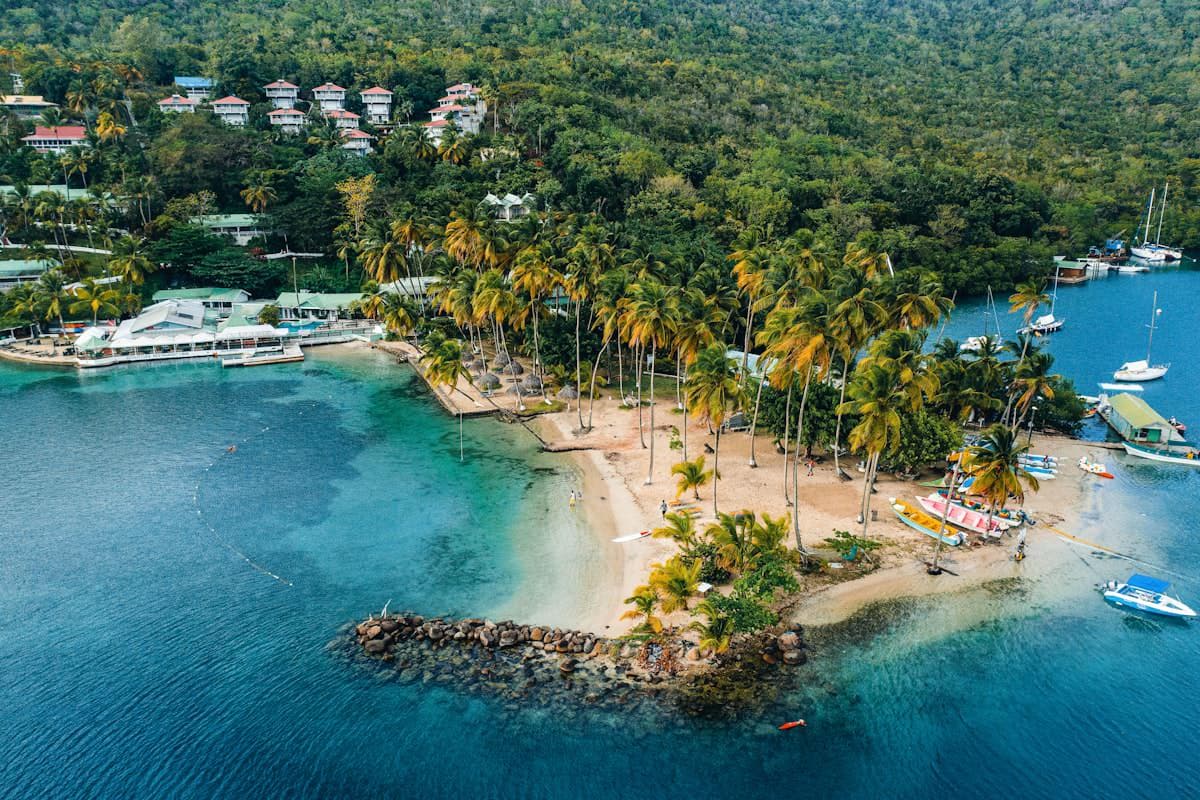
Marigot Bay
Marigot Bay is a sheltered natural harbour on the western coast of Saint Lucia, framed by steep forested hillsides and considered one of the most scenic anchorages in the Caribbean. The inner harbour forms a natural hurricane hole, historically used by both French and British fleets, and today it accommodates a busy marina alongside waterfront restaurants and accommodation. A small passenger ferry connects the two sides of the bay.
Wise
Your bank marks up every USD you spend in Saint Lucia. Wise doesn't.
- No foreign transaction fees
- Free ATM withdrawals up to your limit
- Pay in local currency at the real rate
4.8 ★ App Store·4.8 ★ Google Play
Airalo eSIM
Your phone plan was built for home. This one was built for Saint Lucia.
- No SIM swapping
- No data roaming charges
- Active in minutes
4.7 ★ App Store·4.6 ★ Google Play
Travel Guide
Frequently Asked Questions About Visiting Saint Lucia
Entry requirements vary by passport. Check the requirements for your specific passport on the Saint Lucia page at Yoogo.
Saint Lucia uses the Eastern Caribbean dollar (XCD), which is fixed in value against the US dollar. US dollars are widely accepted at tourist businesses, hotels, and restaurants, while cards are accepted at most larger establishments, though it is worth carrying some local cash for smaller vendors and minibus fares.
Saint Lucia is a popular tourist destination and the main resort areas of Rodney Bay, Gros Islet, and the Soufrière corridor are generally well-frequented by visitors. Standard travel precautions apply, including keeping valuables secure and being attentive in quieter urban areas, particularly after dark.
Minibuses with green number plates are the main form of public transport and connect most towns at low cost, though they run when full rather than to a fixed timetable. Licensed taxis (light blue plates with a TX prefix) are readily available from airports, hotels, and taxi stands, and fares should be agreed in advance. Car hire is also available, though a temporary local driving licence is required and roads can be narrow and winding.
The dry season from December to April is considered the best time to visit, with the lowest rainfall and reliably sunny weather. February to April tends to be the driest period, while the wetter months from June to November coincide with the Atlantic hurricane season, though this period also brings lower accommodation prices and a quieter island atmosphere.
English is the official language and is spoken throughout the island in schools, government, and business. Many Saint Lucians also speak Kwéyòl, a French-based Creole language deeply embedded in everyday culture and local identity.
No vaccinations are mandatory for most travellers arriving from non-yellow-fever-endemic countries, though a yellow fever certificate is required for those arriving from countries where yellow fever is present. It is advisable to be up to date on routine vaccinations such as hepatitis A and tetanus, and mosquito-borne illnesses including dengue and Zika are present on the island, so appropriate precautions are recommended.
Tipping is customary and appreciated across the island. Many restaurants and hotels add a 10 per cent service charge automatically, so it is worth checking your bill before adding extra. Where no service charge is included, a tip of around 10 to 15 per cent is the norm for restaurants and taxis.