←All destinations
Travel Guide
Visiting South Georgia and South Sandwich Islands
Select your passport to instantly check if you need a visa.
Guide in progress
We're still building our South Georgia and South Sandwich Islands travel guide. Check back soon for attractions, cities, and local tips.
Discover
Top Attractions in South Georgia and South Sandwich Islands
The most iconic and unmissable experiences this country has to offer.
Grytviken
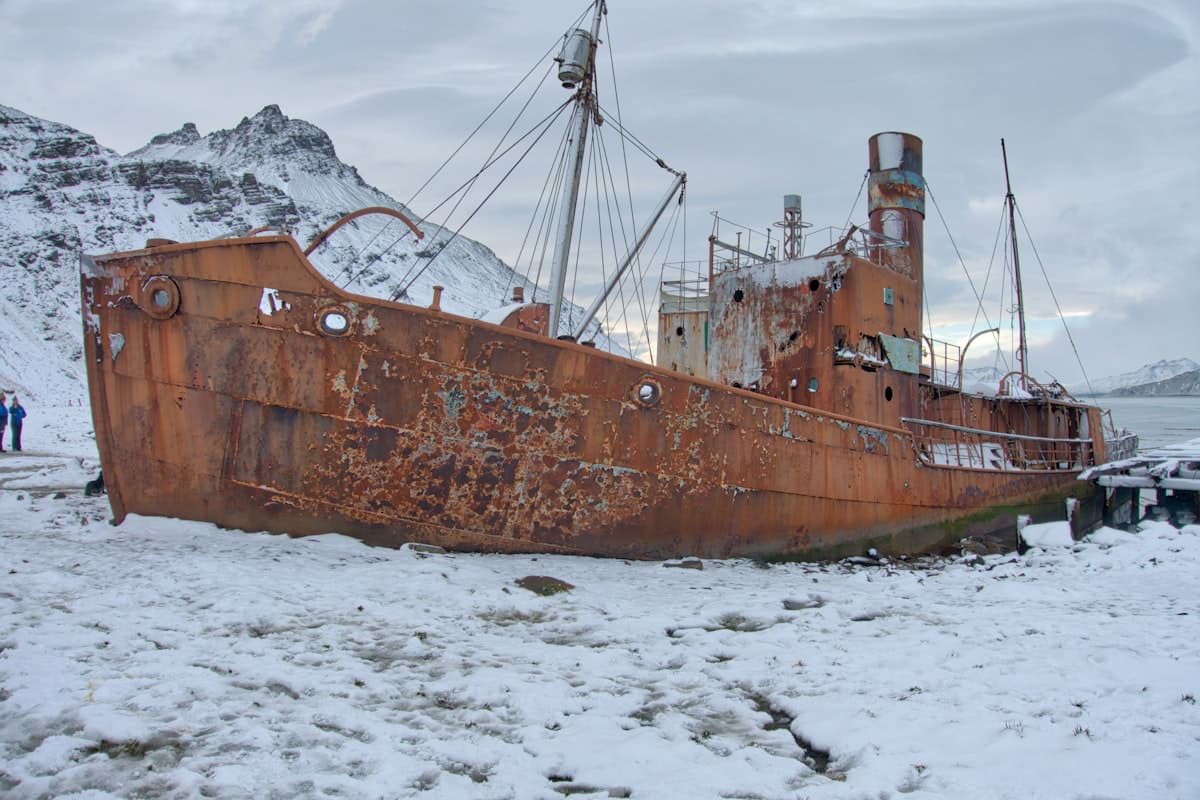
The best preserved of South Georgia's whaling stations, working from 1904 until 1965 and now an open air ruin you can walk through. The white timber church still stands and is one of the few buildings visitors may enter freely. Grytviken is the island's main landing site and the point where most voyages begin their time ashore.
South Georgia Museum
Housed in the former whaling station manager's villa beside King Edward Cove, the museum runs from the first sealers through the whaling years to Shackleton and modern conservation work. Displays include the island's natural history alongside the machinery and daily objects of the station. Only 100 people are admitted at a time, so visits are staggered across a landing.
Shackleton's Grave
Sir Ernest Shackleton died aboard the Quest in Grytviken harbour in January 1922, and at his widow's request he was buried in the whalers' cemetery rather than returned home. A carved granite headstone was unveiled over the grave in 1928. The cemetery is a ten minute walk from the museum, and toasting Shackleton there has become a fixture of nearly every voyage.
Wise
Your bank marks up every USD you spend in South Georgia and South Sandwich Islands. Wise doesn't.
- No foreign transaction fees
- Free ATM withdrawals up to your limit
- Pay in local currency at the real rate
4.8 ★ App Store·4.8 ★ Google Play
Airalo eSIM
Your phone plan was built for home. This one was built for South Georgia and South Sandwich Islands.
- No SIM swapping
- No data roaming charges
- Active in minutes
4.7 ★ App Store·4.6 ★ Google Play
Health & Safety
Health & Emergency Info
Before You Travel
Before you travel make sure you have appropriate travel insurance. Make sure you have accessible funds to cover unexpected medical evacuation. This is particularly important if you have a health condition or are pregnant. Vaccine recommendations and health risks At least 8 weeks before your trip: check the latest vaccine recommendations for Antarctica see where to get vaccines and whether you have to pay on the NHS travel vaccinations page There are no search and rescue or other emergency services on the islands. The Falkland Islands and South America have the nearest medical facilities and ar
Full health advice (FCDO) →Health information sourced from UK FCDO. Always consult a travel health professional before departure.
Practical Info
Travel Essentials
Currency
Language
English
Travel Guide
Frequently Asked Questions About Visiting South Georgia and South Sandwich Islands
Every visitor needs a visit permit from the Government of South Georgia and the South Sandwich Islands, whatever their nationality, and it must be arranged in advance. In practice the operator of your voyage applies on behalf of everyone aboard, and the fee is normally built into the fare. Requirements for the countries you travel through to reach the ship depend on your passport, so check your specific requirements on their destination pages at Yoogo.
The pound sterling is the official currency. The only places to spend anything are the South Georgia Museum shop and the post office at Grytviken, both of which take cards and sterling. Everything else is settled through your ship's onboard account.
Voyages are run by experienced polar operators and serious incidents are rare, but the island has no hospital and no permanent settlement beyond the research station at King Edward Point. Landings are frequently cancelled at short notice because of swell, wind, or aggressive fur seals on the beaches. Operators require insurance covering medical evacuation from a remote position.
There is no airport, so the island is reached only by sea, usually on a voyage from Ushuaia or the Falkland Islands that takes several days. Once there, everything happens by zodiac landing and on foot. There are no roads, no vehicles for visitors, and no way to move independently between sites.
The season runs from October to March. October and November bring king penguin courtship, elephant seal battles, and snow still lying on the beaches, while December and January are the warmest and busiest, with fur seal pups everywhere. February and March offer calmer beaches, moulting kings, and the best chance of whales offshore.
English is the language of the territory and of the British Antarctic Survey team at King Edward Point. There is no permanent civilian population, so there is no local dialect or second language to prepare for. Expedition ships often carry guides who speak German, Spanish, or French.
No vaccinations are required for South Georgia itself, though the countries you transit through may have their own rules. Most operators require a medical fitness declaration, because the nearest hospital is several days away by sea. Bring ample prescription medication, as nothing can be resupplied once you sail.
There is nowhere on the island where tipping applies, since there are no restaurants, hotels, or taxis. Tipping the crew and expedition team of your ship at the end of the voyage is customary, usually as a suggested daily amount charged to your onboard account. The museum shop and post office do not expect tips.