←All destinations
Travel Guide
Visiting Sint Maarten
Select your passport to instantly check if you need a visa.
Discover
Top Attractions in Sint Maarten
The most iconic and unmissable experiences this country has to offer.
Maho Beach
Maho Beach sits directly beneath the approach to Princess Juliana International Airport, where arriving jets pass low overhead before landing. Beyond the plane spotting it is a genuine swimming beach, though the wash from departing aircraft can be strong.
Great Bay Beach and Philipsburg Boardwalk
Great Bay curves along Philipsburg, where a mile-long boardwalk connects the beach to Front Street's shops and restaurants. Cruise passengers come ashore here, and the calm bay makes for easy swimming close to town.
Fort Amsterdam
Fort Amsterdam stands on the peninsula between Great Bay and Little Bay, built by the Dutch in 1631 as their first military post in the Caribbean. Little remains but a few cannons and walls, and the headland gives clear views over Philipsburg and passing cruise ships.
Mullet Bay Beach
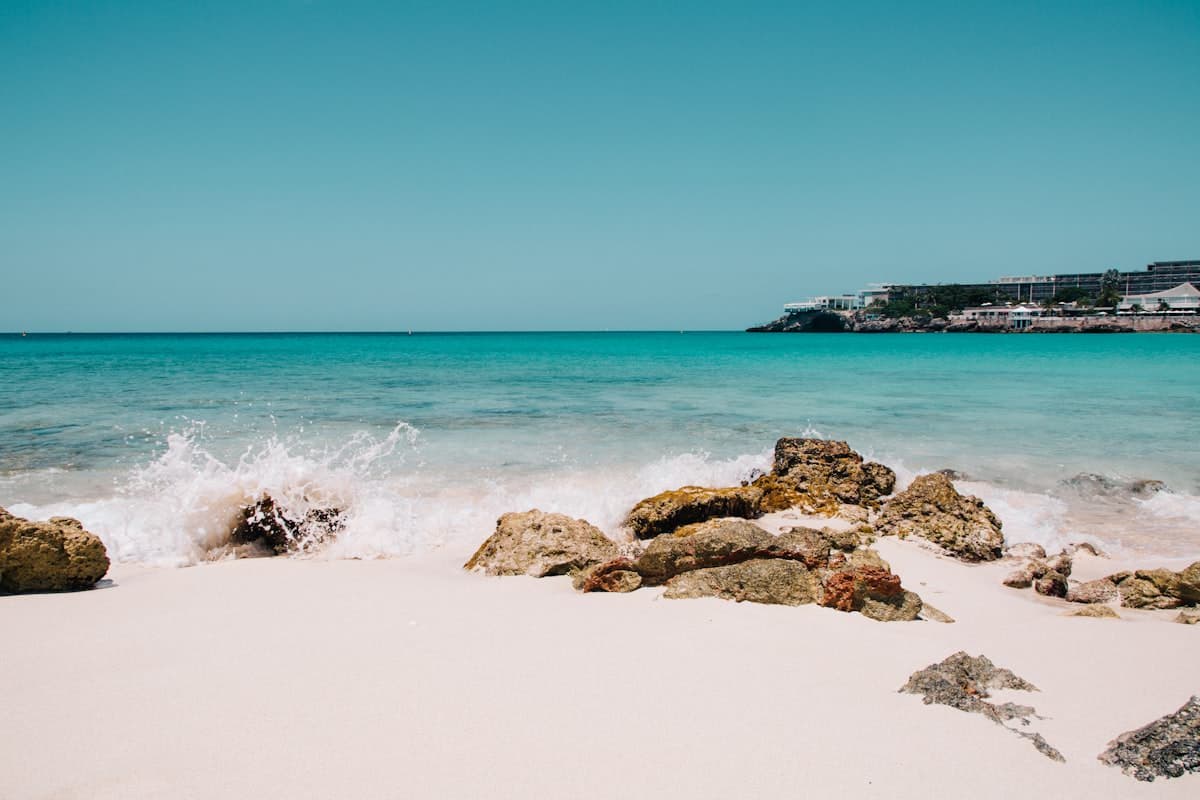
Mullet Bay is widely regarded as Sint Maarten's finest beach, a curve of soft white sand backed by sea grape trees. The clear water is good for swimming, and small waves near the point occasionally draw bodyboarders.
Wise
Your bank marks up every USD you spend in Sint Maarten. Wise doesn't.
- No foreign transaction fees
- Free ATM withdrawals up to your limit
- Pay in local currency at the real rate
4.8 ★ App Store·4.8 ★ Google Play
Airalo eSIM
Your phone plan was built for home. This one was built for Sint Maarten.
- No SIM swapping
- No data roaming charges
- Active in minutes
4.7 ★ App Store·4.6 ★ Google Play
Health & Safety
Health & Emergency Info
Before You Travel
Before you travel check that: your destination can provide the healthcare you may need you have appropriate travel insurance for local treatment or unexpected medical evacuation This is particularly important if you have a health condition or are pregnant. Emergency medical number Call 911 and ask for an ambulance. Contact your insurance company quickly if you’re referred to a medical facility for treatment. Vaccine recommendations and health risks At least 8 weeks before your trip: check the latest vaccine recommendations for St Maarten see where to get vaccines and whether you have to pay on
Full health advice (FCDO) →Emergency Numbers
Police911
Ambulance912
Fire919
Health information sourced from UK FCDO. Always consult a travel health professional before departure.
Practical Info
Travel Essentials
Travel Guide
Frequently Asked Questions About Visiting Sint Maarten
Sint Maarten is a constituent country of the Kingdom of the Netherlands, and entry requirements depend on your passport nationality. Check your specific requirements on the Sint Maarten destination page at Yoogo before you book.
The official currency is the Netherlands Antillean guilder, though the US dollar is accepted almost everywhere and is the currency most visitors use. Prices are often shown in dollars, and cards are widely accepted. Carry some small notes for taxis and beach vendors.
Sint Maarten is generally safe for visitors, and most trips are trouble free. Take sensible precautions with valuables, avoid quiet areas at night, and use hotel safes for passports and cash. The island shares the regional hurricane risk from June to November.
Hiring a car is the easiest way to explore both the Dutch and French sides, as there is no border control between them. Shared minibuses run along the main routes at low cost, and taxis operate on fixed zone fares rather than meters. Agree the fare before you set off.
The dry, sunny high season runs from December to April and is the busiest and priciest time. May and June often bring good weather with fewer crowds. The hurricane season from June to November carries a higher chance of storms, particularly from August to October.
Dutch is the official language, but English is the main language of daily life and tourism and is spoken almost everywhere. On the neighbouring French side, French is official. Spanish and a local English-based Creole are also widely heard.
No vaccinations are required for entry, although routine immunisations should be up to date. Dengue and other mosquito-borne illnesses can occur, so use repellent. The island has a hospital in Philipsburg, and travel insurance with medical cover is strongly advised.
Many restaurants add a service charge of around 10 to 15 percent, so check the bill before adding more. If service is not included, a tip of around 15 percent is customary. Rounding up for taxis and leaving a little for hotel staff is appreciated.
Sint Maarten has good mobile coverage and 4G across the island through local networks. Roaming can be costly, so check with your provider, or use a travel eSIM from Airalo for data. Wi-Fi is common in hotels, restaurants, and beach bars.
The island is friendly and informal, and a warm greeting is always welcome. Beachwear belongs on the beach, so dress a little more fully in shops and restaurants. Moving between the Dutch and French sides is seamless, with no passport check at the open border.