←All destinations
Travel Guide
Visiting Suriname
Select your passport to instantly check if you need a visa.
Discover
Top Attractions in Suriname
The most iconic and unmissable experiences this country has to offer.
UNESCO World Heritage
Historic Inner City of Paramaribo
The historic centre of Paramaribo preserves a remarkably intact 17th-century colonial streetscape, with over 250 wooden monuments arranged along a river-side grid laid out from 1683. Dutch urban planning gradually fused with Creole building traditions, producing a distinctive architectural style found nowhere else in South America. The area was inscribed on the UNESCO World Heritage List in 2002, recognised for its outstanding illustration of a European colonial town transplanted into a tropical setting.
UNESCO World Heritage
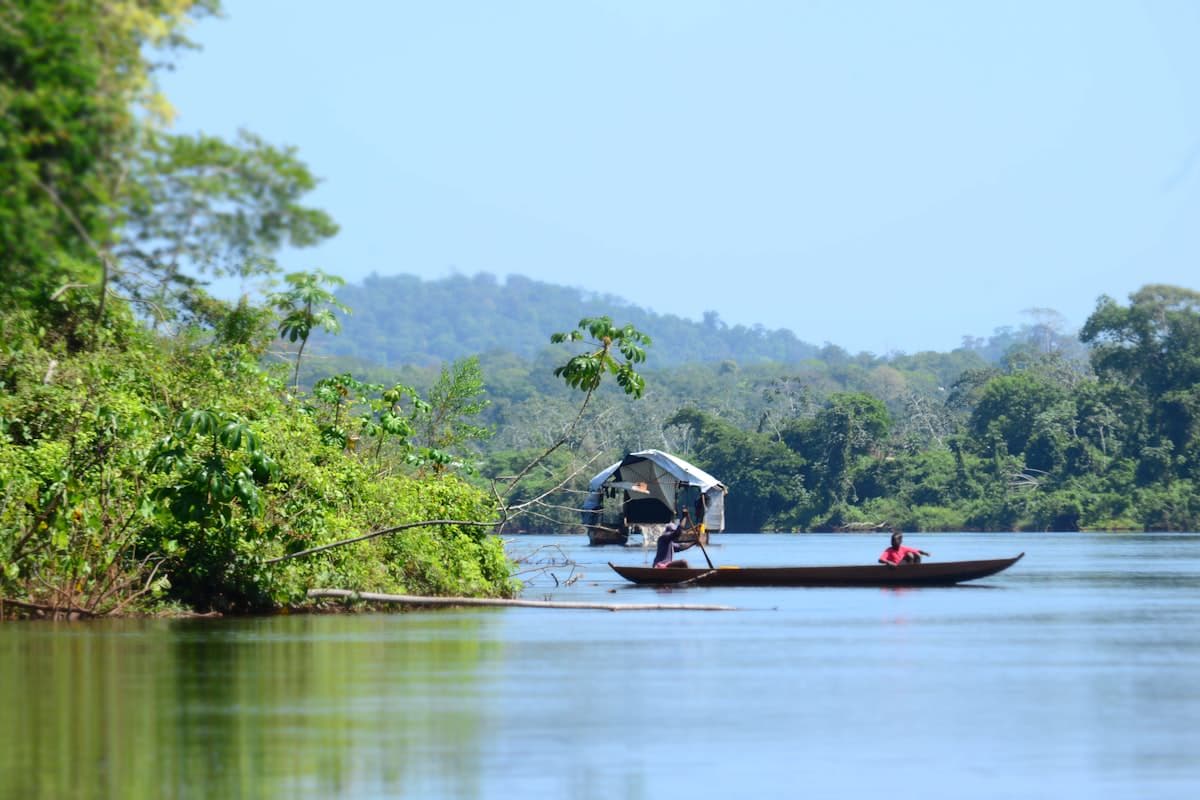
Central Suriname Nature Reserve
Wise
Your bank marks up every USD you spend in Suriname. Wise doesn't.
- No foreign transaction fees
- Free ATM withdrawals up to your limit
- Pay in local currency at the real rate
4.8 ★ App Store·4.8 ★ Google Play
Airalo eSIM
Your phone plan was built for home. This one was built for Suriname.
- No SIM swapping
- No data roaming charges
- Active in minutes
4.7 ★ App Store·4.6 ★ Google Play
Health & Safety
Health & Emergency Info
Before You Travel
Before you travel check that: your destination can provide the healthcare you may need you have appropriate travel insurance for local treatment or unexpected medical evacuation This is particularly important if you have a health condition or are pregnant. Emergency medical number Call 113 or 115 and ask for an ambulance. Contact your insurance company quickly if you’re referred to a medical facility for treatment. Vaccine recommendations and health risks At least 8 weeks before your trip: check the latest vaccine recommendations for Suriname see where to get vaccines and whether you have to p
Full health advice (FCDO) →Emergency Numbers
Police115
Ambulance113
Fire110
Health information sourced from UK FCDO. Always consult a travel health professional before departure.
Practical Info
Travel Essentials
Travel Guide
Frequently Asked Questions About Visiting Suriname
Entry requirements vary by passport. Check the requirements for your specific passport on the Suriname page at Yoogo.
Suriname's official currency is the Surinamese dollar (SRD). Card payments are accepted at larger hotels, supermarkets, and restaurants in Paramaribo, but cash remains essential for smaller businesses, markets, and travel into the interior.
Suriname is generally considered safe for tourists who exercise standard urban precautions, with petty theft such as pickpocketing the most common concern, particularly in busy market areas of Paramaribo. Violent crime against visitors is uncommon, though walking alone in the capital after dark is not recommended.
Within Paramaribo, minibuses and taxis are the primary options, with minibuses following fixed routes at low fares and taxis available for more direct journeys. Travel to the interior relies on a combination of shared vehicles on coastal roads and boat transport along major rivers such as the Suriname, Marowijne, and Corantijn.
The two dry seasons offer the most comfortable conditions for travel: the short dry season runs from February to April, and the longer dry season stretches from mid-August through November. These periods bring reduced rainfall and lower mosquito activity, making them ideal for exploring rainforests and nature reserves.
Dutch is the official language and is used in government, education, and formal business. Surinamese Creole (Sranan Tongo) functions as the widely understood everyday lingua franca, and English is spoken by many people in the tourism industry and in Paramaribo, though proficiency varies outside the capital.
Yellow fever vaccination is required for travellers arriving from risk countries, and proof of immunisation must be presented at the border. Health authorities and travel medicine clinics commonly recommend also considering vaccinations for hepatitis A, typhoid, and hepatitis B, and travellers venturing into the interior should take appropriate precautions against mosquito-borne diseases.
Tipping is not a strong cultural expectation in Suriname, and many restaurants include a service charge of 10 to 15 per cent in the bill. Rounding up a taxi fare is a common and appreciated gesture, while additional tips for tour guides or exceptional service are welcomed but not obligatory.
Suriname's two main mobile operators are Telesur and Digicel, both offering prepaid SIM cards available at the international airport and in shops throughout Paramaribo; passport registration is required for purchase. International eSIM providers such as Airalo offer data plans that connect via local networks, providing a convenient option for travellers who prefer to activate service before arrival.