←Syria travel guide
Aleppo Governorate, Syria
Aleppo
A hilltop citadel above one of the great covered souks
CultureFood & DrinkHistory & Heritage
You climb the stone ramp to the medieval citadel and look out over a city that has traded across the region for some eight millennia. Below, the vaulted lanes of the Al-Madina Souk, the workshops, and the courtyard houses of the Old City spread out in every direction.
Check Syria visa requirements →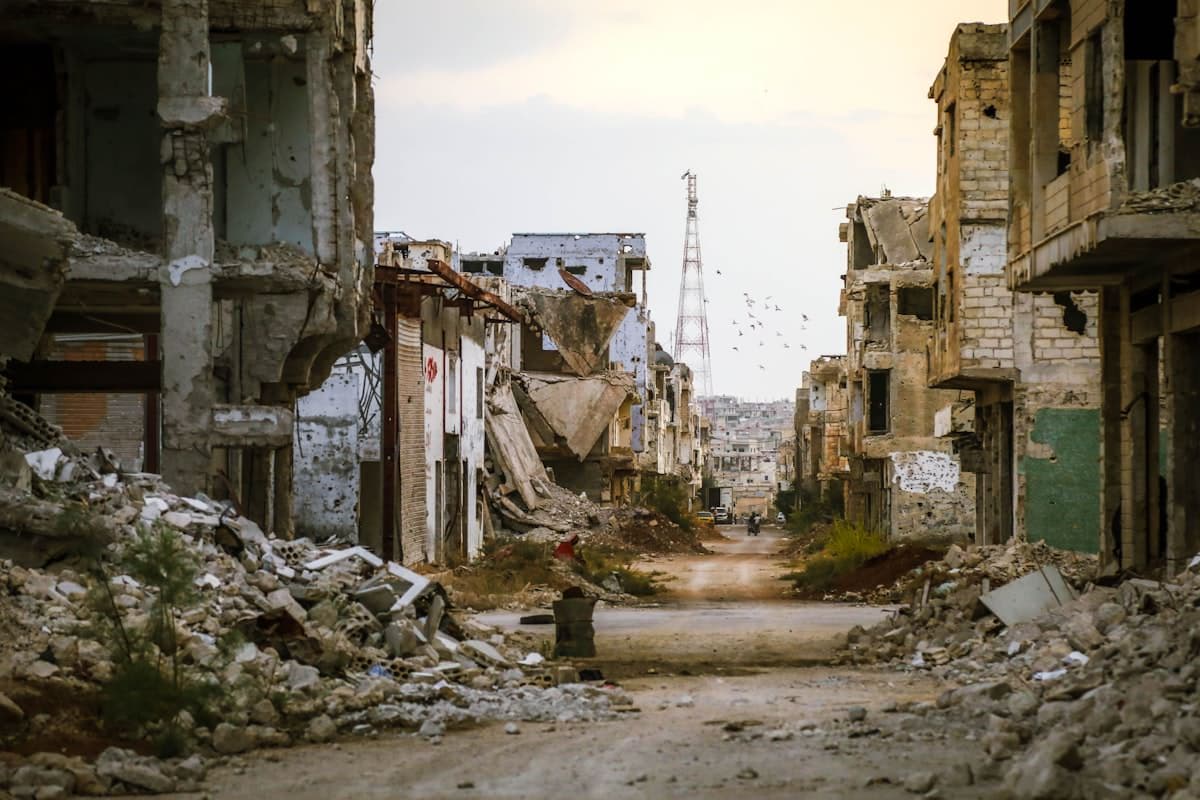
Best time to visit
April to June and September to November
Region
Aleppo Governorate
Main airport
Aleppo ALP (ALP)
Wise
Your bank marks up every USD you spend in Syria. Wise doesn't.
- No foreign transaction fees
- Free ATM withdrawals up to your limit
- Pay in local currency at the real rate
4.8 ★ App Store·4.8 ★ Google Play
Airalo eSIM
Your phone plan was built for home. This one was built for Syria.
- No SIM swapping
- No data roaming charges
- Active in minutes
4.7 ★ App Store·4.6 ★ Google Play
Plan Your Trip
Getting Around Aleppo
Tours, stays, transfers, and flights — curated partner options are on the way.
Tours & Activities
Skip-the-line tickets, guided tours, and day experiences — curated partner options are on the way.
Coming soonWhere to Stay
Hotels, apartments, and guesthouses across every neighbourhood — booking options are on the way.
Coming soonAirport Transfers
Private and shared rides between the airport and the city centre — partner options are on the way.
Coming soonFlights
Compare fares from hundreds of airlines to find the best route in — search options are on the way.
Coming soonTravel Guide
Frequently Asked Questions About Visiting Syria
Most governments currently advise against all travel to Syria due to the ongoing conflict and extremely dangerous security situation. Check your government's official travel advisory and the Syria page at Yoogo before making any plans.
Syria uses the Syrian pound (SYP). The currency has lost significant value due to the conflict and economic crisis. US dollars and euros are widely used in practice. Conditions on the ground change frequently.
Syria has experienced prolonged civil war since 2011, and large areas remain affected by active conflict, instability, and the risk of terrorism, kidnapping, and unexploded ordnance. Most governments advise against all travel to Syria. If you have compelling reasons to travel, consult your government's advisory and register with your embassy.
Infrastructure across much of Syria has been severely damaged by conflict. Road travel carries significant safety risks in many areas. Access to certain regions may be controlled by various armed groups. Any travel planning must be based on the most current security assessments available.
Before the conflict began in 2011, Syria's peak travel season was spring (March to May) and autumn (September to November), when temperatures were mild and the ancient sites of Damascus, Aleppo, Palmyra, and the Crusader castle Krak des Chevaliers were accessible to visitors.
Arabic is the official language. Kurdish is spoken in the north-east. English and French have limited use, primarily in educated urban circles and some business settings.
Consult a travel health clinic before any travel to Syria. The conflict has severely disrupted public health infrastructure, and disease risks are elevated in affected areas. Up-to-date routine vaccinations are essential, and additional vaccines may be recommended depending on the areas you plan to visit.
Historically, tipping was customary in Syrian restaurants and for services such as guides and taxi drivers, with around 10% being typical at restaurants. Conditions on the ground have changed significantly since 2011.
Mobile networks operate in government-controlled areas, but coverage and reliability are highly variable and differ significantly by region. International roaming may not function in all areas. Connectivity conditions change frequently with the security situation.
Syria is a predominantly Muslim country. Dress modestly, particularly when visiting religious sites. Hospitality is deeply embedded in Syrian culture, and guests are traditionally treated with great generosity. The country has a rich history spanning millennia, and its cultural heritage sites are of world significance, though many have suffered damage during the conflict.