←United Arab Emirates travel guide
Dubai, United Arab Emirates
Dubai
Record-breaking skyline, luxury malls, and desert adventures
ArchitectureBeachesNightlifeShopping
Dubai is the largest city in the United Arab Emirates, known for ultramodern architecture, luxury shopping and a desert setting on the Persian Gulf. Landmarks include the Burj Khalifa, the Dubai Mall, the Palm Jumeirah and the historic Al Fahidi district along Dubai Creek.
Check United Arab Emirates visa requirements →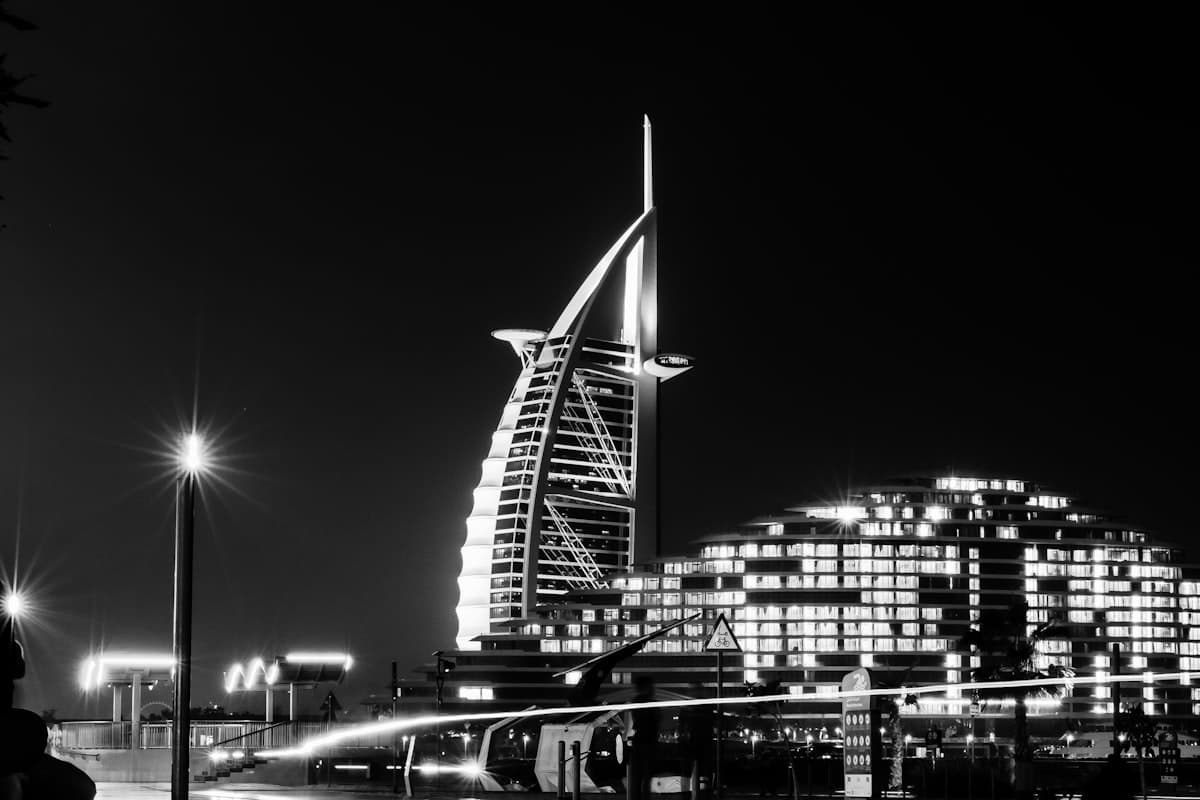
Best time to visit
November to March
Region
Dubai
Main airport
Dubai DXB (DXB)
Discover
Top Things to Do in Dubai
City
Burj Khalifa, Dubai
The world's tallest building at 828 m. Ascend to the At the Top observation deck on the 148th floor for panoramic views across Dubai, the desert, and the Gulf.
City
The Dubai Mall
More than just a shopping centre — the world's largest mall houses an indoor ice rink, aquarium, VR park, and is the centrepiece of the Dubai Fountain, the world's largest choreographed water feature.
City
Palm Jumeirah
The world's largest artificial island, visible from space — home to the iconic Atlantis resort, luxury hotels, beach clubs, and the Palm Monorail.
Wise
Your bank marks up every USD you spend in the UAE. Wise doesn't.
- No foreign transaction fees
- Free ATM withdrawals up to your limit
- Pay in local currency at the real rate
4.8 ★ App Store·4.8 ★ Google Play
Airalo eSIM
Your phone plan was built for home. This one was built for the UAE.
- No SIM swapping
- No data roaming charges
- Active in minutes
4.7 ★ App Store·4.6 ★ Google Play
Plan Your Trip
Getting Around Dubai
Tours, stays, transfers, and flights — curated partner options are on the way.
Tours & Activities
Skip-the-line tickets, guided tours, and day experiences — curated partner options are on the way.
Coming soonWhere to Stay
Hotels, apartments, and guesthouses across every neighbourhood — booking options are on the way.
Coming soonAirport Transfers
Private and shared rides between the airport and the city centre — partner options are on the way.
Coming soonFlights
Compare fares from hundreds of airlines to find the best route in — search options are on the way.
Coming soonTravel Guide
Frequently Asked Questions About Visiting United Arab Emirates
Citizens of many countries — including the US, UK, EU, Canada, Australia, and Japan — receive a free visa on arrival valid for 30 days (extendable once for 30 more days). Citizens of GCC countries need only a national ID. Check your specific nationality via the Yoogo visa checker.
Most nationalities receive a 30-day visa on arrival, extendable to 60 days total. Some nationalities receive 90 days on arrival. Visa overstaying incurs significant daily fines.
A valid passport with at least 6 months validity, return or onward travel confirmation, and sufficient funds (accommodation booking is recommended). Entry is at the discretion of UAE immigration officers.
The UAE is one of the safest countries in the world. Crime is extremely low. However, be aware of strict local laws: public displays of affection, consuming alcohol outside licensed premises, and certain online behaviour are illegal and can result in serious penalties including arrest.
The UAE Dirham (AED, symbol د.إ). It is pegged to the US Dollar at approximately 3.67 AED per USD. ATMs are ubiquitous and credit cards are accepted almost everywhere.
Arabic is the official language. English is widely spoken and understood across all major cities — it is the primary language of business and tourism.
October to April is the ideal time to visit — temperatures are comfortable (20–30°C) and outdoor activities are enjoyable. May to September is extremely hot (often exceeding 40°C) and humid, though indoor attractions are always air-conditioned.
Ascend the Burj Khalifa, visit the Sheikh Zayed Grand Mosque, go on a desert safari, experience the Dubai Mall and Dubai Fountain, explore the Palm Jumeirah, visit Abu Dhabi's Louvre museum, dine at world-class restaurants, and take a traditional dhow cruise in Dubai Creek.
Dubai International Airport (DXB) is one of the world's busiest international airports. Abu Dhabi International Airport (AUH) is the hub for Etihad Airways. Dubai's new Al Maktoum International Airport (DWC) is expanding.
Travel insurance is strongly recommended. Medical costs in the UAE are extremely high, and private hospitals are the standard of care.
No vaccinations are required for most tourists. Standard routine vaccinations are recommended. Check if any vaccinations are needed based on your origin country.