Attraction in Uzbekistan
Gur-e-Amir Mausoleum
UNESCO World Heritage
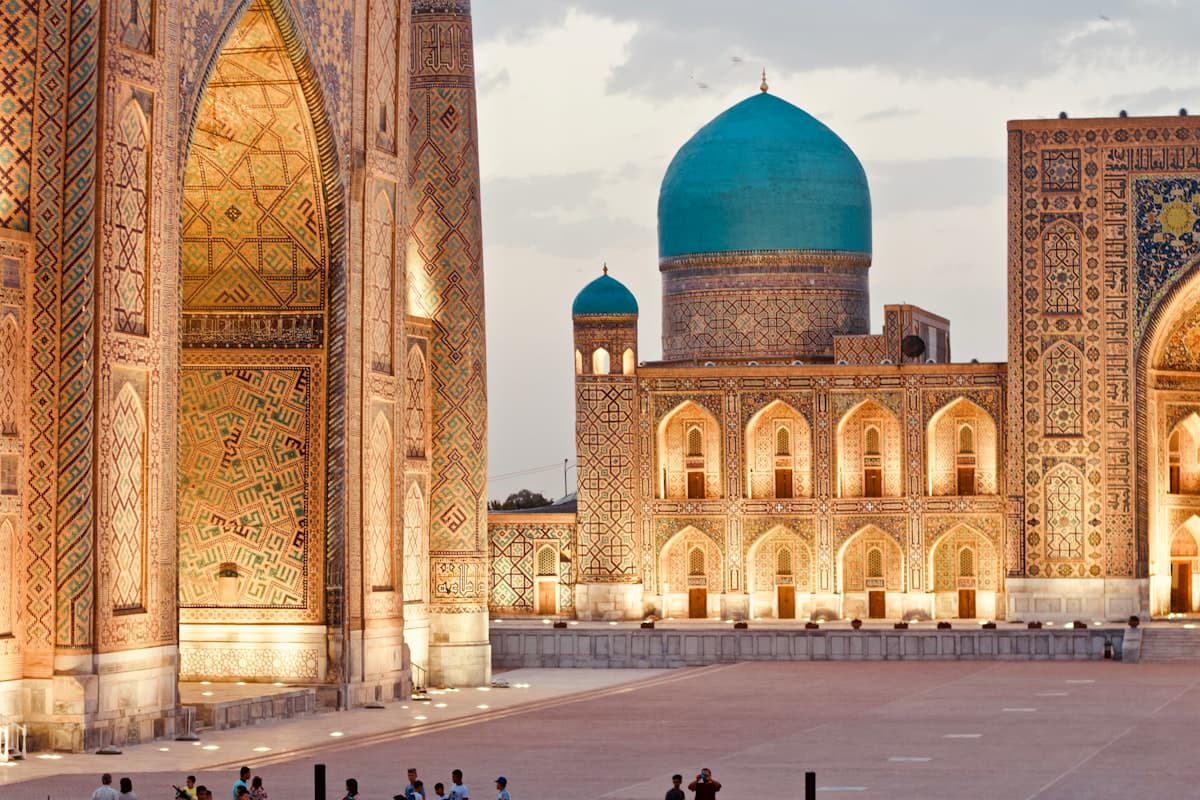
The Gur-e-Amir is the mausoleum of Timur (Tamerlane), completed in Samarkand in 1404 and later serving as the resting place of his sons and grandsons. Its signature ribbed turquoise dome and towering portal are inlaid with intricate arabesques and gilded calligraphy, establishing an architectural language that went on to influence Mughal tomb design, including the Taj Mahal. The interior chamber houses Timur's dark nephrite tombstone, said to be the largest single slab of the stone in the world.
Wise
Your bank marks up every USD you spend in Uzbekistan. Wise doesn't.
- No foreign transaction fees
- Free ATM withdrawals up to your limit
- Pay in local currency at the real rate
4.8 ★ App Store·4.8 ★ Google Play
Airalo eSIM
Your phone plan was built for home. This one was built for Uzbekistan.
- No SIM swapping
- No data roaming charges
- Active in minutes
4.7 ★ App Store·4.6 ★ Google Play
Travel Guide
Frequently Asked Questions About Visiting Uzbekistan
Entry requirements depend on your passport. Uzbekistan has liberalised its visa regime significantly in recent years, with many nationalities able to visit visa-free or obtain a visa on arrival. Check your specific requirements on the Uzbekistan page at Yoogo.
Uzbekistan uses the Uzbekistani som (UZS). Cash is important for most transactions. ATMs are available in cities, and card acceptance has improved significantly, particularly in Tashkent, Samarkand, and Bukhara. US dollars and euros can be exchanged easily at banks and authorised exchange points.
Uzbekistan is generally safe for tourists, with low crime rates. The government maintains tight security, which contributes to a sense of order. Standard precautions with valuables apply. Be respectful of photography restrictions around government buildings and military sites. Check current advisories for border areas.
High-speed Afrosiyob trains connect Tashkent with Samarkand and Bukhara quickly and comfortably. Ordinary trains and shared taxis cover other routes. Tashkent has a clean and efficient metro system. Rental cars with drivers are a practical option for flexible travel. Domestic flights are available but trains are often more convenient.
Spring (April to May) and autumn (September to October) are the best times, with pleasant temperatures and the beauty of the Silk Road cities at their most comfortable. Summers are very hot, particularly in the Fergana Valley and desert regions. Winters can be cold but offer a quieter experience of the great cities.
Uzbek is the official language. Russian remains widely spoken, particularly in cities and among older generations. English is less common but is increasingly spoken by younger people in the tourism sector. Russian is more useful than English for independent travel outside tourist areas.
No vaccinations are required to enter Uzbekistan for most travellers. Hepatitis A, typhoid, and routine vaccinations are commonly recommended. Tap water quality varies; bottled water is advised. Medical facilities in Tashkent are adequate but limited outside major cities.
Tipping is appreciated but not obligatory. At tourist restaurants, rounding up the bill or leaving 5–10% is appropriate. Guides and drivers on organised tours typically receive a tip at the end. Small gratuities for hotel staff are welcomed.
Mobile coverage is good in cities and along major routes. Providers include Ucell, UMS, and Beeline Uzbekistan. Local SIM cards are inexpensive and available with a passport. 4G is available in urban areas. Wi-Fi is widely available in hotels and many cafes in major cities.