Attraction in Vietnam
Hue Imperial Citadel
UNESCO World Heritage
The walled citadel of Hue was the seat of the Nguyen emperors from 1802 until 1945, its moated purple city containing palaces, temples, and ceremonial gates modelled partly on Beijing's Forbidden City. UNESCO inscribed the complex in 1993 in recognition of its outstanding role as Vietnam's political and cultural centre for nearly 150 years.
Wise
Your bank marks up every USD you spend in Vietnam. Wise doesn't.
- No foreign transaction fees
- Free ATM withdrawals up to your limit
- Pay in local currency at the real rate
4.8 ★ App Store·4.8 ★ Google Play
Airalo eSIM
Your phone plan was built for home. This one was built for Vietnam.
- No SIM swapping
- No data roaming charges
- Active in minutes
4.7 ★ App Store·4.6 ★ Google Play
Travel Guide
Frequently Asked Questions About Visiting Vietnam
Entry requirements depend on your passport. Check your specific requirements on the Vietnam page at Yoogo.
Vietnam uses the Vietnamese dong (VND). Cash is important for most daily transactions, street food, markets, and smaller businesses. ATMs are widely available in cities and tourist destinations. Cards are accepted at most hotels, larger restaurants, and shopping centres. Keep small denominations for everyday purchases.
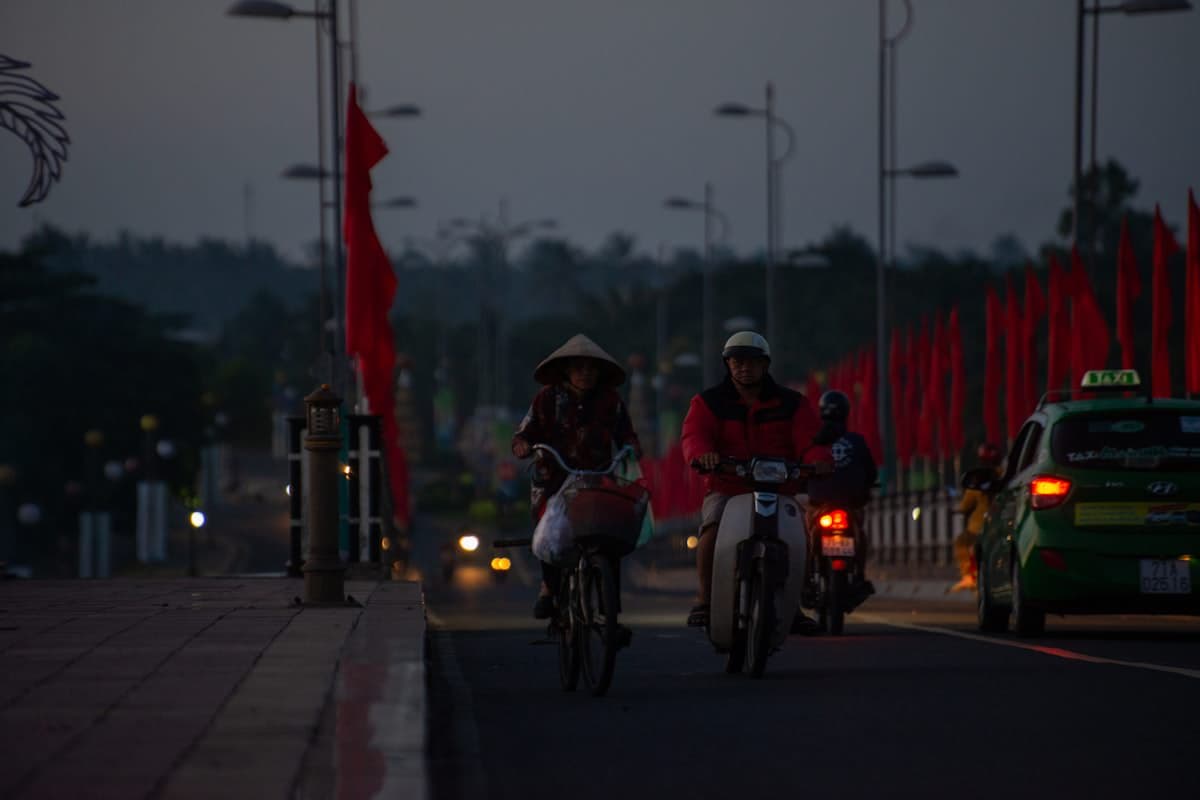
Vietnam is generally safe for tourists, with low violent crime. Petty theft, bag snatching, and scams targeting tourists occur in busy areas such as Ho Chi Minh City's District 1 and Hanoi's Old Quarter. Use reputable taxi companies or ride-hailing apps (Grab is the most reliable). Traffic is a genuine hazard: roads are busy with motorbikes and crossing the street requires patience.
Vietnam is a long country, and domestic flights are the most time-efficient way to travel between north and south. The Reunification Express train is a scenic and comfortable option for the full length of the country. Sleeper buses cover many routes affordably. In cities, Grab (ride-hailing) is reliable and well-priced. Motorbike hire is popular but requires experience and appropriate insurance.
Vietnam's north and south have different climate patterns. Hanoi and the north are best from October to April, avoiding summer heat and rain. The central coast and Hoi An are best from February to May. Ho Chi Minh City in the south is most comfortable from November to April. In practice, Vietnam is visited year-round as different seasons suit different regions.
Vietnamese is the official language. It is a tonal language with six tones, making spoken communication challenging for newcomers. English is widely spoken in hotels, tour agencies, and tourist areas in the major cities, and among younger people. Outside tourist areas, communication can be more difficult; a translation app is helpful.
No vaccinations are legally required for most travellers. Hepatitis A, typhoid, and routine vaccinations are commonly recommended. Japanese encephalitis is a consideration for travellers spending extended time in rural areas. Dengue fever is present. Consult a travel health clinic before your trip.
Tipping is not a deeply embedded local tradition but is increasingly expected in tourist settings. At upscale restaurants, 5–10% is appropriate. Tour guides and drivers typically expect tips; USD 2–5 per person per day for guides is common. Small tips at street food stalls are not expected.