Attraction in Yemen
Old City of Sana'a
UNESCO World Heritage
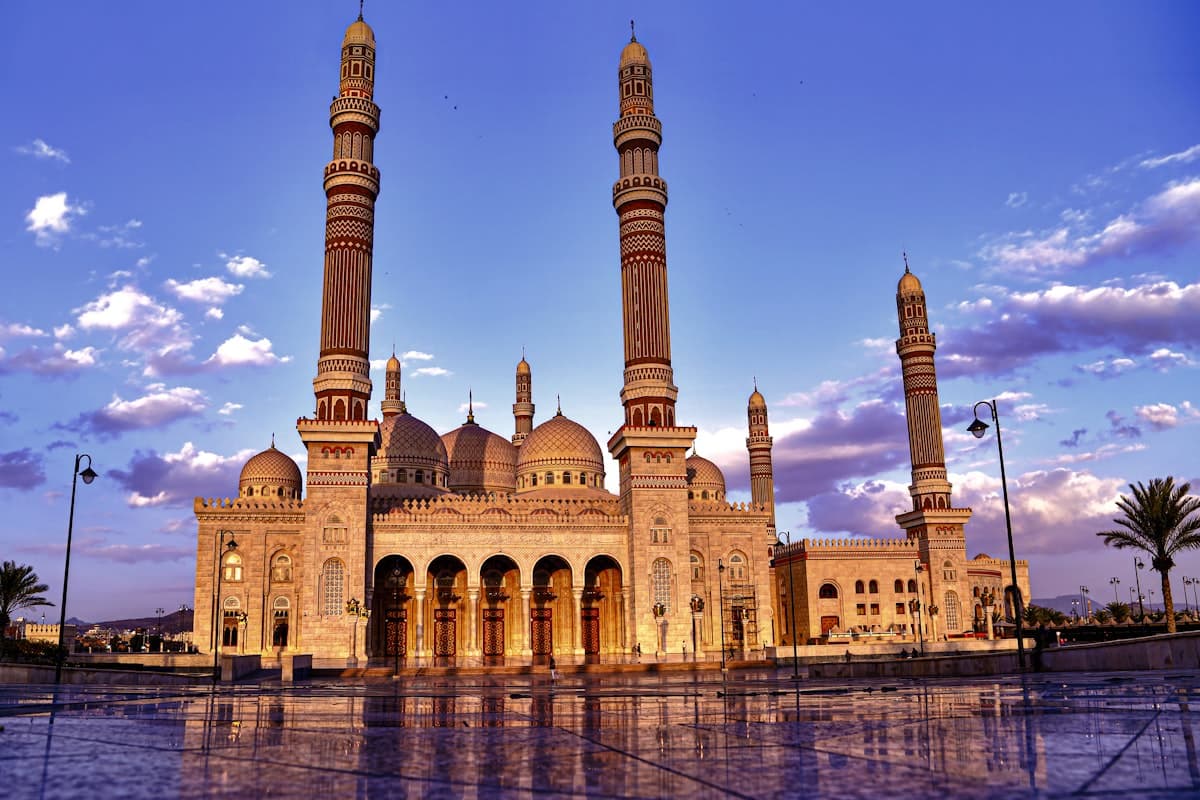
Inhabited for more than 2,500 years, this UNESCO World Heritage walled city is a dense cluster of multi-storey tower houses built from rammed earth, brick, and decorative gypsum. At its heart stands the Great Mosque of Sana'a, recognised as one of the first mosques built outside Mecca and Medina, while gates such as Bab al-Yemen open onto the bustling souqs. Wandering the lanes, you see a living example of early Islamic urban architecture preserved almost intact.
Wise
Your bank marks up every USD you spend in Yemen. Wise doesn't.
- No foreign transaction fees
- Free ATM withdrawals up to your limit
- Pay in local currency at the real rate
4.8 ★ App Store·4.8 ★ Google Play
Airalo eSIM
Your phone plan was built for home. This one was built for Yemen.
- No SIM swapping
- No data roaming charges
- Active in minutes
4.7 ★ App Store·4.6 ★ Google Play
Travel Guide
Frequently Asked Questions About Visiting Yemen
Most governments advise against all travel to Yemen due to the ongoing armed conflict, which has caused a severe humanitarian crisis since 2015. The situation remains extremely dangerous throughout most of the country. Check your government's official travel advisory and the Yemen page at Yoogo before making any plans.
Yemen uses the Yemeni rial (YER). The currency and banking system have been severely disrupted by the conflict. Conditions on the ground change frequently and vary by region and controlling authority.
Yemen has been in the grip of a devastating civil war since 2015, with multiple armed factions controlling different parts of the country. Airstrikes, ground combat, landmines, kidnapping, and terrorism make travel anywhere in Yemen extremely dangerous. Most governments issue 'do not travel' advisories for the entire country.
Yemen was once one of the Arabian Peninsula's most remarkable destinations, with the ancient Old City of Sana'a (a UNESCO World Heritage Site), the island of Socotra with its unique dragon blood trees, and the mud-brick tower houses of Shibam. These extraordinary cultural and natural assets remain, though access is currently impossible for most visitors.
Before the conflict, October to April was the most comfortable time to visit, with milder temperatures than the intense summer heat. The southern highlands and Socotra were accessible during the winter months when weather conditions permitted.
Arabic is the official language. Modern Standard Arabic is used in formal contexts, while Yemeni Arabic dialects are spoken in daily life. English is rarely spoken outside some urban professional and academic circles.
The conflict has devastated Yemen's public health infrastructure. Consult a travel health clinic if considering travel. Cholera, which saw large outbreaks during the conflict, and other infectious diseases pose elevated risks. Yellow fever vaccination is required if arriving from an endemic country. Medical care is extremely limited and unreliable across most of the country.
Historically, tipping was not a formal custom in Yemen, though small tips for guides, drivers, and hotel staff were appreciated. Hospitality is deeply embedded in Yemeni culture, and guests are traditionally welcomed warmly.
Mobile networks are severely disrupted across Yemen. Connectivity varies dramatically by region and controlling authority. Internet access is extremely restricted and unreliable. Communication infrastructure has been extensively damaged by the conflict.