←All destinations
Travel Guide
Visiting Aruba
Select your passport to instantly check if you need a visa.
Discover
Top Attractions in Aruba
The most iconic and unmissable experiences this country has to offer.
Arikok National Park
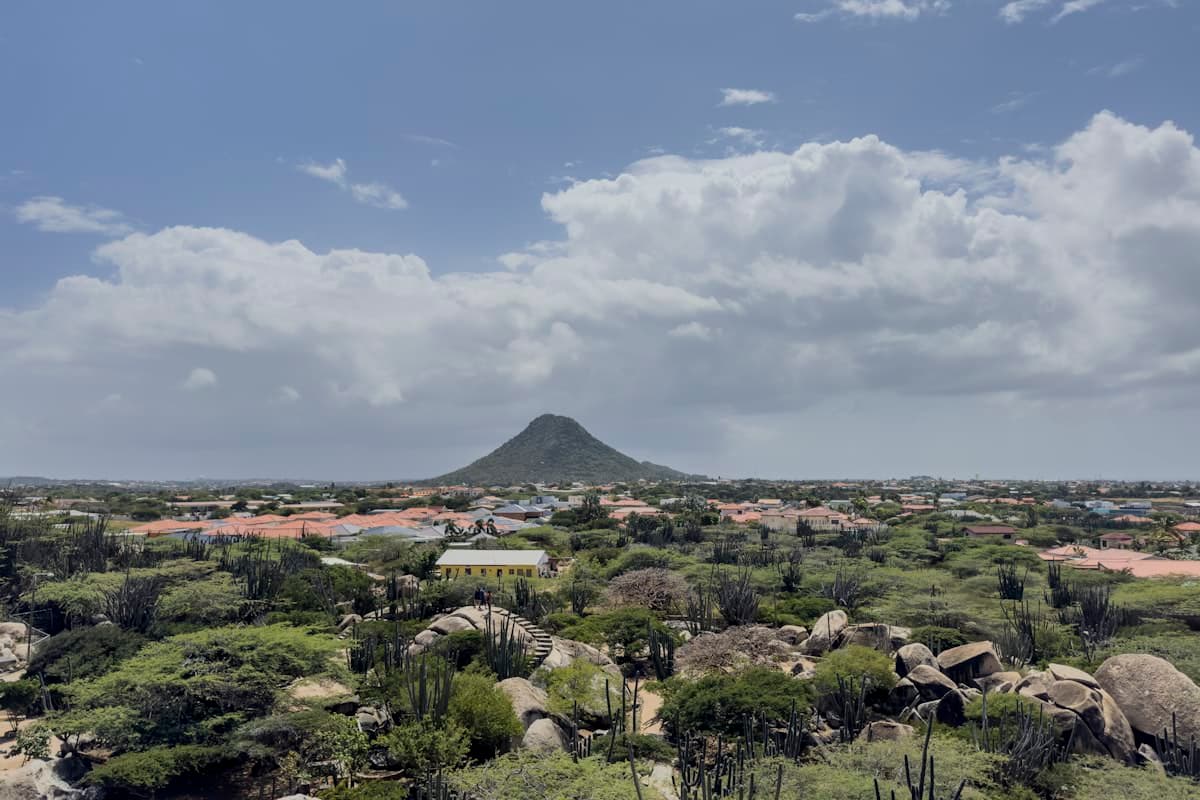
Arikok National Park covers nearly a fifth of Aruba and protects a rugged landscape of limestone cliffs, desert cacti, hidden caves, and native wildlife. Trails and rough tracks lead to dramatic coastal viewpoints, ancient rock drawings, and secluded coves, with a modest conservation fee supporting the reserve.
Eagle Beach
Eagle Beach is Aruba's most celebrated shoreline, regularly named among the best beaches in the world for its wide expanse of soft white sand and calm, clear water. It is home to the island's iconic fofoti trees, whose windswept silhouettes are among the most photographed sights in Aruba.
California Lighthouse
Perched on Aruba's north-western tip, the California Lighthouse is one of the island's best-known landmarks, restored and reopened to visitors in 2016. Climbing the tower rewards you with sweeping views of the rugged coastline, and the late afternoon brings cooler air and memorable sunsets.
Natural Pool (Conchi)
The Natural Pool, known locally as Conchi, is a sheltered swimming spot ringed by volcanic rock within Arikok National Park. Reached only by four-wheel-drive, on horseback, or on foot, it rewards the effort with calm, protected water amid Aruba's wild northern coast.
Wise
Your bank marks up every USD you spend in Aruba. Wise doesn't.
- No foreign transaction fees
- Free ATM withdrawals up to your limit
- Pay in local currency at the real rate
4.8 ★ App Store·4.8 ★ Google Play
Airalo eSIM
Your phone plan was built for home. This one was built for Aruba.
- No SIM swapping
- No data roaming charges
- Active in minutes
4.7 ★ App Store·4.6 ★ Google Play
Health & Safety
Health & Emergency Info
Before You Travel
Before you travel check that: your destination can provide the healthcare you may need you have appropriate travel insurance for local treatment or unexpected medical evacuation This is particularly important if you have a health condition or are pregnant. Emergency medical number Call 911 and ask for an ambulance. Contact your insurance company quickly if you’re referred to a medical facility for treatment. Vaccine recommendations and health risks At least 8 weeks before your trip: check the latest vaccine recommendations for Aruba see where to get vaccines and whether you have to pay on the
Full health advice (FCDO) →Emergency Numbers
Police100
Ambulance911
Fire911
Health information sourced from UK FCDO. Always consult a travel health professional before departure.
Practical Info
Travel Essentials
Travel Guide
Frequently Asked Questions About Visiting Aruba
Entry requirements depend on your passport nationality. Check your specific requirements on the Aruba destination page at Yoogo before you book.
The official currency is the Aruban florin (AWG), which is pegged to the US dollar, and US dollars are widely accepted across the island. Credit and debit cards are taken at most hotels, restaurants, and shops, though it is wise to carry some cash for smaller vendors, taxis, and tips.
Aruba is considered one of the safer Caribbean islands, with low rates of serious crime against visitors. As anywhere, you should take sensible precautions, such as securing valuables, avoiding leaving belongings unattended on the beach, and staying aware of your surroundings at night.
Aruba has a reliable public bus service (Arubus) linking Oranjestad with the hotel areas, San Nicolas, and other towns, alongside readily available taxis with fixed fares. Many visitors hire a car to explore freely, and driving is on the right-hand side of the road.
Aruba enjoys warm, sunny weather year round and sits below the main hurricane belt, so it is a dependable destination in almost any season. The period from December to April is the busiest and driest, while the quieter months from May to November often bring lower prices and fewer crowds.
The official languages are Dutch and Papiamento, the latter being the everyday language of most Arubans. English and Spanish are also widely spoken, particularly in hotels, restaurants, and tourist areas, so visitors rarely face a language barrier.
No special vaccinations are generally required for Aruba, though you should ensure your routine immunisations are up to date and consult your doctor or a travel clinic before departure. The island has good medical facilities, including the Dr Horacio Oduber Hospital, and the strong sun makes sunscreen, a hat, and plenty of water sensible essentials.
Many restaurants add a service charge of around ten to fifteen per cent to the bill, so it is worth checking before adding more. Where service is not included, a tip of around fifteen per cent is customary, and small gratuities for taxi drivers, housekeeping, and tour guides are appreciated.
Aruba has good mobile coverage and reliable 4G across populated areas, with networks operated by local providers such as Setar and Digicel. You can use international roaming, buy a local prepaid SIM card on arrival, or use an eSIM, and most hotels and many restaurants offer free Wi-Fi.