←All destinations
Travel Guide
Visiting Bosnia and Herzegovina
Select your passport to instantly check if you need a visa.
Discover
Top Attractions in Bosnia and Herzegovina
The most iconic and unmissable experiences this country has to offer.
UNESCO World Heritage
Stari Most
Stari Most (the Old Bridge) is a graceful 16th-century Ottoman stone arch spanning the Neretva River in Mostar, commissioned during the reign of Suleiman the Magnificent and completed in 1566. Destroyed during the war in 1993 and faithfully rebuilt using traditional techniques by 2004, it was inscribed on the UNESCO World Heritage List in 2005 as a symbol of reconciliation. Flanked by two medieval towers, Halebija and Tara, the bridge draws visitors who come to watch local divers leap from its parapet into the river below.
Bascarsija
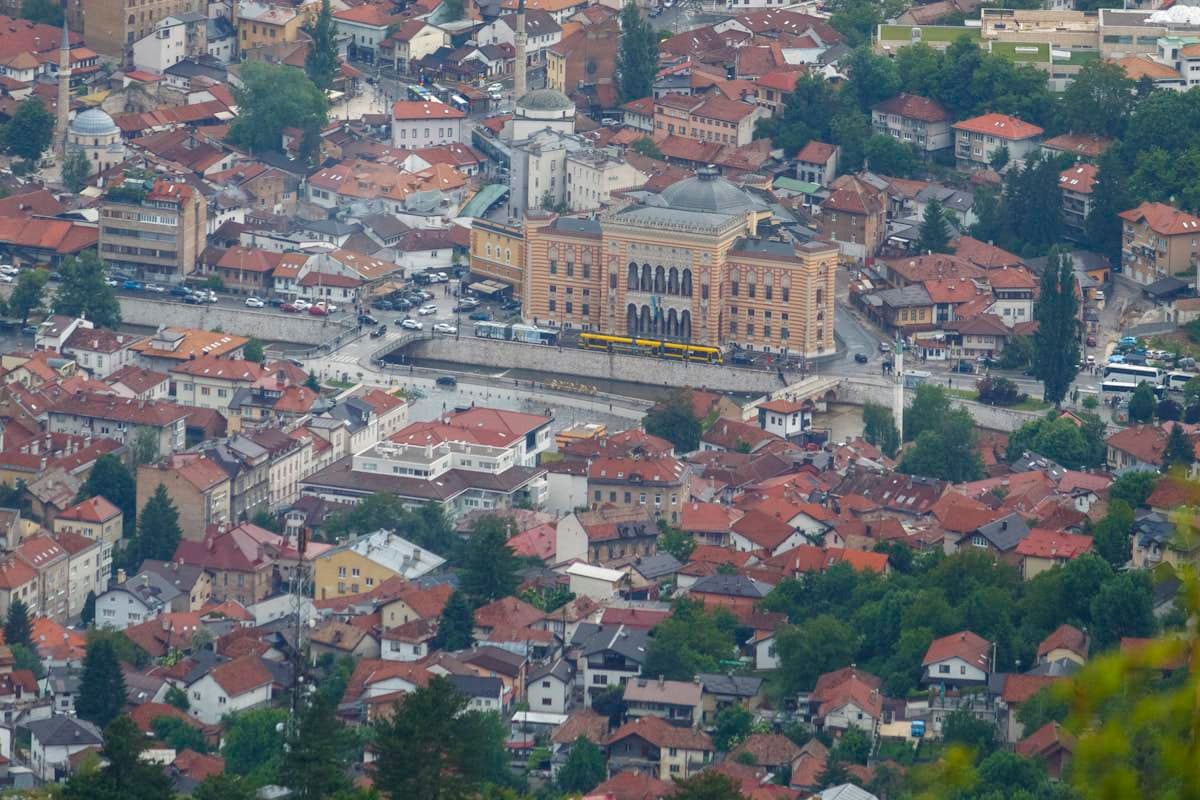
Bascarsija is Sarajevo's Ottoman-era bazaar and the historic heart of the city, a maze of cobblestoned lanes established in the 15th century where coppersmiths, jewellers, and carpet traders have worked for generations. The Sebilj fountain at its centre and the soaring Gazi Husrev-beg Mosque nearby set the tone for a quarter where the architecture, crafts, and street life reflect five centuries of continuous urban tradition. Walking through it offers an unusually direct encounter with the layered cultural history of the western Balkans.
Wise
Your bank marks up every USD you spend in Bosnia and Herzegovina. Wise doesn't.
- No foreign transaction fees
- Free ATM withdrawals up to your limit
- Pay in local currency at the real rate
4.8 ★ App Store·4.8 ★ Google Play
Airalo eSIM
Your phone plan was built for home. This one was built for Bosnia and Herzegovina.
- No SIM swapping
- No data roaming charges
- Active in minutes
4.7 ★ App Store·4.6 ★ Google Play
Where to Go
Top Cities to Visit in Bosnia and Herzegovina
Health & Safety
Health & Emergency Info
Before You Travel
Before you travel check that: your destination can provide the healthcare you may need you have appropriate travel insurance for local treatment or unexpected medical evacuation This is particularly important if you have a health condition or are pregnant. Emergency medical number Dial 124 and ask for an ambulance. Contact your insurance or medical assistance company quickly if you’re referred to a medical facility for treatment. Vaccine recommendations and health risks At least 8 weeks before your trip: check the latest vaccine recommendations for Bosnia and Herzegovina see where to get vacci
Full health advice (FCDO) →Emergency Numbers
Police122
Ambulance124
Fire123
Health information sourced from UK FCDO. Always consult a travel health professional before departure.
Practical Info
Travel Essentials
Travel Guide
Frequently Asked Questions About Visiting Bosnia and Herzegovina
Entry requirements vary by passport. Check the requirements for your specific passport on the Bosnia and Herzegovina page at Yoogo.
The official currency is the Bosnian convertible mark (BAM), which is pegged to the euro. Card payments are accepted in hotels, larger restaurants, and shops in cities, but cash is still widely expected in smaller establishments, markets, and rural areas, so it is worth carrying some local currency.
Bosnia and Herzegovina is generally a safe destination for travellers, with violent crime rates remaining relatively low and most visits to Sarajevo, Mostar, and other cities passing without incident. Petty theft such as pickpocketing can occur in busy tourist areas, and some rural regions retain unexploded ordnance from the 1990s conflict, so it is advisable to stay on marked paths when hiking.
Intercity buses are the most practical and widely used option for travel between Sarajevo, Mostar, Banja Luka, and other towns, with services running throughout the day. The twice-daily Sarajevo to Mostar train is notably scenic and recommended, though the broader rail network is limited and slow. Within Sarajevo, trams and trolleybuses serve the main routes.
Late spring (May to early June) and early autumn (September to October) offer the most comfortable conditions, with warm temperatures and fewer crowds than the peak summer months. July and August can be very hot in Herzegovina, while winter brings heavy snow to the mountainous interior, which suits winter sports but can complicate road travel.
Bosnia and Herzegovina has three official languages, Bosnian, Serbian, and Croatian, which are mutually intelligible South Slavic languages written in both Latin and Cyrillic scripts. English is widely understood among younger people and those working in hospitality and tourism in the main cities, though knowledge of a few basic phrases in the local language is appreciated outside tourist areas.
No vaccinations are required for entry, but travellers are generally advised to be up to date on routine immunisations including hepatitis A, diphtheria, tetanus, and measles, mumps, and rubella. Those planning outdoor activities in forested or rural areas may wish to discuss tick-borne encephalitis vaccination with a travel health professional before departure.
Tipping is not mandatory but is appreciated for good service. In restaurants and cafes a tip of around 10 per cent is a reasonable gesture, and it is customary to leave the tip in cash even when paying by card. Taxi drivers are typically tipped by rounding up the fare.