←All destinations
Travel Guide
Visiting Botswana
Select your passport to instantly check if you need a visa.
Discover
Top Attractions in Botswana
The most iconic and unmissable experiences this country has to offer.
UNESCO World Heritage
Okavango Delta
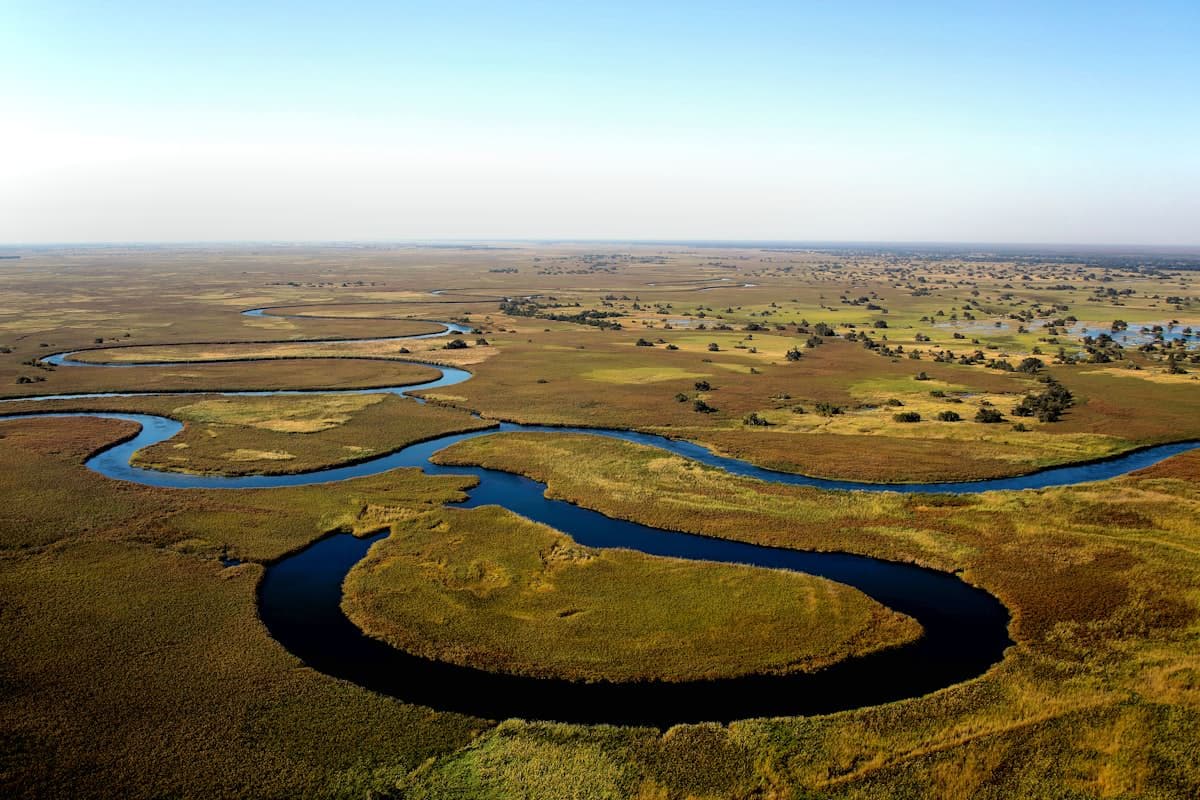
The Okavango Delta is one of the world's largest inland deltas, sprawling across roughly 15,000 square kilometres of the Kalahari Basin and listed as a UNESCO World Heritage Site in 2014. Each year the Cubango River floods from Angola, filling a labyrinth of papyrus-fringed channels, lagoons, and palm-covered islands that attract extraordinary concentrations of elephants, lions, leopards, hippos, and more than 400 bird species. Visitors explore by mokoro (traditional dugout canoe), motorboat, or on foot with a licensed guide.
Chobe National Park
Chobe National Park, covering around 11,700 square kilometres in north-eastern Botswana, is home to the largest elephant population on earth, with estimates of 50,000 to 80,000 animals gathering at the Chobe River during the dry season. The park encompasses four distinct ecosystems, from the well-watered riverfront to the arid Savute marshes, supporting lions, buffalo, wild dogs, and a spectacular array of raptors. Game drives along the riverbank and sunset cruises on the Chobe River are among the defining safari experiences in Africa.
Wise
Your bank marks up every USD you spend in Botswana. Wise doesn't.
- No foreign transaction fees
- Free ATM withdrawals up to your limit
- Pay in local currency at the real rate
4.8 ★ App Store·4.8 ★ Google Play
Airalo eSIM
Your phone plan was built for home. This one was built for Botswana.
- No SIM swapping
- No data roaming charges
- Active in minutes
4.7 ★ App Store·4.6 ★ Google Play
Where to Go
Top Cities to Visit in Botswana
Health & Safety
Health & Emergency Info
Before You Travel
Before you travel check that: your destination can provide the healthcare you may need you have appropriate travel insurance for local treatment or unexpected medical evacuation This is particularly important if you have a health condition or are pregnant. Emergency medical number Call 997 and ask for an ambulance. Contact your insurance company quickly if you’re referred to a medical facility for treatment. Vaccine recommendations and health risks At least 8 weeks before your trip: check the latest vaccine recommendations for Botswana see where to get vaccines and whether you have to pay on t
Full health advice (FCDO) →Emergency Numbers
Police999
Ambulance997
Fire998
Health information sourced from UK FCDO. Always consult a travel health professional before departure.
Practical Info
Travel Essentials
Travel Guide
Frequently Asked Questions About Visiting Botswana
Entry requirements vary by passport. Check the requirements for your specific passport on the Botswana page at Yoogo.
The currency is the Botswana Pula (BWP), divided into 100 thebe. Card payments are accepted at hotels, larger restaurants, and supermarkets in Gaborone and other towns, but cash remains essential in rural areas and remote safari camps, so it is wise to carry Pula when venturing beyond urban centres.
Botswana is widely regarded as one of southern Africa's most politically stable and peaceful countries. Petty theft can occur in urban areas, particularly around bus stations and markets, so standard precautions such as keeping valuables secure and remaining aware of your surroundings are sensible.
Self-drive in a four-wheel-drive vehicle is the most flexible option for reaching national parks and remote areas, though roads vary significantly in condition. Shared minibuses called combis connect major towns affordably, and charter or scheduled domestic flights link Maun and Kasane to Gaborone for those heading to safari destinations.
The dry season from May to October is generally considered the prime time for wildlife viewing, as animals congregate around shrinking water sources and vegetation thins, making sightings easier. July and August are particularly popular for the Okavango Delta when seasonal floodwaters are at their peak, creating the spectacular channels and islands the region is known for.
Setswana and English are the two official languages, with Setswana spoken as a first language by the majority of the population. English is widely used in government, business, and tourism, so most visitors will have little difficulty communicating in hotels, lodges, and urban settings.
A healthcare provider or travel medicine clinic should be consulted at least six weeks before departure. Malaria is present in the northern regions, including the Okavango Delta and Chobe, particularly during the summer wet season, and antimalarial medication is commonly recommended for visits to those areas.
Tipping is not mandatory but is warmly appreciated and forms an important part of staff income, particularly in the tourism sector. Safari lodges typically provide a communal tip box for general staff and separate envelopes for guides and trackers; a common guideline is USD 10–20 per person per day for guides, while restaurants generally expect around 10% of the bill if a service charge has not already been included.