←Cuba travel guide
Havana Province, Cuba
Havana
Where 1950s cars roll past sea-sprayed colonial squares
ArchitectureCultureHistory & HeritageNightlife
Havana is the capital and largest city of Cuba, home to the UNESCO-listed Old Havana with its baroque and neoclassical buildings, cobbled plazas, and the seafront Malecon promenade. Vintage American cars, the imposing Capitolio, and lively music in the streets give the city its distinctive, layered character.
Check Cuba visa requirements →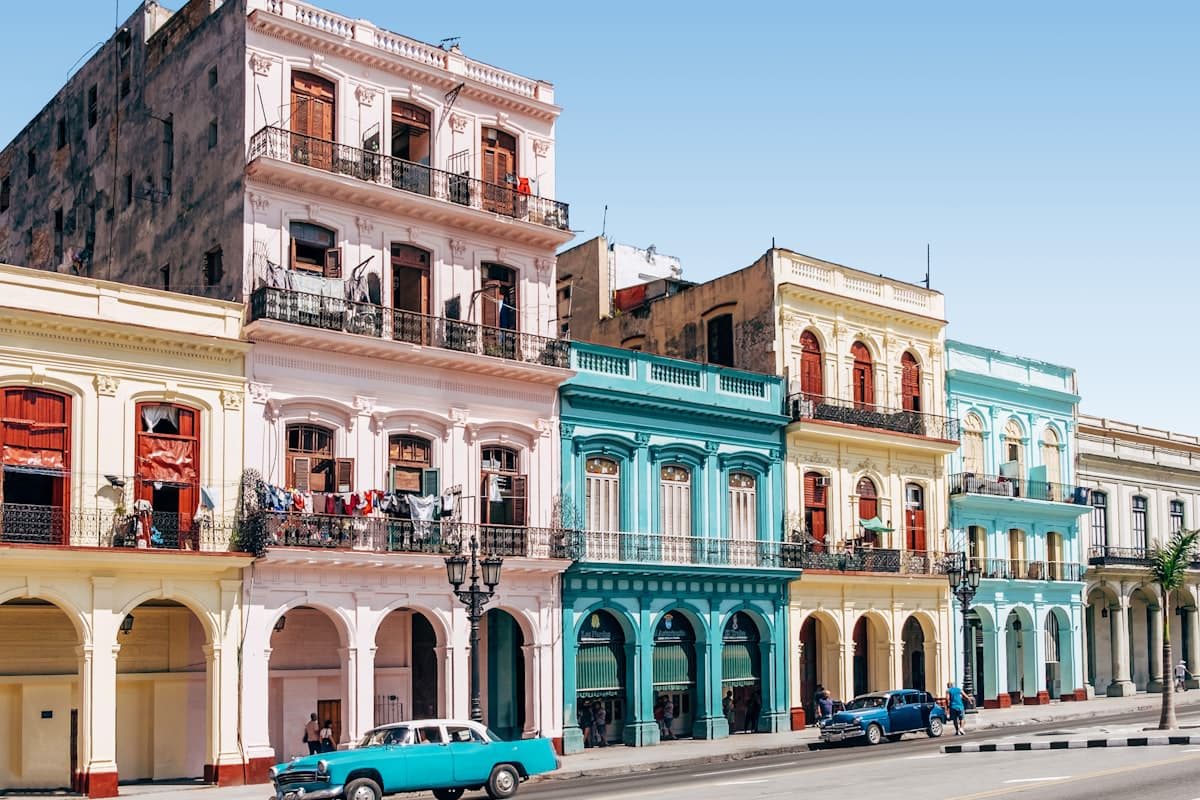
Best time to visit
December to April
Region
Havana Province
Main airport
Havana HAV (HAV)
Discover
Top Things to Do in Havana
UNESCO World HeritageHistory
Old Havana
Old Havana is the historic colonial heart of the capital and a UNESCO World Heritage Site, woven from cobbled plazas, sixteenth-century churches, and grand baroque and neoclassical facades. Best explored slowly on foot, it combines restored squares such as Plaza Vieja with casas particulares, bars, and the constant rhythm of street music.
Culture
El Capitolio
El Capitolio is one of Havana's most recognisable landmarks, completed in 1929 with a grand dome and a facade echoing classical European models. Once the seat of the Cuban Congress, it has since housed national scientific institutions and anchors the busy heart of central Havana.
Wise
Your bank marks up every USD you spend in Cuba. Wise doesn't.
- No foreign transaction fees
- Free ATM withdrawals up to your limit
- Pay in local currency at the real rate
4.8 ★ App Store·4.8 ★ Google Play
Airalo eSIM
Your phone plan was built for home. This one was built for Cuba.
- No SIM swapping
- No data roaming charges
- Active in minutes
4.7 ★ App Store·4.6 ★ Google Play
Plan Your Trip
Getting Around Havana
Tours, stays, transfers, and flights — curated partner options are on the way.
Tours & Activities
Skip-the-line tickets, guided tours, and day experiences — curated partner options are on the way.
Coming soonWhere to Stay
Hotels, apartments, and guesthouses across every neighbourhood — booking options are on the way.
Coming soonAirport Transfers
Private and shared rides between the airport and the city centre — partner options are on the way.
Coming soonFlights
Compare fares from hundreds of airlines to find the best route in — search options are on the way.
Coming soonTravel Guide
Frequently Asked Questions About Visiting Cuba
Entry requirements vary by passport. Check the requirements for your specific passport on the Cuba page at Yoogo.
Cuba uses the Cuban peso (CUP). The country's dual currency era has officially ended, with the CUP as the sole legal currency. Cash is essential; most foreign debit and credit cards, particularly US-issued cards, do not work in Cuba. Bring sufficient euros, Canadian dollars, or other non-US currency in cash to exchange on arrival. ATMs are limited and unreliable.
Cuba is generally safe for tourists by regional standards. Violent crime against visitors is rare. Petty theft and scams targeting tourists, particularly in Havana's tourist areas, do occur. The country faces significant economic shortages of fuel, food, and medicines that can affect travel plans. Power cuts (apagones) are frequent. Check your government's travel advisory for the latest conditions.
Viazul is the main long-distance bus company for tourists, connecting major cities reliably. Classic American cars (almendrones) act as shared taxis for set-route journeys. Taxis are available in main cities; negotiate the fare before getting in. Domestic flights connect Havana with key cities and beach resorts. Hire cars are available but fuel shortages can affect availability.
November to April is the best time to visit, with dry, sunny weather and comfortable temperatures of around 24–26°C. May to October is the wet season, bringing heat, humidity, and hurricane risk from June to November. December and March to April are peak visitor months. Shoulder months of November and early December offer a good balance of weather and fewer crowds.
Spanish is the official language. Cuban Spanish has a distinctive musical accent with dropped consonants that can challenge other Spanish speakers. English is spoken at upscale hotels and resorts catering to international tourists, but is limited elsewhere. Learning a few Spanish phrases goes a long way in connecting with locals.
No vaccinations are legally required for most travellers. Hepatitis A and typhoid are sometimes recommended. Healthcare in Cuba is theoretically universal, but access for foreigners through the tourist system (Asistur) can be expensive. Medical supplies are often limited due to shortages. Bring a comprehensive supply of any medications you need.
Yes, tipping is an important part of Cuba's visitor economy. Restaurant staff, musicians, hotel porters, cleaners, and tour guides rely on tips as a significant part of their income. One to three CUP (or the equivalent in hard currency) per service is a standard guide. Always tip in cash.