←All destinations
Travel Guide
Visiting Ghana
Select your passport to instantly check if you need a visa.
Exercise Caution
UK FCDO: Your travel insurance could be invalidated if you travel against advice from the Foreign, Commonwealth and Development Office (FCDO).
Updated 2025-12-10
Discover
Top Attractions in Ghana
The most iconic and unmissable experiences this country has to offer.
UNESCO World Heritage
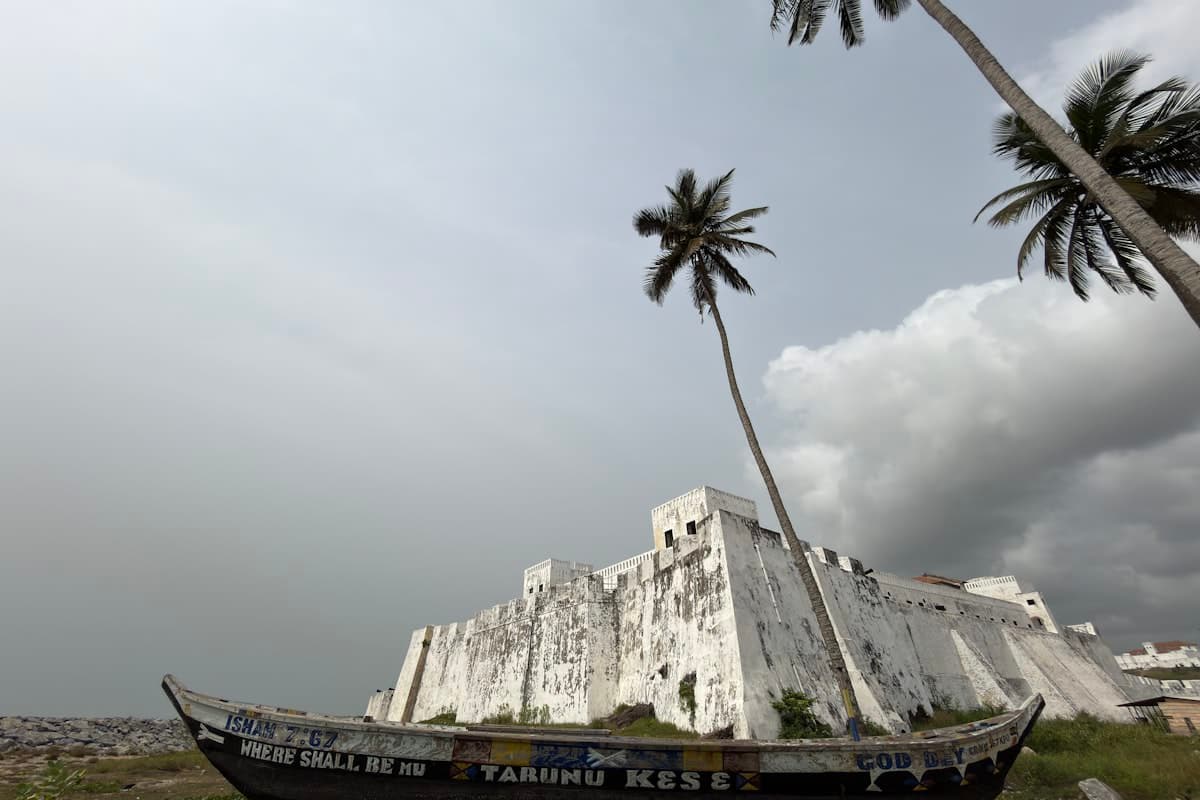
Cape Coast Castle
Cape Coast Castle is a UNESCO World Heritage Site built by the Swedish in the seventeenth century and later used by the British as the principal hub of their transatlantic slave trade operations. Visitors walk through the dungeons where enslaved people were held before being forced through the Door of No Return, and explore a museum covering pre-colonial history and the colonial period. The castle is one of the most visited and historically significant sites in West Africa.
Kakum National Park
Kakum National Park covers 357 square kilometres of intact coastal rainforest roughly 30 kilometres north of Cape Coast, and is best known for its 350-metre canopy walkway, a series of seven suspension bridges suspended up to 40 metres above the forest floor. The park shelters over 250 bird species, forest elephants, and a rich variety of primates. It is one of the few places in West Africa where visitors can experience primary lowland rainforest from above the canopy.
Wise
Your bank marks up every USD you spend in Ghana. Wise doesn't.
- No foreign transaction fees
- Free ATM withdrawals up to your limit
- Pay in local currency at the real rate
4.8 ★ App Store·4.8 ★ Google Play
Airalo eSIM
Your phone plan was built for home. This one was built for Ghana.
- No SIM swapping
- No data roaming charges
- Active in minutes
4.7 ★ App Store·4.6 ★ Google Play
Health & Safety
Health & Emergency Info
Before You Travel
Before you travel check that: your destination can provide the healthcare you may need you have appropriate travel insurance for local treatment or unexpected medical evacuation This is particularly important if you have a health condition or are pregnant. Emergency medical number Call 999 or 112 and ask for an ambulance. Contact your insurance company quickly if you’re referred to a medical facility for treatment. Vaccine recommendations and health risks At least 8 weeks before your trip: check the latest vaccine recommendations for Ghana see where to get vaccines and whether you have to pay
Full health advice (FCDO) →Emergency Numbers
Police191
Ambulance112
Fire192
Health information sourced from UK FCDO. Always consult a travel health professional before departure.
Practical Info
Travel Essentials
Travel Guide
Frequently Asked Questions About Visiting Ghana
Entry requirements vary by passport. Check the requirements for your specific passport on the Ghana page at Yoogo.
Ghana's currency is the Ghanaian Cedi (GHS). Card payments are accepted at larger hotels, supermarkets, and restaurants in Accra and Kumasi, but cash is essential in smaller towns, markets, and rural areas. ATMs are available in major cities, though it is advisable to carry some cash when travelling outside urban centres.
Ghana is generally considered one of West Africa's more stable and welcoming destinations, with a long record of peaceful democratic governance. Petty theft can occur in crowded areas such as markets and bus stations, particularly in Accra, so standard precautions around valuables are sensible. Check your government's current travel advisory before departure for the most up-to-date guidance.
Shared minibuses known as tro-tros are the most widely used form of intercity transport and connect most towns at low cost, though journey times can be long on unpaved roads. Intercity coaches such as STC and VIP Bus offer a more comfortable option for routes between Accra, Kumasi, Tamale, and Cape Coast. Ride-hailing apps including Uber and Bolt operate in Accra, while taxis are available throughout the country.
The dry season from November to March is generally the most comfortable time to visit, with lower humidity and clear skies across most of the country. The harmattan wind blows from the Sahara between December and February, bringing dusty haze in the north. The rainy seasons (April to June and September to October in the south) can make some rural roads impassable but keep the landscape green.
English is Ghana's official language and is widely spoken in cities, schools, businesses, and government, making it straightforward to communicate throughout the country. Akan languages, particularly Twi, are spoken by a large proportion of the population in southern Ghana, while Dagbani, Hausa, and other languages are prevalent in the north. A few words of Twi such as 'Akwaaba' (welcome) are warmly appreciated by local people.
A valid Yellow Fever vaccination certificate is required by law for all travellers over nine months of age and must be presented on arrival. Malaria is present throughout the entire country including Accra, so antimalarial medication and insect repellent are strongly recommended regardless of where you plan to travel. Hepatitis A and B, typhoid, and meningitis vaccinations are also commonly advised; consult a travel health clinic at least four to six weeks before departure.