←All destinations
Travel Guide
Visiting Madagascar
Select your passport to instantly check if you need a visa.
Discover
Top Attractions in Madagascar
The most iconic and unmissable experiences this country has to offer.
UNESCO World Heritage
Tsingy de Bemaraha
This UNESCO World Heritage Site in western Madagascar features a vast plateau of razor-sharp limestone pinnacles, some reaching 50 metres, carved over millions of years by groundwater erosion into a labyrinth of canyons, fissures, and caves. The name Tsingy is Malagasy for 'walking on tiptoes', a fitting description for the needle-like karst formations that define the landscape. The park shelters numerous endemic species of lemur, reptile, and bird, making it one of Africa's most distinctive natural reserves.
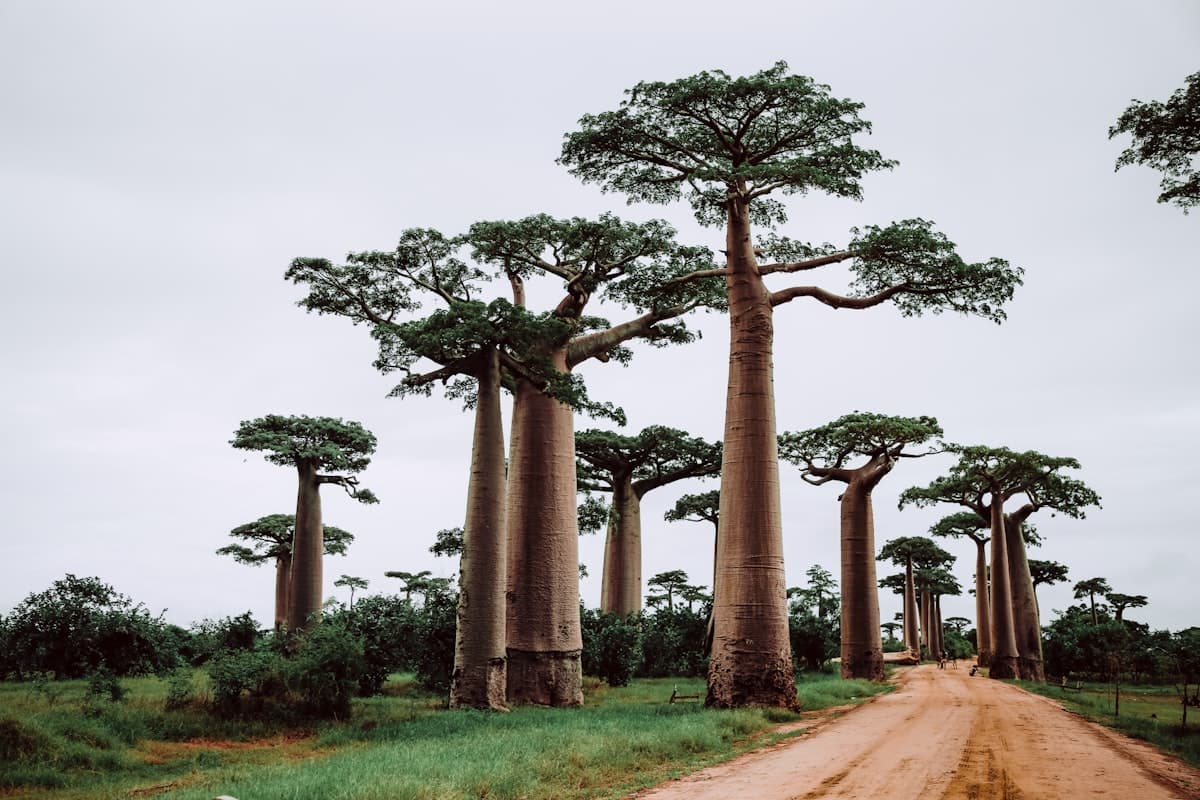
Avenue of the Baobabs
A striking corridor of giant Grandidier's baobabs lines a dirt track near Morondava on the west coast, their smooth, bulbous trunks rising up to 30 metres above the surrounding savannah. The trees are estimated to be over 800 years old and are the surviving remnants of a forest that once covered the region. The avenue is at its most dramatic at sunrise and sunset, when the angled light turns the trunks amber and the shapes cast long shadows across the track.
Wise
Your bank marks up every USD you spend in Madagascar. Wise doesn't.
- No foreign transaction fees
- Free ATM withdrawals up to your limit
- Pay in local currency at the real rate
4.8 ★ App Store·4.8 ★ Google Play
Airalo eSIM
Your phone plan was built for home. This one was built for Madagascar.
- No SIM swapping
- No data roaming charges
- Active in minutes
4.7 ★ App Store·4.6 ★ Google Play
Health & Safety
Health & Emergency Info
Before You Travel
Before you travel check that: your destination can provide the healthcare you may need you have appropriate travel insurance for local treatment or unexpected medical evacuation This is particularly important if you have a health condition or are pregnant. Emergency medical number Call 117 from a mobile or 17 from a landline and ask for an ambulance. Contact your insurance company quickly if you’re referred to a medical facility for treatment. Vaccine recommendations and health risks At least 8 weeks before your trip: check the latest vaccine recommendations for Madagascar see where to get vac
Full health advice (FCDO) →Emergency Numbers
Police117
Ambulance124
Fire118
Health information sourced from UK FCDO. Always consult a travel health professional before departure.
Practical Info
Travel Essentials
Travel Guide
Frequently Asked Questions About Visiting Madagascar
Entry requirements vary by passport. Check the requirements for your specific passport on the Madagascar page at Yoogo.
Madagascar uses the Malagasy Ariary (MGA), and the economy is predominantly cash-based, particularly outside Antananarivo and major hotels. ATMs are available in the capital and larger towns but can be unreliable, so carrying sufficient cash is advisable. Credit cards are accepted at some upmarket hotels and tour operators, but most restaurants, markets, and local transport require cash.
Madagascar is generally considered safe for visitors who take standard precautions, though petty theft and opportunistic crime occur in urban areas, particularly in Antananarivo after dark. Travelling with a reputable local guide is strongly recommended when visiting national parks and remote regions. Consult your government's official travel advisory for the most current guidance before departure.
The most common form of long-distance public transport is the taxi-brousse, a shared minibus that operates on fixed routes between towns and departs when full rather than on a fixed schedule. Domestic flights connect major destinations including Antananarivo, Toamasina, Nosy Be, and Toliara, saving considerable time on long routes. For flexibility and comfort, hiring a 4x4 vehicle with a local driver-guide is the preferred choice for touring national parks and rural areas.
The dry season from April to October is generally the most comfortable time to visit, with cooler temperatures, lower rainfall, and better road conditions across most of the island. July and August are the peak visitor months, offering ideal conditions for wildlife viewing and hiking, though accommodation should be booked in advance. The wet season from November to March brings heavy rains, cyclone risk on the east coast, and can make unpaved roads impassable.
Malagasy is the national language and is spoken throughout the island, with French serving as the second official language and widely used in government, education, and business. English is increasingly spoken in tourist areas, hotels, and by younger guides, though it is not widely understood in rural regions. Learning a few words of Malagasy, such as greetings, is warmly appreciated by locals.
Malaria is present across most of Madagascar, including coastal and park regions, so antimalarial medication is strongly recommended and should be discussed with a travel health professional before departure. A yellow fever vaccination certificate is required for travellers arriving from countries where yellow fever transmission is a risk. Other vaccinations commonly recommended include typhoid, hepatitis A, and rabies, particularly for those planning extended stays or remote travel.