←All destinations
Travel Guide
Visiting Seychelles
Select your passport to instantly check if you need a visa.
Discover
Top Attractions in Seychelles
The most iconic and unmissable experiences this country has to offer.
UNESCO World Heritage
Vallée de Mai Nature Reserve
Inscribed as a UNESCO World Heritage Site in 1983, this ancient palm forest on Praslin is home to the endemic coco de mer palm, which produces the largest seed in the plant kingdom. Shaded walking trails wind through groves where black parrots and bronze geckos inhabit the understorey. The reserve is one of only two places on earth where the coco de mer grows wild.
Anse Source d'Argent
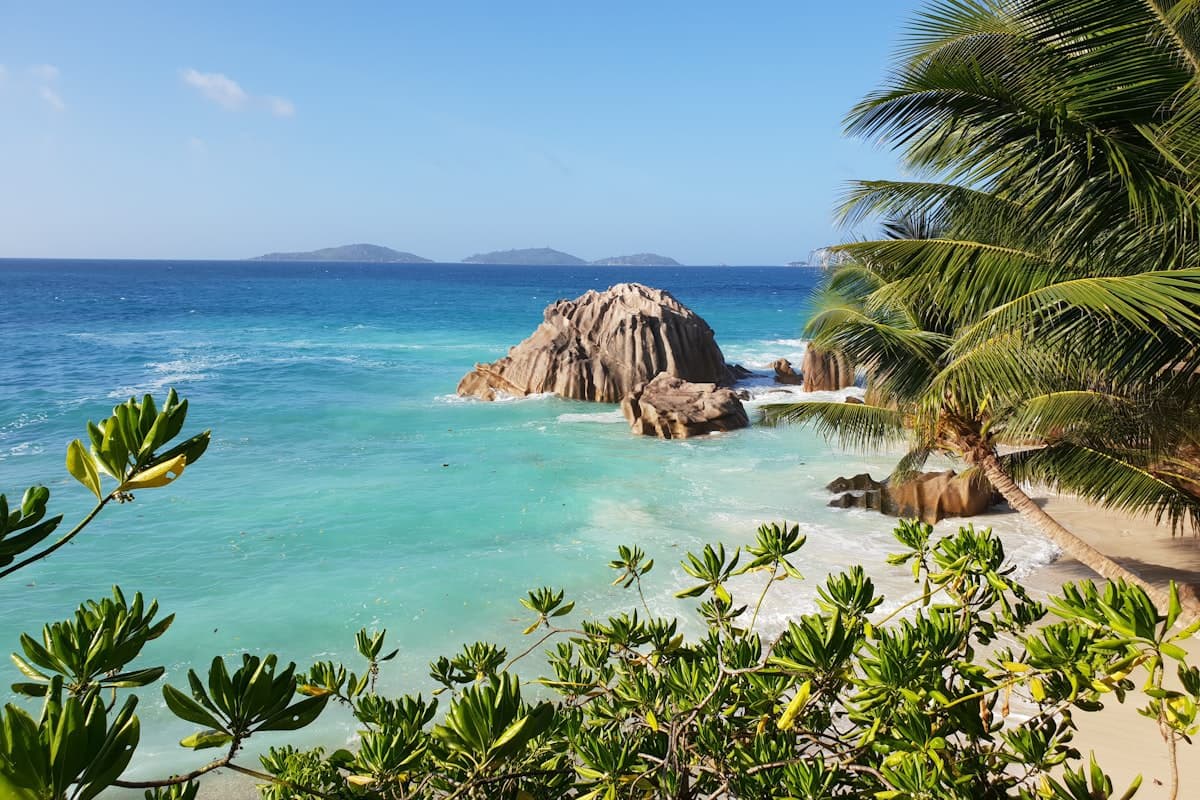
Anse Source d'Argent on La Digue is one of the most photographed beaches in the world, its white sand broken by dramatic granite boulders sculpted smooth over millions of years. The shallow, sheltered waters shift from turquoise to vivid blue across the bay, and the beach is accessed through the L'Union Estate. It is best visited at low tide when the full sweep of the shore is revealed.
UNESCO World Heritage
Wise
Your bank marks up every USD you spend in the Seychelles. Wise doesn't.
- No foreign transaction fees
- Free ATM withdrawals up to your limit
- Pay in local currency at the real rate
4.8 ★ App Store·4.8 ★ Google Play
Airalo eSIM
Your phone plan was built for home. This one was built for the Seychelles.
- No SIM swapping
- No data roaming charges
- Active in minutes
4.7 ★ App Store·4.6 ★ Google Play
Health & Safety
Health & Emergency Info
Before You Travel
Before you travel check that: your destination can provide the healthcare you may need you have appropriate travel insurance for local treatment or unexpected medical evacuation This is particularly important if you have a health condition or are pregnant. Emergency medical number Call 999 and ask for an ambulance. Contact your insurance company quickly if you’re referred to a medical facility for treatment. Vaccine recommendations and health risks At least 8 weeks before your trip: check the latest vaccine recommendations for Seychelles see where to get vaccines and whether you have to pay on
Full health advice (FCDO) →Emergency Numbers
Police999
Ambulance151
Fire999
Health information sourced from UK FCDO. Always consult a travel health professional before departure.
Practical Info
Travel Essentials
Travel Guide
Frequently Asked Questions About Visiting Seychelles
Entry requirements vary by passport. Check the requirements for your specific passport on the Seychelles page at Yoogo.
The official currency is the Seychellois Rupee (SCR). Major credit cards such as Visa and Mastercard are widely accepted at hotels and larger restaurants, but smaller establishments, local markets, and buses typically operate on a cash-only basis, so it is sensible to carry some rupees at all times.
Seychelles is generally considered one of the safest destinations in the Indian Ocean, with violent crime against visitors being exceptionally rare. The main concerns are opportunistic petty theft such as beach bag theft or ATM-vicinity pickpocketing, and travellers are advised to keep valuables secure and not leave belongings unattended on beaches.
High-speed ferries operate daily between Mahé, Praslin, and La Digue, with the Mahé–Praslin crossing taking roughly one hour and the Praslin–La Digue crossing around 15 minutes. Air Seychelles runs frequent domestic flights between Mahé and Praslin in approximately 15 minutes, while on La Digue itself, bicycles are the primary mode of transport and are available to hire near the jetty.
The shoulder months of April–May and October–November are widely regarded as the finest times to visit, sitting between the north-west and south-east trade wind seasons when seas are generally calmer and rainfall is lower. The islands can be visited year-round, as temperatures remain warm throughout, though January and February tend to be the wettest months.
Seychelles has three official languages: Seychellois Creole, English, and French, with Seychellois Creole being the most widely spoken in everyday life. English is used broadly in business, government, and tourism, so most visitors will have no difficulty communicating across the main islands.
Seychelles is malaria-free, but the CDC and WHO recommend travellers are up to date on routine vaccinations before departure. Dengue fever is present and mosquito-borne illnesses are a consideration, so using repellent and wearing long sleeves in the evenings is recommended, particularly for pregnant travellers.
Tipping is not mandatory in Seychelles, as a service charge is often included in restaurant and hotel bills. Where a charge is not included, a cash tip of around 5–10 per cent for good service is appreciated but entirely discretionary.
eSIM coverage is available across the main islands of Mahé, Praslin, and La Digue via the two local carriers, Airtel and Cable and Wireless. Airalo and other international eSIM providers offer prepaid data plans for Seychelles that can be installed before departure, making it straightforward to stay connected on arrival.