←All destinations
Travel Guide
Visiting Somalia
Select your passport to instantly check if you need a visa.
Avoid Some Regions
UK FCDO: Your travel insurance could be invalidated if you travel against advice from the Foreign, Commonwealth & Development Office (FCDO).
Updated 2026-01-26
Discover
Top Attractions in Somalia
The most iconic and unmissable experiences this country has to offer.
Laas Geel
Laas Geel is a complex of rock shelters located around 55 kilometres northeast of Hargeisa, containing some of the oldest and best-preserved prehistoric rock paintings in Africa, dating to approximately 9,000 to 11,000 years ago. The polychrome panels depict long-horned cattle adorned with what appear to be ceremonial robes, alongside hunters, antelope, giraffes, and dogs, rendered in vivid ochre and white pigments that have remained remarkably intact. The site was first documented by a French archaeological team in 2002 and is widely regarded as one of the most significant Neolithic heritage sites in the Horn of Africa.
Mosque of Islamic Solidarity
The Mosque of Islamic Solidarity is the largest mosque in the Horn of Africa, capable of accommodating up to 10,000 worshippers and set prominently in Mogadishu with views towards the Indian Ocean. Constructed in 1987 with support from a Saudi foundation, the mosque features a 35-metre minaret and a clean white exterior that blends traditional Islamic architectural forms with East African influences. Following restoration works completed in 2015, it stands as one of the most recognisable landmarks on the Somali capital's skyline.
Lido Beach
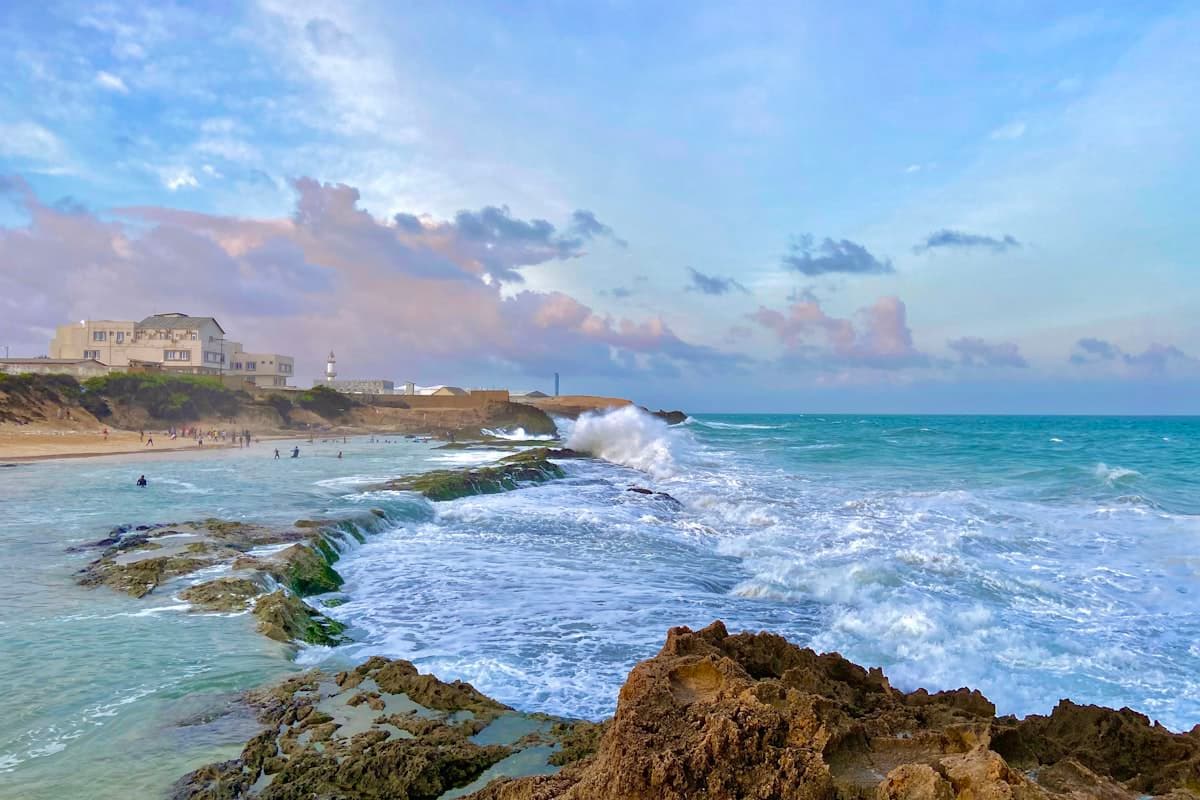
Lido Beach stretches along Mogadishu's northeastern coastline where white sand meets the warm, clear waters of the Indian Ocean. Originally developed in the late 1930s, the beach is now the city's most popular gathering place, lined with seafood restaurants and cafes and regularly busy with locals and visitors alike. The shallow, calm waters and long, open shoreline make it a defining feature of the capital's coastal character.
Wise
Your bank marks up every USD you spend in Somalia. Wise doesn't.
- No foreign transaction fees
- Free ATM withdrawals up to your limit
- Pay in local currency at the real rate
4.8 ★ App Store·4.8 ★ Google Play
Airalo eSIM
Your phone plan was built for home. This one was built for Somalia.
- No SIM swapping
- No data roaming charges
- Active in minutes
4.7 ★ App Store·4.6 ★ Google Play
Health & Safety
Health & Emergency Info
Before You Travel
Before you travel check that: your destination can provide the healthcare you may need you have appropriate travel insurance for local treatment or unexpected medical evacuation This is particularly important if you have a health condition or are pregnant. Emergency medical number Call 999 and ask for an ambulance. If that number does not work, call the Somali Red Crescent on 445 for emergency services. Contact your insurance company quickly if you’re referred to a medical facility for treatment. Vaccine recommendations and health risks At least 8 weeks before your trip: check the latest infor
Full health advice (FCDO) →Emergency Numbers
Police888
Ambulance999
Fire555
Health information sourced from UK FCDO. Always consult a travel health professional before departure.
Practical Info
Travel Essentials
Travel Guide
Frequently Asked Questions About Visiting Somalia
Entry requirements vary by passport. Check the requirements for your specific passport on the Somalia page at Yoogo.
The official currency is the Somali shilling (SOS), though the US dollar is widely accepted, particularly in Mogadishu and other major cities. Cash is the predominant means of payment, as card acceptance is very limited outside of a small number of hotels, and ATMs are scarce and unreliable.
Somalia faces ongoing security challenges, including the presence of armed groups in several regions, and many governments advise against all travel to parts of the country. Somaliland and Puntland have differing security profiles from the south, and conditions can change quickly; consulting your government's current travel advisory before planning any trip is strongly recommended.
Private vehicle hire with a local driver is the most practical way to travel within and between cities, as public transport is limited and road conditions vary significantly. Domestic flights connect Mogadishu, Hargeisa, Bosaso, and Kismayo, and are often the safest option for longer distances.
The most comfortable period for travel is December to February, during the dry season when temperatures are somewhat lower and rainfall is minimal. The main rainy seasons run from March to May (Gu) and October to November (Deyr), when roads in rural areas can become impassable.
Somali is the official language and is spoken throughout the country, with Arabic holding co-official status and widely used in religious and educational contexts. English is understood in some business and government settings, particularly in Somaliland, while Italian retains a residual presence among older generations in the south.
Vaccinations commonly recommended for travel to Somalia include hepatitis A, typhoid, polio, and yellow fever for travellers arriving from countries with yellow fever risk. Malaria is present throughout the country and anti-malarial medication is strongly advised; consulting a travel health clinic well before departure allows time to complete any required courses.
Tipping is not a formal custom or expectation in Somalia, and most transactions take place without a gratuity. That said, rounding up the fare for drivers or leaving a small token of appreciation for attentive service is generally welcomed and understood as a gesture of goodwill.
Somalia has several active mobile operators, including Hormuud Telecom in the south and Telesom in Somaliland, with 3G and 4G coverage in major cities such as Mogadishu, Hargeisa, and Bosaso. Most global eSIM providers do not currently support Somalia, so purchasing a local SIM card on arrival is the most reliable way to access data; bring an unlocked device to make this straightforward.