←All destinations
Travel Guide
Visiting South Korea
Select your passport to instantly check if you need a visa.
Discover
Top Attractions in South Korea
The most iconic and unmissable experiences this country has to offer.
Bukchon Hanok Village, Seoul
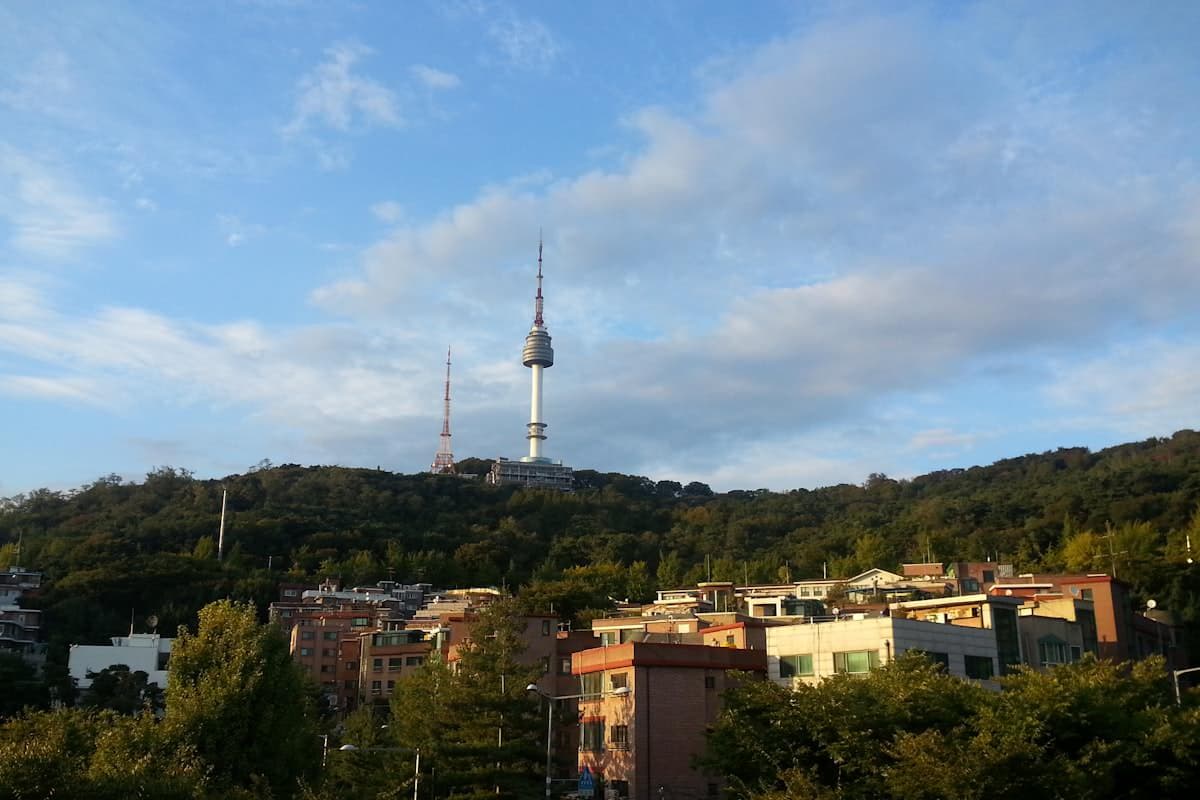
Bukchon Hanok Village occupies a hillside between Gyeongbokgung and Changdeokgung palaces in central Seoul, preserving a dense collection of traditional hanok courtyard houses that date from the Joseon period. Narrow alleyways wind between grey-tiled rooftops and wooden gates, offering views across the city that contrast sharply with Seoul's modern skyline just beyond. Many of the hanok are still privately occupied, giving the neighbourhood an authenticity that purpose-built heritage sites rarely match.
UNESCO World Heritage
Bulguksa Temple and Seokguram Grotto, Gyeongju
Bulguksa Temple, built in 528 CE and substantially reconstructed under the Silla Kingdom in the 8th century, is one of Korea's most magnificent Buddhist complexes, its stone bridges, pagodas, and pavilions set against a wooded hillside above Gyeongju. A short distance away, the Seokguram Grotto houses a masterful stone Buddha statue carved in the 8th century, considered the finest example of Buddhist sculpture in East Asia. Both sites are jointly inscribed on the UNESCO World Heritage List.
Wise
Your bank marks up every USD you spend in South Korea. Wise doesn't.
- No foreign transaction fees
- Free ATM withdrawals up to your limit
- Pay in local currency at the real rate
4.8 ★ App Store·4.8 ★ Google Play
Airalo eSIM
Your phone plan was built for home. This one was built for South Korea.
- No SIM swapping
- No data roaming charges
- Active in minutes
4.7 ★ App Store·4.6 ★ Google Play
Health & Safety
Health & Emergency Info
Before You Travel
Before you travel check that: your destination can provide the healthcare you may need you have appropriate travel insurance for local treatment or unexpected medical evacuation This is particularly important if you have a health condition or are pregnant. Emergency medical number Call 119 and ask for an ambulance. Contact your insurance company quickly if you’re referred to a medical facility for treatment. Vaccine recommendations and health risks At least 8 weeks before your trip: check the latest vaccine recommendations for South Korea see where to get vaccines and whether you have to pay o
Full health advice (FCDO) →Emergency Numbers
Police112
Ambulance119
Fire119
Health information sourced from UK FCDO. Always consult a travel health professional before departure.
Practical Info
Travel Essentials
Travel Guide
Frequently Asked Questions About Visiting South Korea
Entry requirements depend on your passport. Check your specific requirements on the South Korea page at Yoogo.
South Korea uses the Korean won (KRW). Card payments are widely accepted, even at smaller shops and convenience stores, making South Korea one of the more card-friendly destinations in Asia. ATMs are plentiful, including international-capable machines at banks and convenience stores. The T-money smart card is invaluable for public transport across buses, subways, and taxis, offering small discounts on each journey. Load it at any convenience store.
South Korea has a low crime rate and is considered very safe for tourists. Violent crime targeting visitors is rare. Exercise normal caution in busy nightlife districts and avoid unlicensed taxis; use official metered cabs or ride-hailing apps such as KakaoTaxi. The demilitarised zone (DMZ) along the North Korean border is a popular tourist destination visited safely via organised tours. Remain aware of any regional advisories relating to the Korean peninsula.
South Korea has excellent public transport. The KTX high-speed rail network connects Seoul to major cities including Busan, Daegu, and Gwangju quickly and comfortably. Six cities have metro systems, and buses reach every corner of the country. Within Seoul, the subway is extensive, affordable, and easy to navigate with English signage. The T-money card works across all public transport modes nationwide. Domestic flights serve Jeju Island, the country's most popular island destination.
Autumn, from September through November, is widely considered the best time to visit, with mild temperatures, clear skies, and spectacular foliage colours across the country. Spring, from March through May, is also excellent with cherry blossoms and pleasant weather. Summer (June–August) is hot, humid, and prone to heavy monsoon rainfall. Winter brings cold temperatures and snow, but also skiing opportunities and unique festivals in areas like Pyeongchang.
Korean is the official language, written in the Hangul script, which is logical and can be learned phonetically in a few hours. English proficiency is increasing, particularly among younger people in Seoul and major cities. Transport signage, maps, and menus in tourist areas are commonly available in English. Outside major cities, English is less common, and having a translation app is helpful. Learning a few Korean phrases is appreciated by locals.
No vaccinations are legally required to enter South Korea for most travellers. Routine vaccinations should be up to date. The country has high-quality healthcare and hygiene standards, so health risks are generally low for visitors. Tap water is safe to drink in most areas. Consult your doctor or a travel health clinic if you have specific health concerns or are travelling to rural areas.