←All destinations
Travel Guide
Visiting Zambia
Select your passport to instantly check if you need a visa.
Discover
Top Attractions in Zambia
The most iconic and unmissable experiences this country has to offer.
UNESCO World Heritage
Victoria Falls
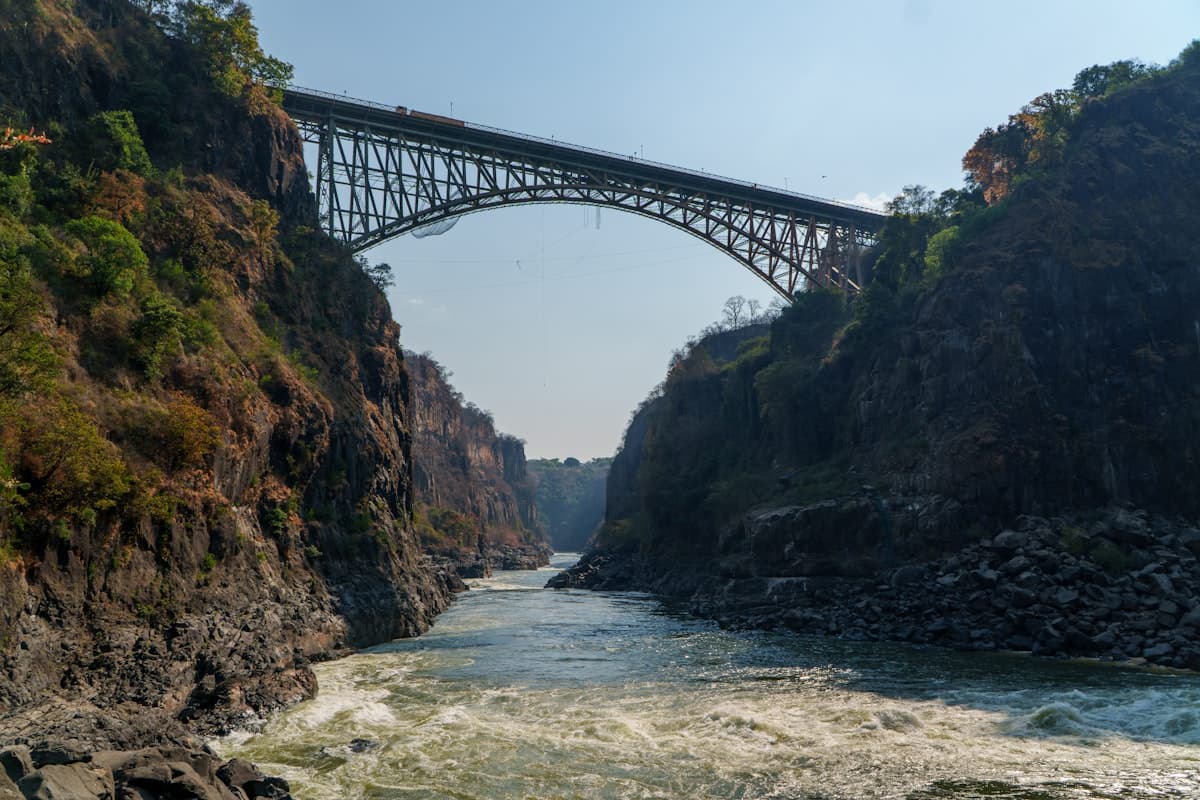
Shared with Zimbabwe and inscribed as a UNESCO World Heritage Site in 1989, Mosi-oa-Tunya (meaning 'The Smoke That Thunders') is the world's largest curtain of falling water, stretching 1,708 metres wide. The Zambezi River pours up to 500 million litres per minute over the basalt edge, generating a permanent mist and rainbows visible for many kilometres. The Zambian side offers some of the most dramatic viewpoints, and the adjacent Mosi-oa-Tunya National Park protects white rhino and a range of other wildlife along the riverbank.
South Luangwa National Park
Widely regarded as one of the finest wildlife sanctuaries in the world, South Luangwa is the birthplace of the guided walking safari, a practice pioneered here in the 1950s by conservationist Norman Carr. The park holds 60 mammal species and over 400 bird species, and is particularly renowned for its dense leopard population and spectacular night drives. The Luangwa River draws vast herds of elephant and buffalo, and the floodplains fill seasonally with hippo and crocodile.
Wise
Your bank marks up every USD you spend in Zambia. Wise doesn't.
- No foreign transaction fees
- Free ATM withdrawals up to your limit
- Pay in local currency at the real rate
4.8 ★ App Store·4.8 ★ Google Play
Airalo eSIM
Your phone plan was built for home. This one was built for Zambia.
- No SIM swapping
- No data roaming charges
- Active in minutes
4.7 ★ App Store·4.6 ★ Google Play
Health & Safety
Health & Emergency Info
Before You Travel
Before you travel check that: your destination can provide the healthcare you may need you have appropriate travel insurance for local treatment or unexpected medical evacuation This is particularly important if you have a health condition or are pregnant. Vaccine recommendations and health risks At least 8 weeks before your trip: check the latest vaccine recommendations for Zambia where to get vaccines and whether you have to pay on the NHS travel vaccinations page See what health risks you’ll face in Zambia including: yellow fever malaria dengue fever cholera mpox The UNAIDS Zambia country p
Full health advice (FCDO) →Emergency Numbers
Police999
Ambulance991
Fire993
Health information sourced from UK FCDO. Always consult a travel health professional before departure.
Practical Info
Travel Essentials
Currency
Drive on
left
Language
English (official), Bemba, Nyanja, Tonga, Lozi, Chewa
Plug Types
Type C, D, G
Travel Guide
Frequently Asked Questions About Visiting Zambia
Entry requirements depend on your passport. Check your specific requirements on the Zambia page at Yoogo.
Zambia uses the Zambian kwacha (ZMW). Cash is important for most daily transactions, particularly outside Lusaka. US dollars are widely accepted at safari lodges, national park fees, and tourist businesses. ATMs are available in Lusaka and Livingstone but less reliable elsewhere. Bring sufficient cash for travel to remote areas.
Zambia is generally safe and has a reputation as one of Africa's more stable countries. Petty theft occurs in urban areas; take standard precautions. Lusaka requires normal urban vigilance. Safari areas and tourist destinations are generally safe. Check your government's current travel advisory before visiting.
Domestic flights connect Lusaka with Livingstone, the Luangwa Valley, and other destinations. Roads range from good to very poor; a 4WD vehicle is essential for national park access. Buses and minibuses serve most towns but can be slow. Safari operators typically arrange transfers. Driving is on the left.
The dry season from May to October is the best time for wildlife viewing. July and August are peak months. The green season (November to April) offers lush scenery and excellent birding, and Victoria Falls is most impressive from February to May when the Zambezi is at its highest.
English is the official language and is used in government, education, and business, and is widely spoken in urban areas and tourist contexts. Zambia has over 70 indigenous languages; Bemba, Nyanja, Tonga, and Lozi are among the most widely spoken.
Yellow fever vaccination is required if arriving from a yellow fever endemic country, and is recommended for all travellers. Malaria is endemic throughout the country; antimalarial prophylaxis is strongly recommended. Hepatitis A, typhoid, and routine vaccinations are also recommended. Tap water outside Lusaka should be treated or replaced with bottled water.
Tipping is an important part of the economy in tourist Zambia. Safari guides and camp staff customarily receive gratuities; USD 10–20 per person per day for guides is a widely cited guideline. Restaurant staff appreciate 10% where a service charge is not included. Hotel staff and drivers welcome small tips.
Mobile coverage is good in Lusaka and major towns via MTN Zambia, Airtel Zambia, and Zamtel. Coverage in national parks and remote areas is limited. Local SIM cards are inexpensive and available with a passport. Wi-Fi is available at lodges and hotels in main tourist areas.