←All destinations
Travel Guide
Visiting Ireland
Select your passport to instantly check if you need a visa.
Discover
Top Attractions in Ireland
The most iconic and unmissable experiences this country has to offer.
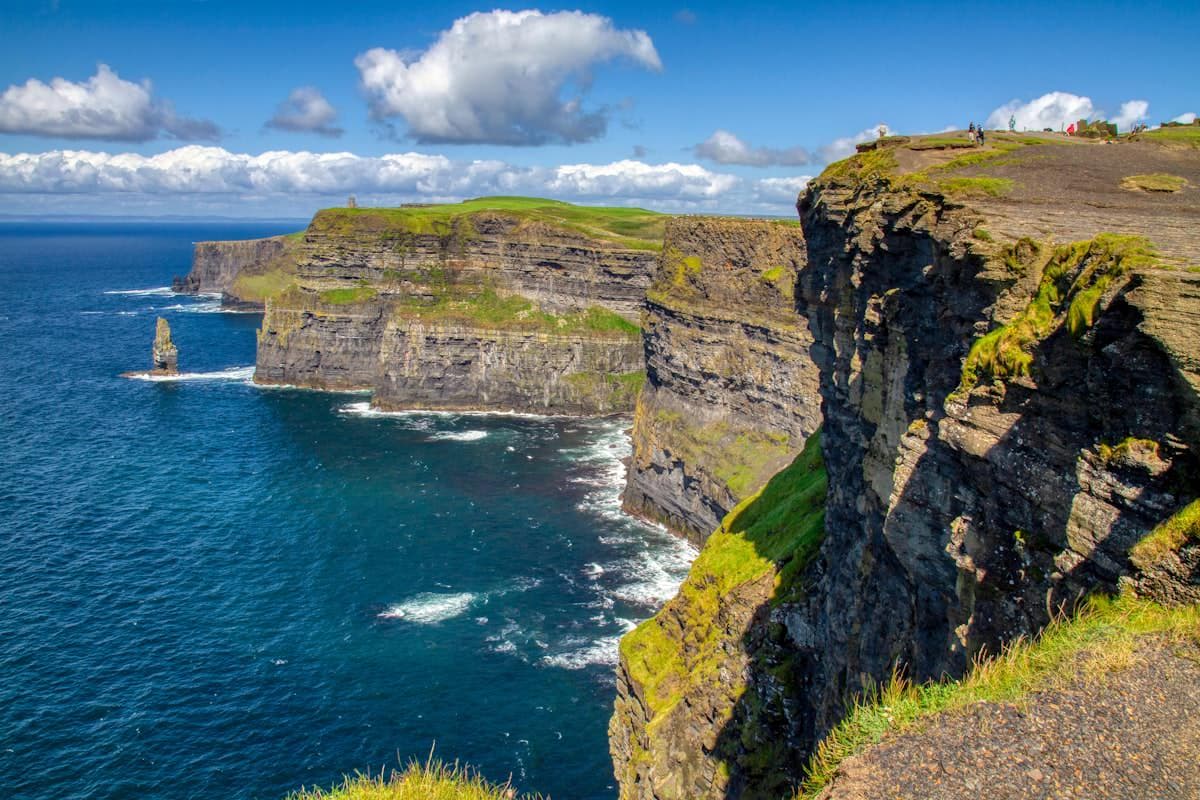
Cliffs of Moher
Rising 214 m above the Atlantic along County Clare's coastline, the Cliffs of Moher offer one of Ireland's most dramatic and photographed landscapes.
Ring of Kerry
A 179 km scenic driving route around the Iveragh Peninsula in County Kerry, passing rugged coastline, glacial lakes, ancient stone forts, and breathtaking mountain scenery.
Blarney Castle
Home to the legendary Blarney Stone, which legend says bestows the gift of eloquence to anyone who kisses it. The castle grounds and gardens are equally beautiful.
Giant's Causeway
A UNESCO World Heritage Site in County Antrim, Northern Ireland — over 40,000 interlocking hexagonal basalt columns formed by ancient volcanic activity.
Wise
Your bank marks up every USD you spend in Ireland. Wise doesn't.
- No foreign transaction fees
- Free ATM withdrawals up to your limit
- Pay in local currency at the real rate
4.8 ★ App Store·4.8 ★ Google Play
Airalo eSIM
Your phone plan was built for home. This one was built for Ireland.
- No SIM swapping
- No data roaming charges
- Active in minutes
4.7 ★ App Store·4.6 ★ Google Play
Health & Safety
Health & Emergency Info
Before You Travel
Before you travel check that: your destination can provide the healthcare you may need you have appropriate travel insurance for local treatment or unexpected medical evacuation This is particularly important if you have a health condition or are pregnant. Emergency medical number Dial 112 or 999 and ask for an ambulance. Contact your insurance or medical assistance company quickly if you’re referred to a medical facility for treatment. Vaccine recommendations and health risks At least 8 weeks before your trip: check the latest vaccine recommendations for Ireland see where to get vaccines and
Full health advice (FCDO) →Emergency Numbers
Police999
Ambulance999
Fire999
Health information sourced from UK FCDO. Always consult a travel health professional before departure.
Practical Info
Travel Essentials
Travel Guide
Frequently Asked Questions About Visiting Ireland
Citizens of the EU, UK, US, Canada, Australia, New Zealand, Japan, and many other countries can visit Ireland visa-free. Note that Ireland is NOT in the Schengen Area — a UK visa does not grant entry to Ireland, and vice versa. Check your specific nationality with the Yoogo visa checker.
Visa-free visitors can typically stay for up to 90 days per visit. Stays beyond 90 days require applying for an extension from the Irish Naturalisation and Immigration Service (INIS).
A valid passport or, for EU/EEA nationals, a national identity card. Evidence of sufficient funds, accommodation details, and a return or onward ticket may be requested.
Ireland is one of the safest countries in Europe for tourists. Crime levels are low. Normal precautions against petty theft in city centres apply.
The Euro (EUR, symbol €) is the currency of the Republic of Ireland. Note that Northern Ireland (part of the UK) uses Pound Sterling (£). ATMs are widely available, and card payments are accepted almost everywhere.
English is the main language used throughout Ireland. Irish (Gaelic) is the first official language and is widely taught in schools. It is spoken as a community language in certain western coastal areas known as the Gaeltacht.
May to September offers the best combination of longer days, milder temperatures, and drier weather. June and July are the sunniest months. Ireland can be visited year-round — winter has lower prices and fewer crowds, though weather is wetter and some attractions have reduced hours.
Walk the Cliffs of Moher, drive the Ring of Kerry, visit the Book of Kells at Trinity College Dublin, explore Killarney National Park, discover the Giant's Causeway, tour Blarney Castle, enjoy live traditional music in a Galway pub, and hike in Connemara.
Dublin Airport (DUB) handles the vast majority of international arrivals. Cork Airport (ORK) and Shannon Airport (SNN) also receive some international flights.
Travel insurance is strongly recommended. EU citizens with a European Health Insurance Card (EHIC) have access to state healthcare, but most visitors should carry private travel insurance covering medical expenses and trip disruption.
No vaccinations are required for entry to Ireland. Standard routine vaccinations are recommended.
Yes. Visitors can drive with a valid foreign licence for up to 12 months. Note that driving is on the left side of the road, and many rural roads are very narrow. An International Driving Permit is useful.